

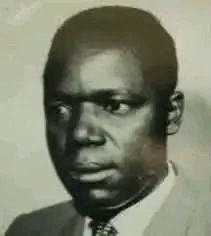
SOLOMON KALULU—THE MINISTER WHO WARNED AGAINST CRITICISM, AND THE MAN WHO WANTED SOBER LOCOMOTIVE ENGINEERS
In Zambia’s early political history, Kalulu was one of those men whose journey from the classroom to the corridors of power reflected the ambitions, contradictions and occasional ironies of the independence generation.
A teacher who abandoned the chalkboard for politics, he became a key figure in the nationalist movement, a member of the first Cabinet of independent Zambia, and eventually a diplomat.
But Kalulu’s political career was not merely about land, wildlife and ministerial reshuffles. It also featured stern warnings about criticising the Head of State, a brush with a celebrated South African playwright, and an unusually early interest in breathalysers for train drivers. Clearly, the young Republic had plenty to keep its ministers occupied.
Kalulu was born in Lusaka on June 18, 1924. By profession, he was a teacher, having received his education at Waddilove Training Institute and through the Lyceum Correspondence College in South Africa.
He was only 19 when he entered the teaching profession. His career progressed to the position of headmaster, suggesting that he had the qualifications and discipline to climb the educational ladder. But the political winds of the 1950s proved more persuasive than the prospect of spending the rest of his working life marking exercise books.
By 1952, Kalulu had become so engrossed in politics that he abandoned teaching altogether. The classroom lost a headmaster, but the nationalist movement gained another organiser.
He joined the African National Congress (ANC) of Northern Rhodesia and served as the party’s secretary from 1952 to 1955. It was a period when the struggle against colonial rule was gathering momentum, and political loyalties were being tested by increasingly sharp disagreements over leadership, strategy and the future of the country.
When the nationalist movement split between Harry Mwaanga Nkumbula and Kenneth Kaunda, Kalulu chose his side.
On October 24, 1958, he left the ANC and joined Kaunda’s Zambian African National Congress, aligning himself with the emerging political force that would eventually become the United National Independence Party (UNIP).
When UNIP was launched in 1959, Kalulu became its secretary-general. Following Kaunda’s release from prison and his appointment as UNIP president on January 31, 1960, Kalulu was appointed national chairman.
These were not insignificant positions. In a movement preparing to inherit the machinery of government, the men entrusted with organising the party were helping lay the foundations of the new political order.
When Zambia attained independence on October 24, 1964, Kalulu became the country’s first Minister of Lands and Natural Resources. He also represented Rufunsa as a UNIP Member of Parliament and later served as MP for Lusaka City East.
But independence did not automatically usher in an era of unlimited political tolerance. The new government was building a nation, and some of its leading figures appeared to believe that nation-building required a particularly delicate approach to criticism of the President.
Kalulu provided an early illustration of this attitude.
In May 1964, he reportedly threatened South African playwright Athol Fugard with deportation after Fugard accused Zambians of racial bigotry.
It was an awkward encounter. Fugard was a prominent critic of apartheid, yet his criticism of African attitudes had apparently touched a nerve among the nationalists.
Then came July 1964, when Kalulu reportedly warned that criticism of President Kaunda would be regarded as conspiracy against the state.
He cited Malawi, which had attained independence four months before Zambia, as an example, telling a meeting that nobody was allowed to speak ill of President Hastings Kamuzu Banda.
Apparently, the new Republic was already conducting comparative studies in presidential reverence. If Malawi had found a way to keep criticism of its leader under control, perhaps Zambia could learn a thing or two.
There was, of course, a difference between respecting a Head of State and treating criticism of one as a threat to national security. But in the political atmosphere of the period, the distinction was not always given the attention it deserved.
For a country whose independence struggle had been fuelled by opposition to colonial authority, the question was an uncomfortable one: having fought so hard to acquire the freedom to govern themselves, how much freedom would citizens enjoy when questioning those who governed them?
Kalulu’s record was not confined to political warnings and controversial remarks. As Minister of Lands and Natural Resources, he also took an interest in wildlife conservation.
In 1966, he is credited with mounting a campaign to save the red lechwe antelope from extinction. The initiative reportedly attracted public support, while Kalulu organised the use of spotter planes to help identify and apprehend poachers operating in game reserves.
The antelope was prized for its valuable skin, making it a target for hunters whose interest in wildlife conservation ended where the commercial value of a dead animal began.
Here, Kalulu’s ministerial instincts were directed towards protecting a national natural resource rather than policing the boundaries of political debate.
In 1967, Kalulu was transferred to the Ministry of Transport, Power and Communications.
And this is where his career acquired one of its more unusual footnotes.
Long before the Road Transport and Safety Agency became part of Zambia’s road-safety landscape, Kalulu was reportedly considering the use of breathalysers to reduce railway accidents caused by intoxicated train engineers.
Notice the distinction: his concern was not initially about motorists weaving their way along the Great North Road, but about railway operators entrusted with moving trains and passengers safely.
It was a practical concern because at that time, not many Zambians owned automobiles and railway transport was the most common mode of travel.
In 1968, Kalulu was appointed Minister of the Eastern Province. After a year in the provincial portfolio, he returned to Lusaka.
Such movements were characteristic of the political administration of the First Republic, where ministers could find themselves transferred from one portfolio to another as the President reorganised his team.
For politicians, a Cabinet reshuffle could mean a fresh challenge, a change in influence or an abrupt reminder that ministerial office was an appointment rather than personal property.
Kalulu experienced this machinery of government from more than one position, moving between national responsibilities and provincial administration before eventually leaving the Cabinet.
After his Cabinet career, Kalulu entered the diplomatic service and served as Zambia’s ambassador to Egypt.
For a man who had participated in the nationalist struggle, helped organise UNIP and served in several government portfolios, the diplomatic appointment represented another chapter in a career shaped by the institutions of the newly independent state.
Kalulu died on October 19, 1992, aged 68. His daughter Christar Kalulu carried on with his legacy of public service, having served as Lusaka district commissioner under President Rupiah Banda and State House permanent Secretary under President Edgar Lungu.
Kalulu belonged to the generation that helped move Zambia from colonial rule to independence. He was a teacher who became a nationalist organiser, a senior UNIP official, a Cabinet minister, a legislator and a diplomat.
History does not always give us spotless heroes or uncomplicated villains. Sometimes it gives us men who contributed to the construction of a nation while reflecting the political attitudes and limitations of their era.
Kalulu was one such figure.
Follow: The Zed Informant