

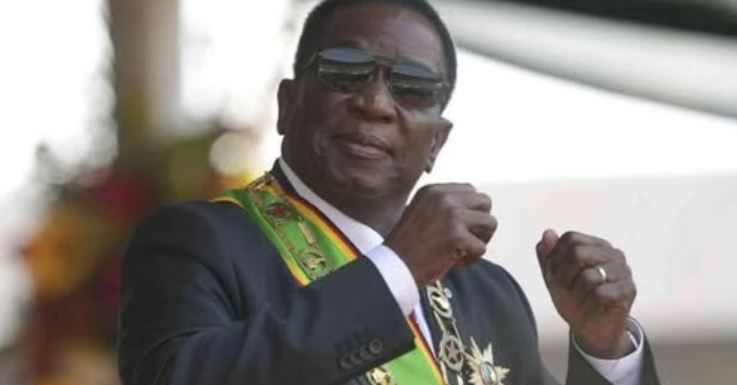
President Emmerson Mnangagwa abruptly cancelled an extraordinary Zanu-PF politburo meeting last Friday amid fierce divisions over proposed amendments to the ruling party’s constitution.
The meeting was called off at the last minute, with First Lady Auxillia Mnangagwa and Vice-President Constantino Chiwenga already at the party’s headquarters.
The proposed amendments have reportedly triggered a three-way confrontation involving Zanu-PF legal secretary Ziyambi Ziyambi, Speaker of Parliament Jacob Mudenda and Chiwenga.
Ziyambi convened the meeting to discuss changes he said would align the party’s constitution with the amended national Constitution. He reportedly argued that the proposals were driven by resolutions passed by provincial structures.
However, Chiwenga’s allies argue that changes to the party constitution require at least three months of consultations before being submitted to the central committee. They accuse Ziyambi of attempting to bypass established procedures while introducing sweeping amendments that had not been requested.
Mudenda, who was reportedly in Tanzania on parliamentary business, rushed back for the meeting but received the proposals only an hour before it was scheduled to begin, sources told ZimLive.
The report said Mudenda was particularly angered by a proposal to assign some of his responsibilities to the party’s director general, a position that exists but is not currently provided for in the Zanu-PF constitution.
Under the draft amendments, the director general would oversee the party’s day-to-day administration and provide secretariat and administrative services to its principal organs.
Mudenda reportedly viewed the proposal as an attempt to undermine his authority and telephoned Mnangagwa to express his concerns.
The proposed changes also seek to revise the party’s leadership election cycle, correct drafting errors and repetitive clauses, and formally define the responsibilities of its administrative structures.
One of the most contentious proposals concerns how Zanu-PF would select its leader and presidential candidate once the party’s electoral calendar is aligned with the national election timetable.
The draft reportedly separates the position of party president from that of the party’s presidential candidate, although the same individual could hold both positions.
Ziyambi is said to be promoting the arrangement as a way for Mnangagwa to remain party president after 2029, citing demands from provincial structures. Under the proposed system, the party would elect its leader under its existing constitution, while provincial structures would select the candidate for the 2030 presidential election.
The arrangement has been dubbed the “Nyerere Way”, drawing parallels with former Tanzanian president Julius Nyerere, who stepped down as head of state in 1985 but remained president of the Chama Cha Mapinduzi ruling party until 1990.
The proposal also draws comparisons with South Africa’s African National Congress, where former president Thabo Mbeki relinquished the country’s presidency but continued to contest party leadership before losing to Jacob Zuma.
The draft amendments further declare that Zanu-PF is the country’s principal political authority and require the president and other office bearers to ensure, within the limits of the law, that government policies and legislative initiatives reflect the party’s ideology, resolutions and policy decisions.
Office bearers who act contrary to party policies or resolutions would face disciplinary proceedings under the proposed provisions.
However, critics within the party reportedly fear the changes could weaken the authority of the sitting president by placing the office under the constant threat of party disciplinary action or recall.
Mnangagwa was surprised by the intensity of the resistance, particularly from Mudenda, whom he regarded as a loyal supporter. He had reportedly anticipated opposition from Chiwenga’s allies but was taken aback by the Speaker’s response.
The report also said Ziyambi had warned Mnangagwa that some party members were intent on disrupting the meeting, reportedly describing Mudenda as having “gone rogue”.
The attendance of Obert Mpofu, who was demoted from secretary general to secretary for information technology last year, reportedly added to the tension. Mpofu had not attended politburo meetings for several months, having reported himself ill, according to the report.
Zanu-PF spokesperson Christopher Mutsvangwa attributed the postponement to a clash in the President’s schedule, while a government spokesperson cited an overflow of presidential programmes.
The dispute comes after the Constitution of Zimbabwe Amendment (No. 3) Act, 2026, was signed into law in July, extending Mnangagwa’s second and final term by two years to 2030. The legislation is being challenged in court.
Chiwenga opposed the constitutional amendments, including a provision that replaces the direct popular election of the President with election by Parliament. His supporters among war veterans have also accused Ziyambi of failing to follow the proper procedures for amending the Zanu-PF constitution.
Despite the resistance, Ziyambi is reportedly pressing ahead, maintaining that provincial executive committees have passed resolutions calling for the party constitution to be aligned with the amended national Constitution.
The collapse of the extraordinary politburo meeting, just days before Zanu-PF’s annual conference in Chinhoyi, could complicate efforts to secure approval for the proposed changes.
The conference is scheduled to run from October 12 to 17, with central committee and politburo meetings forming part of the programme.
The report said the agendas for those meetings would already have been set, prompting Ziyambi to convene the extraordinary session specifically to consider the constitutional amendments.
Mnangagwa’s next move remains uncertain as the internal dispute threatens to overshadow the party’s annual gathering.