

HH Explains His Role in Privatization
By Dickson Jere
Hakainde Hichilema, President of Zambia, has explained the role he played in the privatization of state run companies during the MMD era, saying he was merely an adviser to the process, just like many others.
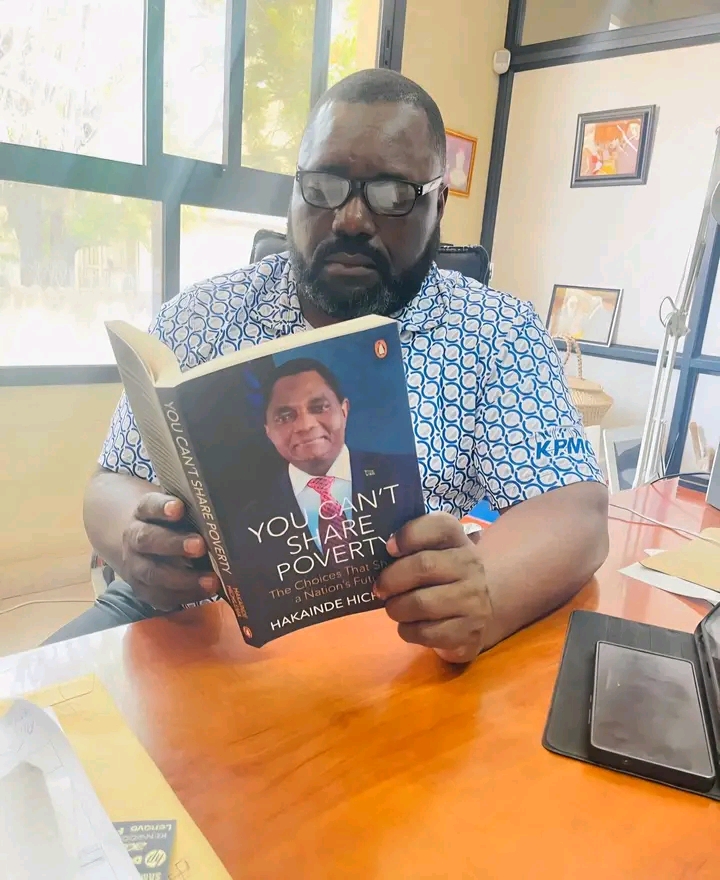
In his newly published book, You Can’t Share Poverty, the President said his firm, Coopers & Lybrand (Grant Thornton), was hired by the government to provide services to the privatization team. However, he noted that other major auditing firms, such as Deloitte, KPMG and PricewaterhouseCoopers, were also hired to perform similar roles, alongside foreign law firms.
“I accept that it’s only because I am in politics today that people like to single out my role in the privatization process, but I was only one of many actors involved,” the President explained on page 66 of his book.
“People continue to forget the real facts to score political points. It’s not unusual, but it’s good to remember it’s just people playing politics with facts,” he said, adding that the process was “generously funded by the World Bank”.
The President explained that the government delayed selling the companies, especially the mines, which later became problematic because most of the companies were actually insolvent. He said the mines should have been sold first, before the smaller companies.
“The biggest mistake was that this process was not done sooner, when the country was not in a crisis. In crisis, things have to be done quickly,” he noted.
He bemoaned the failure of indigenous Zambians to buy some of these assets because they lacked the money and the interest rates were extremely high, making it difficult to borrow for such ventures.
“Thus, the bigger companies could only really be bought by foreigners who were not reliant on the local financial system,” the President said, adding that interest rates in Zambia stood at 40 per cent.
“The one thing government did well was to list a stake in the bigger privatized organizations on the Lusaka Stock Exchange. This led to ordinary people acquiring shares…” he said.
He cited companies such as Zambia Sugar, Zambia Breweries and CEC, saying the idea was to ensure that ordinary people did not feel completely left out.
“But they were left out because the country was poor at that time. There were no local entrepreneurs and there was no way to borrow money to participate in the process,” the President said.
The President disclosed that his team at the firm worked extensively in the services and tradable sectors, helping bring in Shoprite, sugar investments and hotels operated by Sun International in Livingstone.
He singled out First Quantum Minerals (FQM) as a success story arising from privatization.
“FQM is the largest single taxpayer in the country in a sector that accounts for over 70 percent of export earnings and nearly 30 percent of government revenue,” he said.
“In addition, FQM spends heavily on roads, education and conservation.”
The President also praised his longtime friend, Valentine Chitalu, who served as chief executive officer of the Zambia Privatization Agency (ZPA), having been appointed at the young age of 30.
“Although he started his schooling like me in the village, Valentine’s career is a testament of the value of educational opportunities matched with entrepreneurship instincts and determination,” he said.
You Can’t Share Poverty is a fast-paced, 187 page chronicle of President Hakainde Hichilema’s life, recently released by South African publishing house Penguin Publishing. The book traces the President’s journey from his humble beginnings in Hachikoma village in Bweengwa, Southern Province, to State House.
I am done! Packed in library.