

ECHOS OF WAMUYAYAYA: IS PARLIAMENT DEAD?
Linda Kasonde wrote;
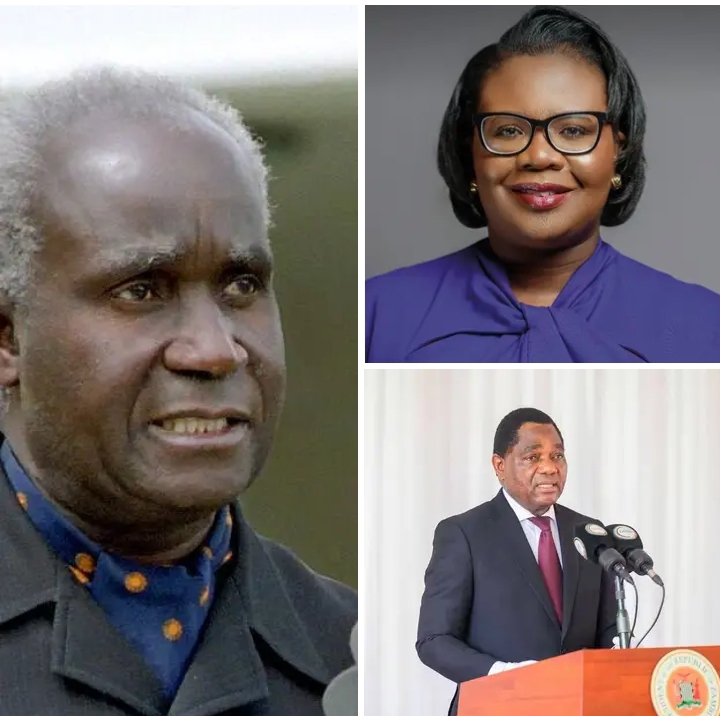
I was in primary school during the last decade of the one-party state under President Kenneth Kaunda. For all his “benevolence” I clearly remember it as a time when you could not speak freely in public or on the phone for fear that shushushus would report on you, where people died due to mysterious accidents, and where the cult of the leader was so strong that we had a saying: “kumulu lesa, panshi Kaunda” or “God reigns in heaven, Kaunda reigns on earth”.
People would chant Kaunda wamuyayaya (Kaunda forever!). On 21st September 2026, I woke up thinking of another dictatorship further afield in the previous century. In 1933, Adolf Hitler exploited an arson attack on the Reichstag, or German Parliament, putting the blame on the Communist Party to secure a decree suspending civil liberties.
The March 1933 election did not give the Nazis a two-thirds majority in Parliament, so Hitler won over the support of the Catholic Centre Party to enact the Enabling Act. On 23rd March 1933, amid state militia intimidation and a reduced quorum – following the absence of some members of parliament, Parliament passed the Enabling Act by 444 to 94 votes.
Only the Social Democratic Party opposed it. It created a legal dictatorship: rival parties were banned, opponents jailed, and Hitler seized presidential powers. The Enabling Act was only repealed twelve years later, on 20th September 1945.
Fascinating, you might say, but why should a Zambian today be interested in this history? Firstly, as the Bible says, “there is nothing new under the sun”. History has a tendency of repeating itself. Look a little closely, and you may see some parallels in today’s events: the rise of the cult of leadership above the rule of law, the suppression of rights and freedoms such as freedom of expression, assembly, and association, and the militarization of the State.
However, there are some important distinctions. Kaunda and even Hitler believed in the rule of law. The one-party state under Kaunda was created after the 1969 referendum, otherwise known as the “referendum to end all referenda”, allowed the fundamental rights in the Constitution to be changed without the requirement of a referendum.
There was some resistance at the time by the opposition African National Congress led by Harry Mwaanga Nkumbula who in 1972 challenged the government’s attempt to create a one-party state through the courts. Nkumbula eventually capitulated by signing a truce with the ruling UNIP party paving the way for the 1973 Constitution which legally entrenched the one-party state.
Kaunda sought legal advice on many of the actions and measures he took, changing the law if necessary. What is currently unfolding in Zambia is rule by man over the rule of law as exemplified by recent abductions and arbitrary detentions, the closure of the courts during the final days before the deadline for lodging a presidential election petition after the August 2026 election, and the arbitrary cancellations of the passports of Zambian citizens.
Zambia held its last general election on 13th August 2026. Even as late as six months before the election, it appeared that there would be no viable contender for the presidency.
The opposition had been stifled following the dismantling of the former ruling party, the Patriotic Front, through infiltration, prosecution of leading opposition party figures, and the blocking of the registration of new political parties, the weaponization of the Public Order Act preventing public gatherings, and the blocking of opposition political party financing.
With around three months left before the election, seemingly from nowhere, the opposition Tonse and Pamodzi Alliance coalesced and appointed Mr. Brian Mundibile as their presidential candidate and Mr. Makebi Zulu as his running mate under the National Reconciliation Party for Unity and Prosperity (NRPUP) political party.
Crucially, although Mundubile and Zulu were on the ticket for the NRPUP, the actual President and Secretary-General of the party were two individuals who had been approached to host the two candidates under the umbrella of the NRPUP due to the difficulties experienced in registering new political parties.
Mundubile and Zulu were able to garner momentum and draw crowds under difficult circumstances. They were definitely giving the incumbent President Hakainde Hichilema a run for his money; the election became a two-horse race.
Polling day largely went without incident. The Electoral Commission put the voter turnout at around 57%, much lower than the 70.6% voter turnout in the previous election.
The trouble came once that announcement of the votes began. On 14th August 2026, the day following the election day, at around 15:00 hours the Electoral Commission of Zambia announced that it was suspending the nationwide vote tallying and the announcement of the results due to violent attacks of polling agents and the theft of ballot papers at a few polling stations across the country.
All polling agents, election monitors, and election observers were removed from the polling stations and left under armed police and army guard. This event was without precedent in Zambia’s entire electoral history. The announcement of the election results resumed after six hours.
It led to concerns of vote manipulation amidst the lack of transparency and accountability by the Electoral Commission. Ill-advisedly, that evening Brian Mundubile declared that his Party’s parallel voter tabulation showed that he had won the presidential election.
Events that unfolded later that evening would prove to be pivotal in the slipping of Zambia’s democratic mask.
On the evening of 14th August 2026, NRPUP presidential candidate Brian Mundubile made public statements on camera stating that he had been abducted by armed men and his home ransacked.
He reported that former Cabinet Minister Mutotwe Kafwaya had been shot and presumed dead and that bullets had narrowly missed him. The Government refuted his statements. SMS messages were sent out to Zambians informing them not to be misled by alarmist propaganda. It later turned out that the eleven men who were in the company of Mundubile had been abducted and their whereabouts were unknown for a couple of days.
They were later found in police custody across police stations in Lusaka. For five days, the government denied knowing where Mutotwe Kafwaya was. It was only after his widow went to court for a habeas corpus application that they admitted that Mr. Kafwaya had died, claiming that previously they had been unable to identify his body
In the weeks that have followed, Brian Mundubile, Makebi Zulu, and sixteen others, including former Law Association of Zambia President George Chisanga and Retired Anglican Bishop Trevor Mwamba, were charged with treason after being held without charge for several days. Mundubile and Zulu were later handed additional charges of sedition.
The Government alleges that the eighteen people participated in a plot to overthrow the government using armed militia. The authorities have yet to provide plausible evidence to support these claims.
The presidential election results were announced in the early hours of 18th August 2026.
On 19th August 2026, Mundubile announced that he would contest the presidential results in the Constitutional Court. On Monday 24th August, a day before the deadline for filing a presidential petition, the judiciary imposed a nation-wide shutdown of all courts in Zambia alleging an unnamed security threat.
No alternative means of accessing the courts were provided. The shutdown was only lifted on Thursday 27th August 2026, two days after the deadline had passed.
Mundubile and Zulu, who had sought refuge in a local United Nations facility, were handed over to the Zambian authorities on 27th August 2026. Mundubile and Zulu were only brought before a court of law on 25th September 2026; in contravention of constitutional provisions on the right to be brought before a court of law in the shortest possible time.
The trial was moved to Solwezi, a town some 588 kilometers from Lusaka, where they were apprehended; making it difficult for their Lusaka-based family and lawyers to access them.
They remain in detention whilst the authorities continue their investigations into the charges levelled against them.
Meanwhile, members of Parliament have been sworn in, Ministers have been appointed.
The Constitutional Amendment Act No. 13 of 2025 increased the number of seats in the National Assembly from 167 to 280 – including nominated members of parliament and ex-officio members. Forty of those seats have been allocated to so-called “proportional representation seats” tied to the proportion of votes that a presidential candidate received in the general election.
These seats are intended to increase the numbers of women, youth, and persons living with disabilities in the National Assembly. In practice, the amendments have introduced a new cohort of parliamentarians loyal to an individual and not to any constituency.
Out of the 30 Cabinet Ministers appointed by President Hakainde Hichilema, only 5 are women, none are youth or persons living with disabilities. The Electoral Commission announced that President Hakainde Hichilema had won the presidential election with 60.49% of the vote to Brian Mundubile’s 37.87% of the vote.
The proportional representation seats are supposed to be distributed in proportion to the presidential election result and yet thirty-two of the forty seats, or 80% have gone to the ruling party.
The 2025 constitutional amendments also increased the number of nominated members of parliament from eight to eleven; all of whom are to be appointed by the President. Overall, out of the total 280 seats in the National Assembly, the UPND has between 171 to 179 seats (some election petitions are still pending) – almost two-thirds of the seats, the main opposition NRPUP has 67 seats, and the remaining 30 seats belong to other parties and Independents.
Following the announcement of the official results by the Electoral Commission of Zambia, the President and Secretary-General of the NRPUP, Mr. Ezra Tembo and Mr. Nonde Mubanga, publicly announced that they accepted the results and would collaborate with the ruling party.
This throws into question whether the elected NRPUP members of Parliament will indeed provide any meaningful opposition.
However, history also tells us that in the 1991 and 1996 general elections that followed the reintroduction of multi-party democracy in Zambia, the ruling Movement for Multi-party Democracy (MMD) won over 70% of the elected seats in the National Assembly on each occasion.
That meant that the MMD had well over the two-thirds majority required to make any changes to the Constitution (outside of Part III which contains the Bill of Rights). And yet somehow, democracy in Zambia survived.
The threatened attempt to amend the Constitution to give President Fredrick Chiluba a third term in office was thwarted by the efforts of the Oasis Forum; a coalition of the Law Association of Zambia, the three Church mother bodies, the women’s movement, and trade unions.
It was a decisive “vote” for democracy and a rejection of a return to the days of “the Party and its Government” and the cult of the leader.
Zambia has a proud democratic history built over the past thirty-five years. The country has had seven different Presidents over four different Governments.
That record has been sustained through the heroic efforts of civil society organisations and ordinary citizens alike. If our history has shown us anything, it is that Zambian democracy is resilient and that our citizens will not easily give it up.