

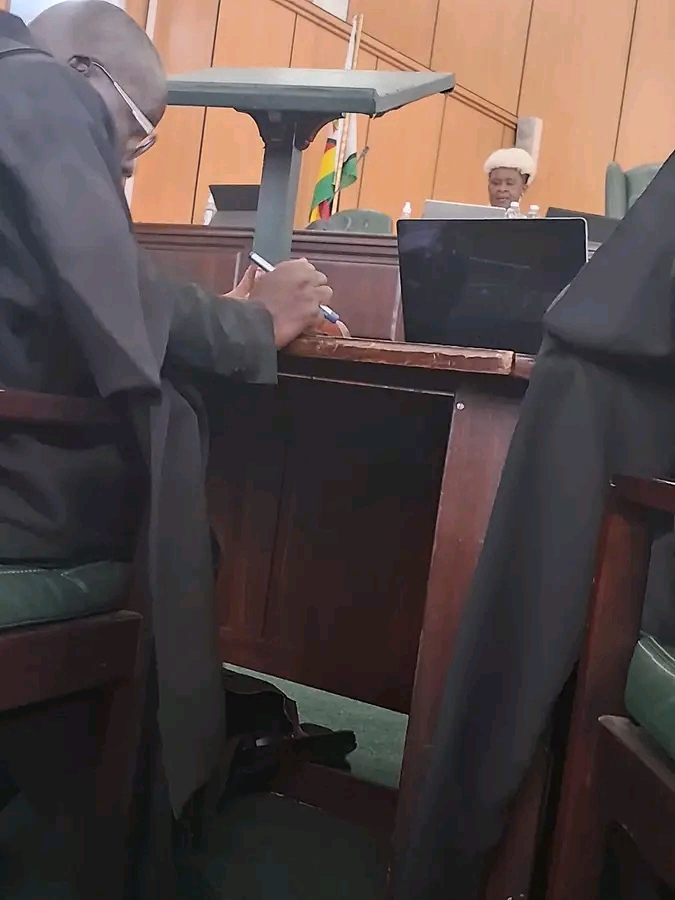
Zimbabwe Constitutional Court Reserves Judgment in Challenge to Amendment Ending Direct Presidential Elections
HARARE — Zimbabwe’s Constitutional Court on Monday reserved judgment in Case CCZ278/26, a legal challenge by Eliphas Kawa and Hazvineyi Machingura to key provisions of the Constitution of Zimbabwe Amendment (No. 3) Act, 2026.
The applicants are seeking direct access to the court for a declaration that parts of the amendment are constitutionally invalid.
Their case centres on the removal of citizens’ right to elect the president by popular vote and the addition of presidential appointees to the Senate.
Under the amendment, signed into law by President Emmerson Mnangagwa on 7 July 2026, Section 92 of the Constitution was repealed and replaced.
The president is now elected by members of Parliament sitting jointly as the Senate and National Assembly, rather than through a direct nationwide ballot.
A candidate requires more than half of the valid votes cast; a runoff is held if necessary.
The amendment also expands the Senate by allowing the president to appoint 10 additional senators on the basis of professional skills.
Kawa and Machingura argue that the changes strip citizens of the right to elect a president of their choice under Section 67 of the Constitution without a referendum, and that the Senate appointments violate the basic structure of the Constitution.
The application is brought against the Minister of Justice, Legal and Parliamentary Affairs, Parliament, the President and the Attorney-General.
The court is expected to first rule on whether the applicants should be granted direct access before considering the substantive constitutional arguments. No date has been set for the delivery of judgment.
The amendment has faced multiple legal challenges.
Critics describe it as one of the most far-reaching changes to the 2013 Constitution, while the government maintains it completed all required legislative stages. Several related cases remain pending before the Constitutional Court.