

THE UPCOMING HIGH COURT PROCEEDINGS IN THE MATTER OF THE STATE V. BRIAN MUNDUBILE AND 17 OTHERS
As the constitutional bail application and related proceedings for Hon. Brian Mundubile, Makebi Zulu, and 16 others come before the Lusaka High Court tomorrow, Thursday, November 5, 2026, I find it imperative, both as President of the Socialist Party and as a jurist committed to the integrity of our constitutional order, to address the profound legal questions surrounding the administration of this case.
The Socialist Party underscores that the bedrock of any functioning democracy is an unyielding commitment to the rule of law, due process, and judicial transparency.
While we recognise and respect the statutory mandate of the Zambia Police Service to maintain public order and manage security under the Zambia Police Act, a critical distinction must be maintained between legitimate crowd management and the systematic infringement of constitutional rights.
The visible trend of completely sealing off court premises, deploying human barriers, and restricting physical access to an arbitrarily selected few represents a severe distortion of the open justice principle.
As a lawyer with a very high interest in jurisprudence, I must remind the state of the clear text of Article 18(10) of the Constitution of Zambia, which commands that all criminal and civil proceedings be held in public. The right to an open trial is not a mere procedural formality; it is a substantive constitutional guarantee designed to ensure judicial accountability and maintain public confidence in the administration of justice.
This principle is fortified by long-standing common law precedents heavily integrated into Zambian jurisprudence. As established by the Privy Council in the landmark case of Macpherson v. Macpherson (1936), public access to court proceedings is an essential safeguard against the abuse of state power, ensuring that the concealment of legal proceedings is strictly forbidden except under the most extraordinary and legally defined circumstances.
While Article 18(11)(a) of the Constitution provides a narrow proviso allowing for the exclusion of the public in the interest of defence, public safety, or public order, the invocation of an in camera or restricted proceeding is a matter of strict judicial discretion. It belongs exclusively to the presiding bench, in this matter, the three-judge panel consisting of Justices Derrick Mulenga, Davies Chibwili, and Ireen Wishimanga, not to the unilateral decree of law enforcement officers at an exterior security checkpoint. When the executive branch, through the police, acts as an autonomous gatekeeper to a fundamentally public constitutional hearing, it encroaches upon the independence of the judiciary and violates the sacred principle of the separation of powers.
Furthermore, any restriction placed on a derogable constitutional right must satisfy the strict test of proportionality. It must be the least restrictive means necessary to achieve a legitimate purpose.
Screening for weapons and managing crowd flow to ensure courtroom safety are permissible; a blanket blockade that deliberately obstructs journalists, legal observers, and the general public from witnessing the treatment of citizens in state custody is legally and democratically indefensible.
The Socialist Party calls for a balanced, legally sound approach to tomorrow’s proceedings. We urge the police command to align their operational tactics with constitutional standards, ensuring that the High Court remains an open and accessible forum. Concurrently, we call upon all citizens, party members, and observers attending the court to exercise their rights with the utmost discipline, peace, and respect for judicial order.
The integrity of our republic relies entirely on our willingness to defend the Constitution when it is tested. Let the law, and nothing else, take its course tomorrow.
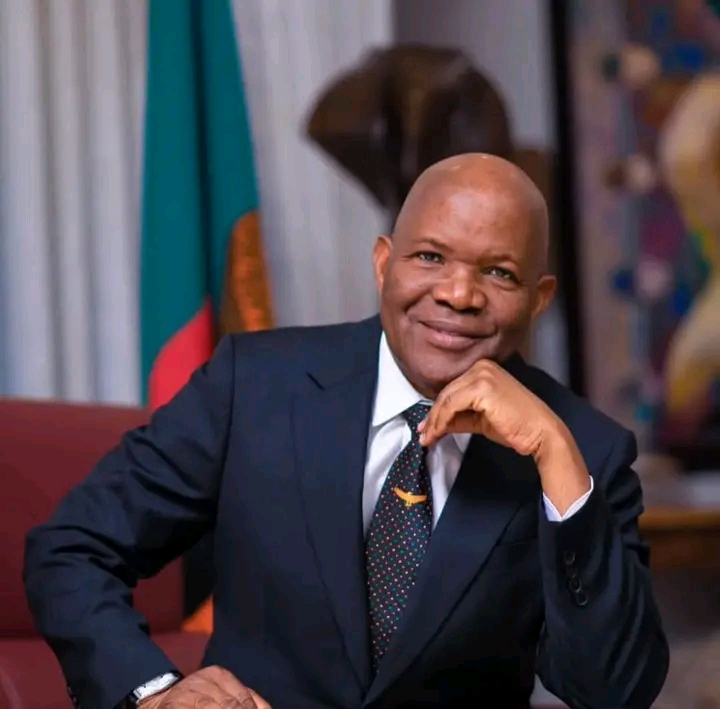
Fred M’membe
SP President