LUNDA CULTURAL ASSOCIATION REJECTS CLAIMS EXCLUDING LUNDA PEOPLE FROM MUKANDA AND MAKISHI HERITAGE
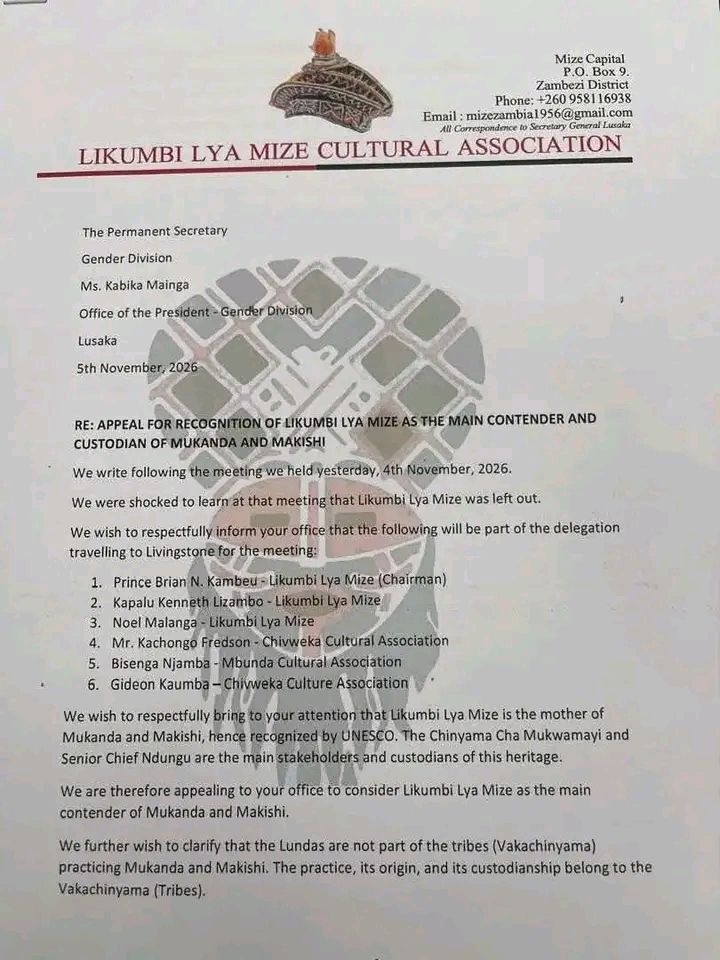
The Lunda Cultural Association of Zambia (LUCAZ), representing Lunda Royal Highnesses, has strongly rejected claims allegedly made by the Likumbi Lya Mize Cultural Association that the Lunda people do not practise the Mukanda initiation ceremony and Makishi cultural traditions
In a letter dated 8 November 2026, addressed to the Permanent Secretary in the Gender Division at the Office of the President, LUCAZ Vice-President Webby Kamangala described the claims contained in a letter dated 5 November 2026 as inaccurate, historically questionable and inconsistent with published cultural documentation.
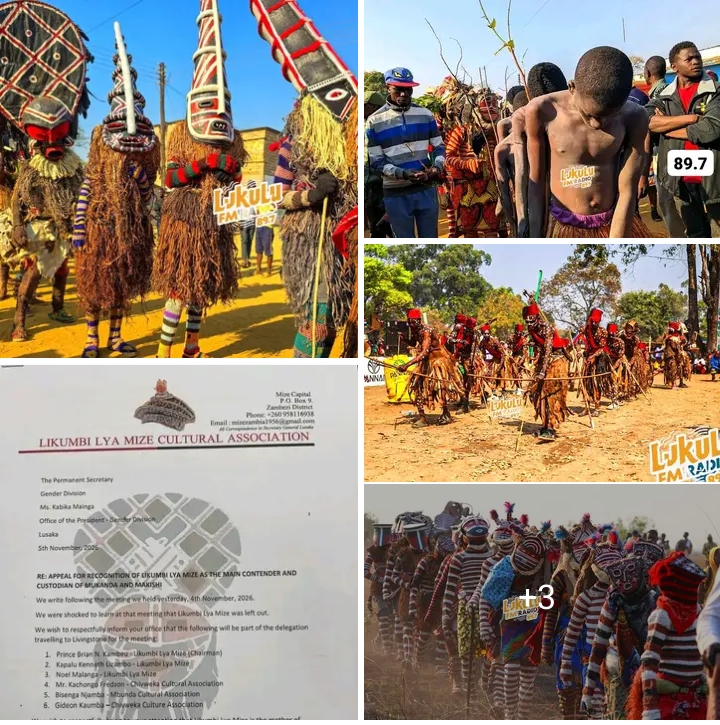
The Association maintains that the Lunda people have practised Mukanda and Makishi traditions for generations, with boys undergoing the initiation ceremony before proceeding to another traditional stage known as Mung’ong’i. It further identifies several Lunda Makishi, including Katotola, Mudimbula, Chikumbu and Invwengi, among others
To support its position, LUCAZ cites documentation from the Getty Research Institute, which identifies the Lunda among communities associated with Makishi masquerades and the Mukanda initiation ceremony. It also references the Fowler Museum at the University of California, Los Angeles, which documents Makishi traditions among several communities, including the Lunda, Chokwe, Mbunda, Luvale/Lwena and Luchazi.
The Association has also challenged what it describes as the misplaced invocation of UNESCO recognition to justify exclusive cultural ownership. It notes that UNESCO’s recognition of the Makishi masquerade, initially proclaimed in 2005 and inscribed on the Representative List of the Intangible Cultural Heritage of Humanity in 2008, does not establish exclusive ownership or deny the cultural connections of other communities.
LUCAZ acknowledges the contribution of Likumbi Lya Mize, Senior Chief Ndungu and the communities that continue to preserve these cultural traditions. However, it insists that such recognition must not come at the expense of other communities whose cultural practices are also documented.
The Association is now calling for the withdrawal or correction of the alleged claims against the Lunda people and has urged Government institutions to facilitate inclusive consultations involving traditional authorities, cultural practitioners and representatives of all communities with documented historical and cultural connections to Mukanda and Makishi.
“Mukanda and Makishi should be safeguarded through truth, mutual respect and cooperation. The blanket exclusion of the Lunda people is unsupported by the published evidence and must be rejected,” the Association states.
The letter has been copied to Senior Chief Ishindi Mankaki Kazanda Chanyika III, Senior Chief Sailung’a Kaata I, Senior Chief Museli Musokantanda IV, Senior Chief Kanong’esha and UNESCO.
The unfolding cultural heritage dispute raises important questions about historical identity, traditional custodianship and the need for dialogue to ensure that the cultural heritage of different communities is respected and preserved.
By Lukulu Fm.