

WHEN PRESIDENTIAL AMBITION OUTSTRIPS THE GOVERNMENT’S FISCAL IMAGINATION: HOW THE 2027 NATIONAL BUDGET UNDERMINES THE GROW ZAMBIA AGENDA 📊 THE PEOPLE’S ECONOMICS
There is something disconcerting about a nation whose President proclaims an extraordinary programme of economic transformation, only for the national budget to emerge without a sufficiently convincing financial pathway for translating those pronouncements into reality.
On 9 October 2026, President Hakainde Hichilema delivered an ambitious address to Parliament under the Grow Zambia Agenda. On 6 November 2026, the Minister of Finance presented the K284.77 billion National Budget for 2027. Having examined the two addresses, I am troubled by the considerable distance between the magnitude of the President’s declared ambitions and the fiscal instruments through which his Government proposes to accomplish them. This discrepancy deserves urgent national attention.
For the avoidance of doubt, although I am a constituent partner in the governing alliance, I neither participated in the formulation of the 2027 National Budget nor recall being afforded any formal opportunity to contribute to its preparation or substantive policy direction. I therefore offer this analysis in my independent capacity as an intellectual and patriot, exercising the liberty of conscience and expression, unencumbered by any oath of secrecy or obligation of institutional allegiance that would inhibit my duty to interrogate public policy with intellectual independence, candour and fidelity to the national interest.
I participated in the 2026 election campaign. I travelled, mobilised, defended our collective commitments and encouraged Zambians to believe in the economic possibilities of a renewed mandate. I therefore speak with a personal appreciation of the promises made to our people and the expectations we helped cultivate. Those of us who grew up in a culture where fidelity to one’s word was an inviolable moral obligation cannot conveniently abandon those undertakings after an electoral victory. A living conscience does not become dormant merely because the campaign has ended. It interrogates whether the commitments we proclaimed before the electorate are being actualised through the decisions of government. Political conscience must survive political convenience.
The President enunciated an economic vision of exceptional audacity, encompassing a sweeping transformation of Zambia’s productive capacities and an ambitious reconfiguration of its developmental trajectory. He announced an agenda to more than double the size of Zambia’s economy relative to when his administration assumed office. He proclaimed annual production targets of ten million tonnes of maize, three million tonnes of soya beans, one million tonnes of wheat, one million tonnes of sugar and three million tonnes of copper.
He envisaged 500,000 hectares under irrigation, eleven million cattle, one billion United States dollars annually in beef exports, five million international tourist arrivals and electricity generation capacity of 10,000 megawatts. These were commitments of immense economic magnitude, requiring unprecedented coordination of agricultural financing, industrial investment, infrastructure development, energy security, technological advancement and institutional execution.
The President went further. He announced an accelerated programme for constructing four international petroleum pipelines connecting Zambia with Angola, Namibia, Tanzania and Zimbabwe. He directed the implementation of fuel blending to reduce petroleum imports and stimulate domestic ethanol production. He proposed reviewing the Energy Regulation Board’s monthly fuel pricing mechanism and strengthening the TAZAMA open access system to make petroleum more affordable.
He announced that government institutions would henceforth acquire only electric vehicles, supported by charging infrastructure across the country. He spoke of artificial intelligence, domestic data centres, nationwide digital connectivity, industrial parks, regional transport corridors, modern universities, skills training centres in every district, affordable housing and a Healthcare City capable of positioning Zambia as a regional medical destination. This was an ambitious vision of a technologically sophisticated, industrially productive and economically competitive Zambia.
In conspicuous contradistinction to these presidential aspirations, the 2027 Budget does not sufficiently demonstrate how these transformative undertakings will be financed, sequenced and delivered. The Minister proposes real GDP growth of at least 4.9%, alongside K10.8 billion in additional net revenue measures, including an increase in VAT from 16 to 16.5%, a new 39.5% marginal PAYE rate and higher taxes on selected productive activities. Where is the comprehensive investment trajectory for doubling the economy?
Where is the quantified industrial expansion programme capable of delivering the President’s production targets? How will additional taxation affect the disposable incomes, enterprise liquidity, domestic savings and capital accumulation upon which private sector led industrialisation depends? Fiscal consolidation may be necessary, but it cannot become an alibi for insufficient economic ambition.
The petroleum sector exposes one of the most conspicuous omissions. While the President explicitly promised ethanol blending, electric only government vehicle procurement, charging infrastructure and four international petroleum pipelines, the Minister’s petroleum discussion concentrates principally on TAZAMA and the proposed Tanzania multiproduct pipeline.
The other pipeline commitments receive no equivalent implementation treatment. Neither ethanol blending nor the electric vehicle transition is accompanied by a distinct, costed programme in the budget address. These are potentially transformative interventions involving agriculture, manufacturing, transport, foreign exchange savings and energy security. Their absence from the Minister’s detailed fiscal exposition invites searching scrutiny of the coherence, credibility and economic viability of the Government’s fiscal direction and the readiness to execute the President’s directives.
Agriculture presents an even more distressing contradiction. The President wants ten million tonnes of maize and unprecedented expansion in other crops, but farmers who have already supplied agricultural produce remain burdened by billions of kwacha in outstanding Food Reserve Agency payments. The Minister proposes K9.05 billion for FISP while announcing its eventual transition towards an agricultural loan scheme. There are proposals for mechanisation, farm blocks and irrigation, but no sufficiently detailed annual financing and production schedule demonstrating how the President’s targets will be achieved. A country cannot proclaim agricultural abundance while allowing the financial exhaustion of the very producers upon whose labour that abundance depends. The immediate payment of farmers is an economic imperative of exceptional urgency.
The same questions arise across mining, tourism, livestock, manufacturing and electricity. The Minister projects 930,000 tonnes of copper production in 2026 against the President’s eventual ambition of three million tonnes annually. He projects the addition of more than 1,400 megawatts of electricity capacity in 2027, a welcome intervention, but the complete investment and delivery pathway to 10,000 megawatts must be demonstrated. Tourism receives approximately K1.36 billion, while the target is five million international visitors annually. The budget provides K100 million for beef disease free compartments against the aspiration of one billion dollars in annual beef exports. These interventions may contribute to the targets, but the country deserves evidence that their combined scale, financing and implementation schedules are commensurate with the magnitude of the President’s undertakings.
The contradiction extends to our young population. The President speaks of artificial intelligence, industrialisation, technological innovation and a new generation of skilled entrepreneurs. The Minister provides for digitalisation, training and a proposed K5 billion small business guarantee initiative. The President’s wider technological programme, including domestic data centres and the integration of artificial intelligence into education and public administration, requires a clearly articulated investment and implementation strategy. A young nation cannot industrialise through the accumulation of policy declarations. Its youth require productive capital, accessible technology, functioning industries, competitive energy, practical skills and expanding markets.
In countries that have achieved accelerated development, the opening period of a presidential administration is treated as a decisive opportunity to establish administrative discipline, mobilise investment and initiate implementation. The first hundred days are particularly consequential as a test of governmental readiness and direction. They do not determine the entire fate of an administration, but they reveal whether the machinery of government is sufficiently prepared to translate political commitments into action. Zambia has entered the first year of a renewed five year mandate. Four years will remain after 2027. Five years are neither five decades nor five centuries. Time is an unforgiving economic variable. A government cannot indefinitely postpone the financing of its ambitions and expect the calendar to accommodate its administrative inertia.
What concerns me most is the apparent disparity between presidential aspiration and the Treasury’s fiscal disposition. The President has articulated an agenda of accelerated production, industrial expansion and technological transformation. The Minister has presented a budget heavily conditioned by revenue mobilisation, debt obligations and fiscal consolidation, alongside selected growth interventions. These objectives can coexist, but only through a demonstrably coherent programme of financing, investment and execution. The budget must disclose the annual production milestones, the required capital, the sources of financing, the responsible institutions and the measurable benefits expected by citizens. Otherwise, the Grow Zambia Agenda risks becoming an impressive catalogue of aspirations whose execution is perpetually deferred.
I believe that President Hakainde Hichilema should personally demand a comprehensive reconciliation of his parliamentary address with the 2027 National Budget. Every major undertaking must have an identifiable financing strategy, implementation timetable and performance benchmark. Where private investment is anticipated, the Government must disclose the investment pipeline and the regulatory conditions required to mobilise it. Where public expenditure is necessary, the budget must demonstrate the corresponding allocation and its adequacy. Where existing expenditure priorities obstruct productive transformation, those priorities must be reexamined with courage and intellectual independence.
The Zambian people have endured too much economic hardship to be offered another cycle of magnificent promises followed by inadequate execution. Our country possesses abundant natural resources, a predominantly youthful population, immense agricultural potential and strategic access to regional markets. What it requires is an administration capable of converting those advantages into productive wealth with exceptional urgency, fiscal ingenuity and administrative discipline.
We cannot continue governing as though presidential promises belong to one institution, fiscal decisions to another and the consequences of their disconnection to the suffering population. The integrity of public leadership is measured by the correspondence between what is promised, what is financed and what is delivered. That is the standard by which the 2027 National Budget must be judged. That is the obligation we owe the electorate, and that is why I believe Zambia must radically change the way it conceives, finances and executes national development.
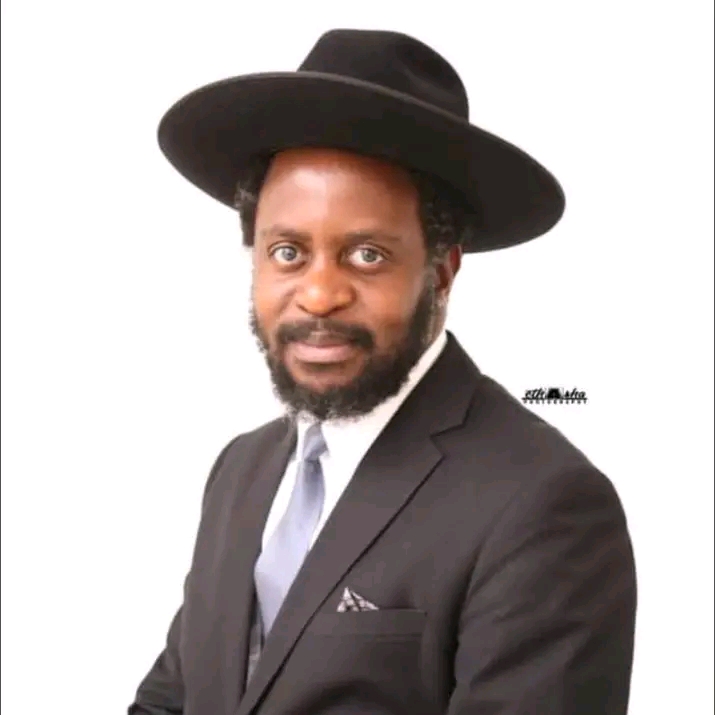
Saviour Chishimba
(Yehudah Ben David) – Jewish Scholar
Principal & Founder
THE PEOPLE’S ACADEMY