

🇿🇲 INSIGHT | The Church Cannot Decide This One
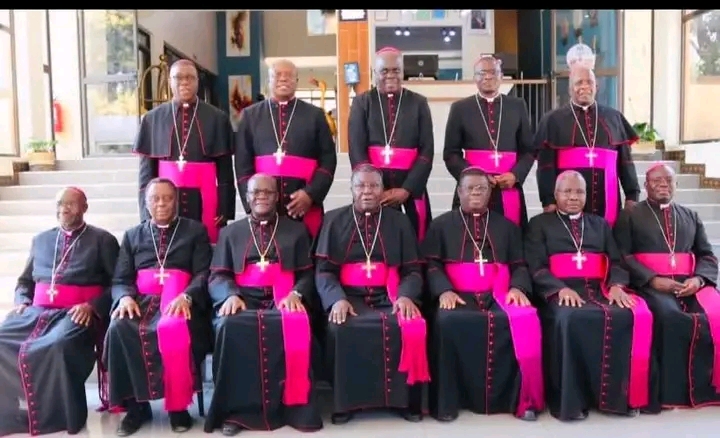
Zambia’s Catholic Bishops have called on President Hakainde Hichilema to defend the country’s presidential term limits. In their statement of 20 November, the Zambia Conference of Catholic Bishops (ZCCB) urged him to declare publicly and unequivocally that he would honour the existing constitutional restriction. Their position has revived memories of the successful campaign against Frederick Chiluba’s third-term ambitions in 2001. However, those expecting history to repeat itself may be overlooking how profoundly Zambia’s political and religious landscape has changed.
Speaking at the opening of the UPND Southern Province secretariat in Choma, Hichilema maintained that he respected the Constitution and would continue doing so, while defending citizens’ freedom to express their views. He also declared his desire to see the governing party survive beyond his leadership, saying, “We are making such investments now because we want the UPND to outlive my legacy, so that the party continues to be appreciated by generations to come.”
Some have interpreted his remarks as a response to pressure from the Catholic Bishops. Green Party president Peter Sinkamba, writing on Facebook, similarly expressed confidence that the bishops’ position would exert decisive pressure against the removal of presidential term limits. His argument reflects a familiar political belief: when the Catholic Church speaks firmly against a constitutional proposal, those promoting it face a formidable obstacle.
Such confidence deserves closer examination. Hichilema’s remarks and the bishops’ statement emerged on the same day, but their proximity does not establish that one prompted the other. More importantly, affirming respect for the Constitution as it stands is not necessarily a commitment to oppose every future amendment. Those assuming that the President has already yielded to religious pressure may be underestimating the political calculations surrounding this debate.
History explains why the Catholic Bishops command such considerable influence. During Chiluba’s third-term campaign in 2001, Catholic leaders joined other churches, the Law Association of Zambia and civil society organisations under the Oasis Forum to resist constitutional changes intended to prolong his presidency. Their collective mobilisation helped defeat the proposal and preserve an important democratic safeguard. Catholic leadership consequently acquired considerable moral authority in matters of constitutional governance.
But the success of that campaign rested on more than the Catholic Church’s influence. It was supported by a broad coalition of religious institutions, civil society and political actors united around a common objective. That unity cannot automatically be assumed today.
One of the most important changes is the democratisation of influence within Zambia’s religious establishment. Catholic leaders remain prominent in national governance discussions, but other Christian organisations have increasingly established their own voices, constituencies and channels of engagement with political authority. Religious influence is no longer concentrated around a few established institutions. Groups that once occupied the margins of national political discussions now participate more visibly, sometimes advancing positions different from those of the traditional church mother bodies.
Among these organisations is the House of Clergy, whose growing engagement with State House illustrates this changing relationship between religion and political power. Information obtained by The People’s Brief indicates that the organisation does not believe President Hichilema should be drawn into a debate initiated by citizens. Its reasoning is that Zambians have a democratic right to express their preferences about political leadership, including whether existing presidential term limits should be retained or reconsidered. Such expressions, according to this position, should not automatically be attributed to the President.
This distinction is politically significant. While the Catholic Bishops want Hichilema to personally reaffirm his commitment to the existing restriction, the reasoning attributed to the House of Clergy places greater emphasis on citizens’ freedom to initiate constitutional discussions. It does not, by itself, establish that the organisation has formally endorsed removing presidential term limits. Nevertheless, the difference reveals how religious institutions can approach the same constitutional question from competing democratic perspectives.
Here lies the central weakness in assuming that Catholic opposition will necessarily prevail. Those who welcome the bishops’ position must recognise that other Zambians are equally entitled to welcome a contrary position from the House of Clergy or another Christian organisation. If Catholic leaders can speak against removing presidential term limits, other religious leaders can argue that citizens should be allowed to seek their removal. Both positions can attract public support, even if their influence and following differ considerably.
Democracy does not confer an exclusive voice upon any religious institution. Nor does the historical authority of one church invalidate the political opinions of another. Some Christians will agree with the Catholic Bishops, while others may support organisations defending the right of citizens to pursue constitutional change. Neither side can claim to represent the entire Christian community merely because its leaders have spoken.
Politicians understand this reality. Divisions within established institutions create opportunities for competing political interests to seek legitimacy. When one religious organisation condemns a proposal, another may offer an interpretation favourable to its proponents. Political actors can draw upon these differences to demonstrate that opposition is not universal. No elaborate conspiracy is required. Even if the House of Clergy remains silent, another organisation could publicly support the proposed changes and attract its own following. Once religious voices are divided, the political question becomes which position commands sufficient influence to shape decisions, rather than which church has spoken first.
Zambia has already witnessed this during the controversy surrounding Constitution Amendment Bill No. 7 of 2025. Catholic leaders and other established church bodies opposed the amendment process, while the House of Clergy and other organisations expressed support for the reforms. Despite considerable public criticism, Parliament passed the Bill at its third reading with 135 votes in favour and none against. President Hichilema subsequently assented to it. Although Bill No. 7 did not seek to remove presidential term limits, its passage demonstrated that opposition from influential religious institutions does not automatically translate into legislative defeat.
Another difficulty concerns the state of the political opposition. Unlike the UPND during its years outside Government, today’s opposition lacks a cohesive national movement capable of sustaining pressure across constituencies. Opposition parties remain fragmented, and much of their political engagement is confined to statements, interviews and social media. NRPUP has brought together some opposition figures, but its capacity to mobilise sustained national resistance remains untested.
Consequently, the Catholic Bishops and civil society organisations could find themselves carrying much of the public opposition to any proposed amendment. Their voices may be influential, but moral authority is not a substitute for political organisation. Public statements can shape opinion, but they cannot cast votes in Parliament.
Attention must therefore turn to the National Assembly, where the constitutional argument would ultimately face its most consequential test. Article 106(3) of the Constitution provides that a person who has twice held office as President is not eligible for election as President. Article 79 requires a proposed constitutional amendment to be published at least 30 days before its first reading and supported by not less than two-thirds of all Members of Parliament at both the second and third readings. Removing the restriction under Article 106(3) would not, by itself, require a referendum.
Petitions concerning presidential term limits have already reached Parliament, although they do not constitute an amendment Bill. Should a formal proposal eventually emerge, the parliamentary numbers will become decisive. UPND’s considerable strength in the National Assembly gives the governing party an important advantage. Members would still have to decide whether to support such a proposal, but those opposed would need sufficient votes to prevent it from securing the required constitutional majority.
This raises a question largely missing from the present debate: do those opposed to removing presidential term limits have the parliamentary numbers, or the political influence necessary to deny proponents the required two-thirds majority? If not, can they build a coalition capable of persuading enough MPs to reject the proposal? The experience of Bill No. 7 should caution against assuming that public criticism necessarily reflects the voting intentions of elected representatives.
Hichilema’s position adds another dimension. Government has maintained that it has no proposal to reopen presidential term limits, while the President continues to defend citizens’ freedom to express their views. This leaves supporters free to advocate constitutional change without the President publicly assuming ownership of their campaign. Whether this reflects deliberate political strategy remains unproven. Nevertheless, it is a politically consequential distinction, particularly if supporters eventually seek to translate their demands into parliamentary action.
For Hichilema, an orderly succession would give practical meaning to his declared desire for UPND to outlive his leadership. His second term offers an opportunity to strengthen institutions, deliver development commitments and prepare his party for a future beyond his presidency. Constitutional safeguards should endure beyond the political fortunes of those who temporarily occupy State House.
Ultimately, the Catholic Bishops remain a formidable voice, but Zambia’s political landscape is no longer that of 2001. Religious influence has become more widely distributed, the opposition is fragmented, and parliamentary numbers favour the governing party. Those expecting the Church to reproduce its historic success may be underestimating these realities. The Catholic Bishops can influence the debate, but Parliament will determine the legislative outcome. Whether opponents of the proposed changes can assemble the numbers to defeat them remains the decisive political question. Time will tell.
The People’s Brief | Ollus R. Ndomu
21 November 2026