

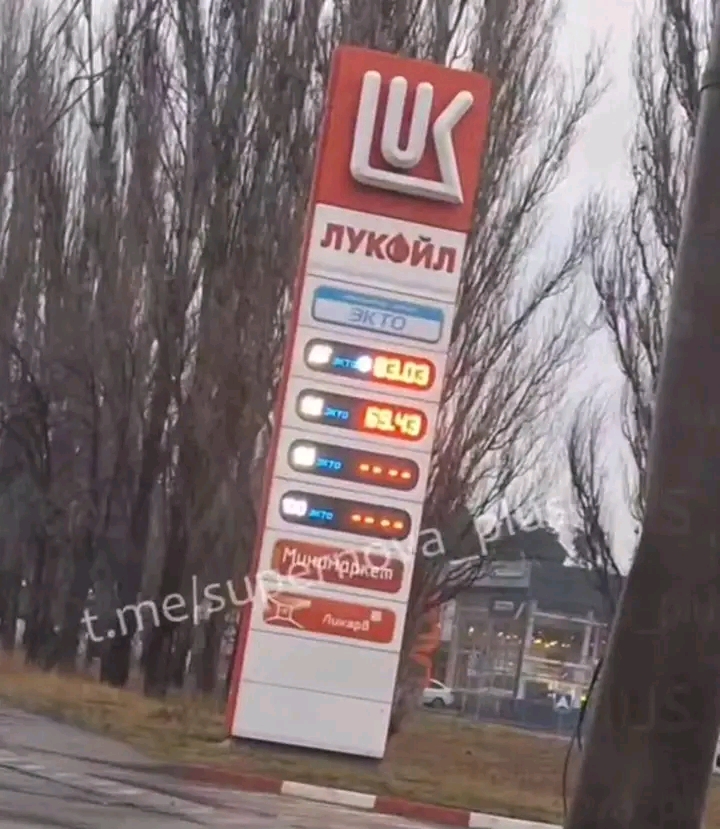
RUSSIA’S FUEL SQUEEZE — HIGHER PRICES, QUEUES AND LIMITS AT THE PUMP
The refinery strikes we havebeen following are reaching beyond the burning facilities. More Russian regions are restricting fuel sales as reduced output puts pressure on supplies. For motorists, that means a more expensive tank—and, in affected areas, a search for a station that can fill it.
Russia’s own statistics show petrol prices had risen more than 15% this year by November 16, over twice the overall inflation rate. AI-95 petrol averaged approximately 76 roubles per litre, putting a 50-litre fill at around 3,817 roubles. The same amount of diesel cost roughly 4,355 roubles.
Availability is becoming another problem. Tomsk introduced purchase limits, Penza capped sales per vehicle, and occupied Sevastopol restricted motorists to a full tank and limited quantities in containers. Conditions vary, but these restrictions show the pressure on distribution.
Having enormous crude oil reserves does not automatically put petrol in a car. Russia still needs functioning refineries to process it, storage to hold it and transport to deliver it. Ukraine’s repeated strikes are disrupting that chain.
The consequences reach businesses too. More expensive or harder-to-find fuel can raise delivery costs and delay journeys. Moscow continues financing its invasion through energy revenues while struggling to keep parts of its own domestic fuel market supplied.