

Coronocracy 2026: Uganda Votes, the Crown Stays
…behold ‘King Museveni’ returns to the thrown
Amb. Anthony Mukwita-Sunday Reflections-
18 Jan. 26.
Uganda has once again performed its favourite national ritual: the election that looks suspiciously like a coronation.
Twenty-one million voters, fifty thousand polling stations, and a result so familiar it could have been photocopied from the last cycle.
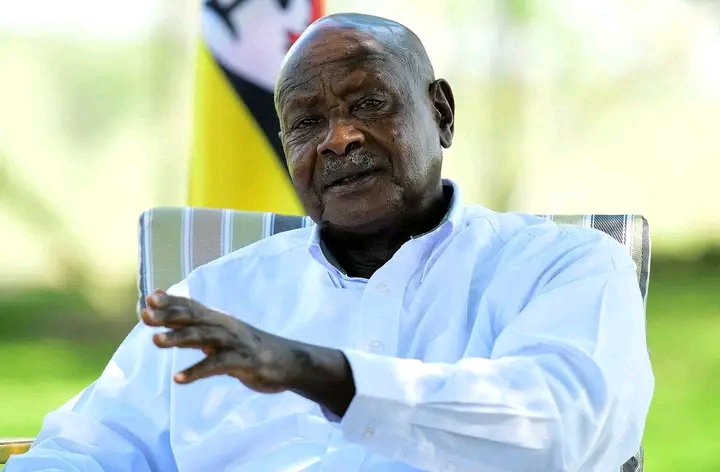
Yoweri Kaguta Museveni, the octogenarian president who has been in power longer than most Ugandans have been alive, emerged with 71.65% of the vote, an outcome announced by the Electoral Commission with the same solemnity one might expect at a royal investiture.
The numbers were tidy, the process orderly, and the conclusion inevitable. Democracy, in Uganda, is less about choice and more about choreography.
The opposition played its assigned roles in this tragicomedy. Bobi Wine, the pop star turned politician, spent much of the campaign encircled by security forces, his rallies throttled, his internet throttled, his oxygen throttled.
Dr. Kizza Besigye, Museveni’s former physician and perennial challenger, was once again sidelined by the familiar cocktail of arrests, prosecutions, and prolonged detentions.
Counting Besigye’s jailings is like counting rainy seasons, recurring, predictable, and never gentle. At the time of the polls, he was effectively neutralized, proving that in Uganda, opposition is not defeated at the ballot box but managed through the police docket.
Museveni’s longevity is no accident; it is constitutional engineering at its finest. Term limits were removed in 2005, age limits scrapped in 2017, and every institution that might have checked his power–courts, parliament, police, army–has been domesticated into loyal pets.
The constitution itself has become a rubber band, stretched, and reshaped to fit the contours of one man’s ambition. Uganda’s democracy is now a minimalist art installation: a ballot box, a soldier, and a constitution sculpted into modern furniture.
And just offstage, the oil drums hum. Uganda is poised to begin pumping its newly discovered oil deposits in 2026, promising billions in revenue.
The timing is exquisite. If you were scripting a leader’s perfect season, you’d write: “Win big, then open the taps.” The treasury will sing, the party will dance, and the president will remind everyone that stability has a price, and he accepts mobile money.
Is this the legacy of African democracy? Institutions as décor, elections as anniversaries, leaders as monarchs in civilian clothes.
Across the continent, Museveni’s peers nod approvingly. Paul Biya in Cameroon, Teodoro Obiang in Equatorial Guinea, Alassane Ouattara in Côte d’Ivoire, all have demonstrated that ballots can be ritual objects, not instruments of rotation
Coronocracy has a ring to it: government of the people, by the palace, for the pipeline.
So yes, Uganda held an election. And yes, a president won. But the crown didn’t move. The voters attended, clapped politely, and went home to watch the same movie next season.
The concern is this movie can play out anywhere in Africa if unchecked.
Democracy in Uganda is less about change than about continuity, less about ballots than about coronets. Eternal power until death do us part, an African love story written from Cape to Cairo.
–Analysis by Amb. Anthony Mukwita, Author & International Relations Analyst