

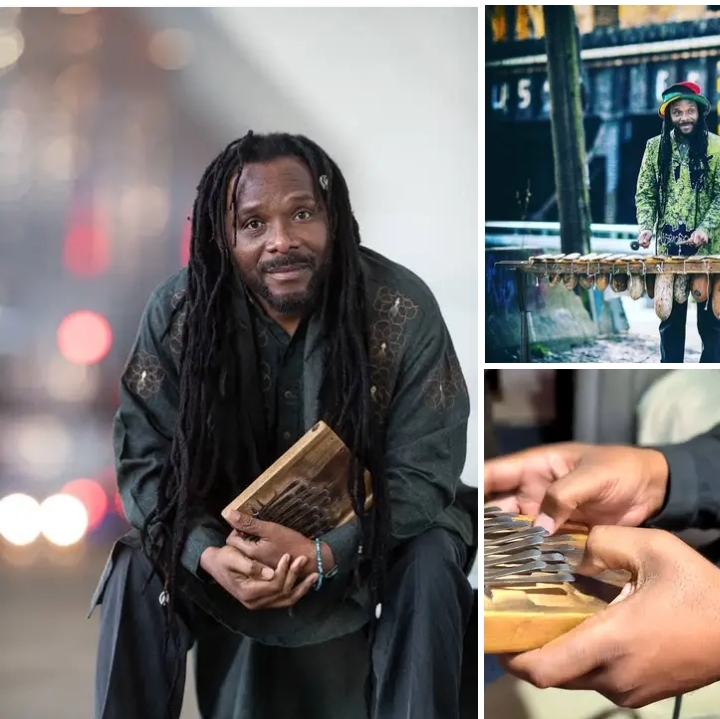
From Kaunda Square in Lusaka to concert halls in the United States – Mathew Tembo’s journey is one of the most remarkable stories in Zambian music.
It did not begin with a plan. Mathew lost his father when he was barely ten years old, inheriting the weight of being the oldest child in a family of five siblings. The expectation was clear – go to university, study accounting or business, earn money, support the family. Music was not part of that plan.
After finishing high school in the early 1990s, Mathew found himself in Lusaka’s Kaunda Square township listening to his neighbors rehearse reggae in their yard. A band called VAM – Victor, Alfred, and Martin – unknowingly lit a fire. He started writing. He started recording. And when he finished his first album, he met two Dutch tourists on a bus to Chipata who bought twenty cassettes before the album was even released. Months later, they wrote him a letter – by post, no social media then – and invited him to tour the Netherlands.
He flew to Europe alone. First time abroad. He formed a band with Dutch musicians and played gigs that kept multiplying. A three-month tour became six months. He recorded his second album, Save My Soul, in the Netherlands — the record that gave Zambia songs like Kuma Malyandimu.
But the turning point came not from success – it came from a question.
In 2004, auditioning at the Rhythmic Music Conservatory in Copenhagen, Denmark, Mathew played three reggae songs. A professor pulled him aside and asked, almost casually: “Why didn’t you play some Zambian music?”
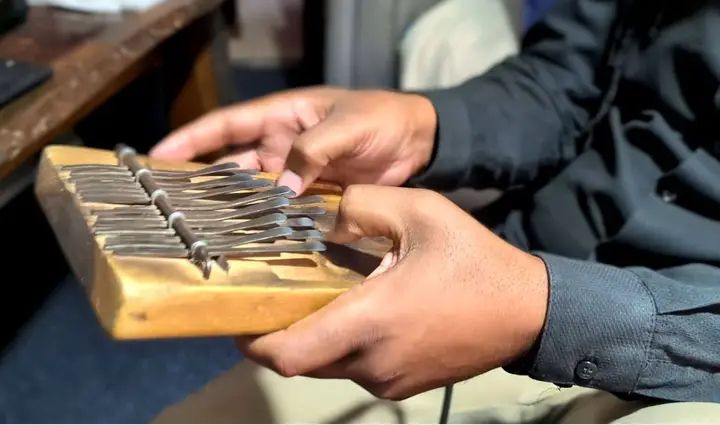
That question followed him home to Lusaka. He stopped performing. He walked the streets of Kaunda Square every evening, not knowing what came next. Then one night he heard it – the silimba, a traditional Zambian xylophone, being played by a boy at home. He followed the sound. He asked the boy to teach him. And in that moment, he knew he had found himself.
For six months, Mathew did nothing but play the silimba – eight hours a day, every day. He bought his own instrument from Western Province. He started writing songs on it, searching for a sound that could hold traditional Zambian music inside a modern band – the way Thomas Mapfumo had done with Zimbabwe’s mbira. He found his answer in the space between those worlds.
That sound became his signature. The silimba at the center. Electric instruments around it. Zambian heritage carried forward in a voice that could travel.
And travel it did. Mathew went on to perform at festivals and institutions across the United States, conducting workshops that introduced American audiences to Zambian musical traditions. The United States also became the place where he deepened his academic foundation – earning both his Masters and PhD in Ethnomusicology from the University of Pittsburgh, one of the world’s leading institutions in the study of music and culture. He became not just a performer but a cultural bridge – a Zambian artist and scholar whose work gave American audiences a direct encounter with a living musical heritage they had never heard before.
Today, Mathew Tembo is a lecturer and researcher in ethnomusicology at the Copperbelt University – bringing the same curiosity that sent him chasing a sound through Kaunda Square into the classroom, into academic research, and into the next generation of Zambian musicians.
He started with a question he could not shake. He answered it with the silimba – and Mathew Tembo has never sounded quite the same since.
#Freedom250
Photo credit: Mathew Tembo
Wow this man his youngest brother we used to LEAVE together in Kamwala Madras. Indeed he used to Enjoy music!
I believe Lawrence and Phillimon his Young brothers are enjoying his successes