

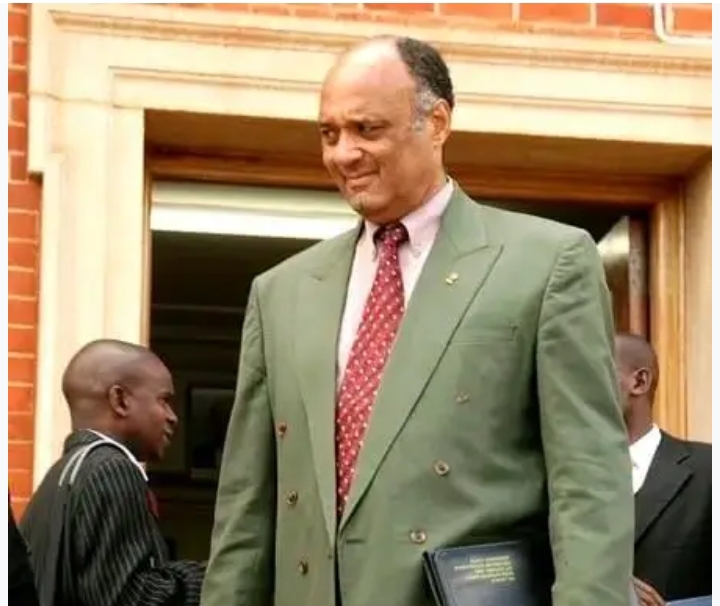
HARRINGTON RENEWS CALL FOR PEACEFUL SETTLEMENT OF BAROTSELAND DISPUTE
By Zambia Barotseland Border post
Reporter,
Former Nominated Member of Parliament, former Senanga Central Member of Parliament (1994–2001), and former Cabinet Minister in the Chiluba administration, William Harrington, has called for what he describes as an amicable and peaceful resolution to the long-standing Barotseland question.
In a statement sent to Zambia Barotseland Border Post, Harrington urged the Government of Zambia to pursue dialogue and lawful engagement over the Barotseland Agreement of 1964 (BA64), arguing that meaningful discussions remain the most appropriate way to resolve the decades-old dispute.
Harrington said the Barotseland Agreement has, for many years, remained a contentious subject, adding that public debate has often been influenced by what he considers misunderstandings of the historical and legal background surrounding the Agreement.
According to Harrington, the restoration of the Barotseland Agreement should not automatically be interpreted as a call for secession. Rather, he argued that it concerns the restoration of the constitutional and legal arrangements that existed between Barotseland and the Republic of Zambia before the Agreement was unilaterally terminated by the Zambian government in 1969.
He cited a statement issued on 16 February 2011 by then-opposition leader Hakainde Hichilema, in which Hichilema described the Barotseland Agreement as an international treaty and expressed concern over the treatment of individuals discussing the matter. Harrington said those remarks reflected the importance of respecting human rights, the rule of law, and open dialogue.
Harrington further stated that the Barotseland Agreement was signed in London in 1964 between Northern Rhodesia’s Prime Minister, Dr. Kenneth Kaunda, and the Litunga of Barotseland, Sir Mwanawina III, with Britain’s Sir Duncan Sandys witnessing the signing on behalf of the British Crown. He argued that the Agreement established the framework for Barotseland’s autonomous status within the newly independent Republic of Zambia while preserving the country’s unit
According to Harrington, subsequent legislative and constitutional changes, including the Local Government Act of 1969 and constitutional amendments made without the consent of Barotseland, fundamentally altered the terms of the Agreement. He contends that these actions breached the original arrangement and should be addressed through peaceful legal and political processes.
Harrington also maintained that, over the years, the people of Barotseland have consistently petitioned successive constitutional review commissions for the restoration of the Agreement. He alleged that some of those efforts were ignored and that certain demonstrations and political activities related to the issue were met with force by state authorities.
Referring to the resolutions adopted by the Barotse National Council (BNC) in March 2012, Harrington said they reflected growing frustration over the failure to restore the Agreement. He noted that the resolutions were endorsed by the Barotse Royal Establishment and attended by representatives from various Barotse communities.
He further highlighted the position of the Barotse National Freedom Alliance (BNFA), which has previously called for the release of the Rodger Chongwe Commission of Inquiry report into the 2011 Mongu disturbances. Harrington also said the BNFA had written to President Hakainde Hichilema in September 2021 expressing its willingness to resolve the matter through international arbitration, including before the Permanent Court of Arbitration in Geneva.
According to Harrington, the BNFA has indicated that it would accept the outcome of an impartial international arbitration process if the Zambian Government agreed to participate, with the aim of bringing the long-standing Barotseland impasse to a peaceful and conclusive resolution.
Harrington concluded by reiterating that dialogue, mutual respect, and adherence to the rule of law offer the best opportunity for resolving the Barotseland question in a manner that promotes lasting peace and national stability.
©️ Zambia Barotseland Border post/ 2026
Same old nonsense fimo fine,bwafya.