

🇿🇲 WEEKEND DIGEST | Mundubile’s Campaign Enters High Gear as Promises, Economics & Education Dominate National Debate
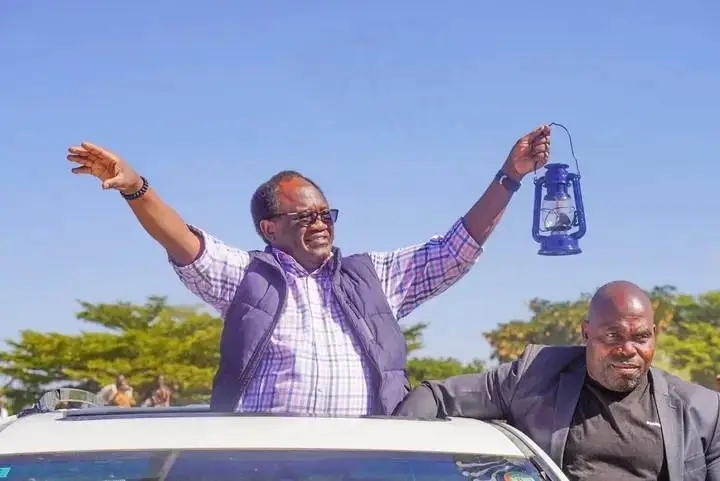
Brian Mundubile has emerged as one of the most active voices on Zambia’s campaign trail this week, moving across Eastern Province with a succession of rallies that have generated large crowds, dominated social media and triggered one of the campaign’s most intense policy debates so far.
From Nyimba, Katete, Sinda, Chipata and Malambo, the Tonse Alliance presidential candidate has delivered a rapid succession of promises, presenting himself as the alternative to the UPND’s economic programme while increasingly shifting from political messaging into detailed policy proposals.
No issue generated more discussion than his remarks on Zambia’s foreign exchange reserves. Addressing supporters in Nyimba, Mundubile argued that his government would prioritise improving household welfare over accumulating what he described as “figures.” “Reserve yatu nipa mimba,” he told supporters, adding that government should focus first on ensuring citizens have jobs, incomes and three meals a day before celebrating reserves, inflation and other macroeconomic indicators.
His remarks quickly spread across social media, where economists, business leaders, political commentators and ordinary citizens debated whether the opposition leader was creating a false choice between macroeconomic stability and household welfare.
The debate has been sharpened by Zambia’s recent economic trajectory. When the UPND assumed office in 2021, the country had already defaulted on its external debt, inflation was above 20 percent and gross international reserves were below US$2.7 billion. Since then, debt restructuring, stronger export earnings and tighter macroeconomic management have helped rebuild reserves to around US$6.5 billion while inflation has fallen to single digits.
Economists note that foreign exchange reserves are not idle cash available for political spending but strategic assets used to finance imports, support the kwacha, service external obligations and provide confidence to investors during periods of economic stress.
But Mundubile’s argument has also resonated with sections of the electorate confronting the realities of daily life. Many households continue to face pressure from the cost of living, unemployment and weak purchasing power despite improving national economic indicators.
The result is an increasingly important campaign debate: whether macroeconomic recovery is reaching ordinary citizens quickly enough and whether economic success should be measured primarily through national statistics or household wellbeing.
This debate is now shaping the tone of the election.
Education became the second major theme of Mundubile’s campaign during the week. Speaking at a rally in Malambo, he announced that a Tonse government would retain the UPND’s free education policy rather than abolish it. Instead, he argued that the next challenge is quality.
He cited overcrowded classrooms, overburdened teachers and high pupil-to-teacher ratios, promising to invest heavily in additional classrooms and school infrastructure with the objective of reducing class sizes to approximately forty pupils per teacher.
His statement effectively acknowledges that free education, once fiercely contested, has now become accepted across the political spectrum, shifting debate from whether it should exist to how it should be improved.
The policy shift is politically significant. Free education, introduced in 2022 and recently enacted into law, has returned more than 2.6 million children to school, expanded classroom construction through the Constituency Development Fund and contributed to a record Grade 12 pass rate of about 70 percent. By choosing to preserve rather than repeal the programme, Mundubile appears to recognise both its popularity and its political durability while attempting to reposition the opposition around implementation rather than reversal.
Throughout the week, Mundubile’s campaign style itself became part of the story. His rallies have been characterised by high energy, enthusiastic crowds and a fast-paced speaking style in which one promise quickly follows another. Supporters describe the approach as direct, accessible and energetic.
Critics argue that the rapid delivery often leaves limited room for scrutiny of how the expanding list of promises including debt swaps, higher student meal allowances, expanded fertiliser support, salary increases, infrastructure spending and other commitments, would be financed within the constraints of the national budget.
With the UPND preparing to formally launch its nationwide presidential campaign this weekend, Zambia’s election is entering a new phase. The early weeks were defined by organisational meetings on one side and mega opposition mobilisation on the other.
They are now giving way to a more substantive contest over economic philosophy, public spending, education, household welfare and the long-term direction of the country’s recovery.
As polling day approaches, the campaign is becoming less about who can fill a rally ground and more about who can persuade voters that their vision for Zambia is both credible and achievable.
© The People’s Brief | Ollus R. Ndomu
Mundubile still has a big day to cry when he loses on 13th August. Crowds in Eastern do not necessarily mean votes, at times people just come to see and listen to someone. You should also bear it in mind that Eastern Province had the highest number of MPs defecting to UPND before even Parliament was dissolved. I for one wouldn’t be surprised if the opposition loses Malambo, MZ’s bedroom, the Province is already shifted to UPND. You will see how red it will become when Bally goes there, Mundibile’s AI crowds wii be completely drowned in the Red Sea like Pharoh’s soldiers and their chariots. The economy and the eduction are on course, Mundubile can’t do anything new or better than what Hakainde is doing or has already done on the economy and education, bakaonaula fye.