

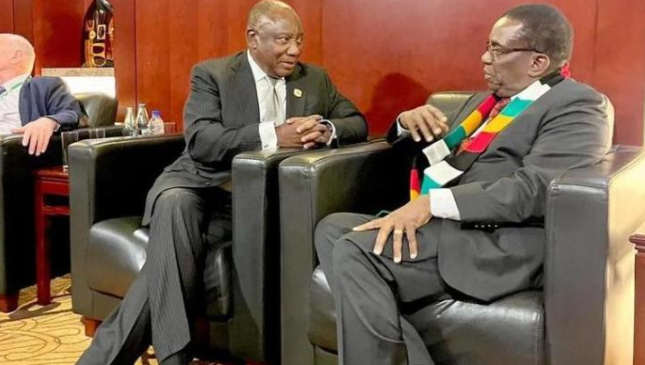
President Cyril Ramaphosa has sparked mixed reaction online after referring to his Zimbabwean counterpart, Emmerson Mnangagwa, as “my brother” during a meeting on the sidelines of the African Union Summit in Addis Ababa.
Ramaphosa, who was attending the 39th Ordinary Session of the AU Assembly, shared images of the engagement on X and Facebook, describing the interaction as a warm exchange between the two leaders.
“Good catching up with my brother President @edmnangagwa on the margins of the #AUSummit,” Ramaphosa posted.
The South African Presidency also circulated photographs of the meeting, stating that the two Heads of State met at the AU Headquarters in Addis Ababa and appending the hashtag #BetterAfricaBetterWorld.
However, it was not only the wording of the post that drew attention. Social media users dissected the images accompanying the message, with some commenting on the body language and facial expressions captured during the brief encounter. While supporters viewed the meeting as a routine diplomatic engagement reflecting regional solidarity, critics questioned the optics given ongoing political and economic challenges in Zimbabwe.
The summit itself has been dominated by discussions on peace, governance and security across the continent. In his address to fellow leaders, Ramaphosa raised concerns about unconstitutional changes of government and persistent instability in countries such as Sudan, South Sudan and the Democratic Republic of Congo.
He reaffirmed South Africa’s commitment to constitutional order, democratic governance and continental stability, in line with the AU’s long-term development blueprint, Agenda 2063.
The interaction between Ramaphosa and Mnangagwa comes amid continued scrutiny over relations between Pretoria and Harare, particularly on issues of migration, economic cooperation and political reform.
While the Presidency framed the meeting as a positive step in strengthening bilateral ties, online reaction suggests that symbolism and perception remain powerful factors in regional diplomacy.