

“Tanzania’s Democracy Hangover: Ballots, Blood, and the Big Swearing-In”
Amb. Anthony Mukwita Reflections-
2nd November 2025
As Dar es Salaam simmers across Zambia’s eastern border, Tanzania’s October 29 elections resemble less a democratic celebration and more a cautionary horror flick minus the popcorn.
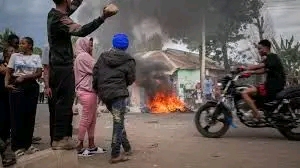
What should’ve been a routine civic exercise turned into a political purge: arrests, disappearances, and deaths. Ballots were cast, yes, but many were drowned out by the sound of sirens and the silence of vanished voices.
The pre-election atmosphere was already thick with dread. Amnesty International and the UN had sounded the alarm: civic space was shrinking, repression rising.
By voting day, nearly a hundred opposition figures had either vanished, been jailed, or met suspicious ends. Their names now circulate in hushed tones, mourned by families while the continent watches with a mix of horror and déjà vu.
Then came the diplomatic confetti. The African Union and SADC issued their usual statements—regretful, polished, and, to many, disturbingly premature.
Congratulations were extended even as cities burned, citizens bled, and the internet took a nap. One wonders: was there pressure to applaud before probing? Were AU and SADC playing cheerleaders while democracy limped off the field?
Shouldn’t a fact-finding mission have preceded the fanfare? The optics were damning, regional bodies seen to be endorsing chaos, not condemning it.
It’s the kind of PR disaster that makes one question whether these institutions are guardians of democracy or just glorified ribbon-cutters.
“This isn’t just about Tanzania,” analysts warn. “It’s about a continent where flawed elections are becoming the norm, and where institutions meant to safeguard democracy often arrive late, speak softly, and leave quietly.”
The AU, SADC, even ECOWAS—once imagined as Africa’s democratic watchdogs—now risk being seen as ceremonial mascots.
“Unlike the EU or NATO, which come armed with sanctions and consequences, Africa’s regional bodies seem more like rubber stamps with diplomatic passports.”
⚡ The Youthquake and the Fault Line
Tanzania’s turmoil also exposed a generational fault line. Gen Z—angry, unemployed, and digitally savvy—took to the streets demanding change. Their reward? Tear gas and bullets. Reports suggest over 500 deaths, though the government insists it’s all exaggerated. (Because nothing says “trust us” like a blackout and a body count, a sleeping internet.)
This isn’t an isolated tremor. From Madagascar to Kenya, youthful energy is colliding with aging regimes that treat power like a family heirloom. The result?
A continent caught between the promise of tomorrow and the paranoia of yesterday.
And yet, amid the blood and broken glass, there’s a flicker of hope. Civil society is stirring. Opposition parties are learning that silence is complicity. The outrage is growing louder, more organized, more urgent because democracy requires that.
Before the Swearing-In, Not After
The call now is for pre-emptive action. Stop the violence before the swearing-in, not after. Because once a president is inaugurated, reversing the damage becomes a diplomatic nightmare.
It’s like trying to unboil an egg—messy, impossible, and bound to leave everyone with egg-faced.
The who’s who list of detainees ahead of polls in TZ
1. Chadema Leadership Targeted
• Tundu Lissu, Chadema’s presidential candidate, was detained in April 2025 and faces treason charges. His trial continues under heavy scrutiny.
• John Heche, Chadema’s deputy chairperson, was arrested outside the High Court in Dar es Salaam while attending Lissu’s trial.
• John Mnyika, Chadema’s Secretary General, confirmed the arrests and accused security agencies of systematically detaining key opposition figures until after the election.
2. Pattern of Repression
• Reports from Amnesty International and the UN warned of Tanzania’s descent into authoritarianism, citing shrinking civic space and increased repression.
• Allegations include forced disappearances, arbitrary arrests, and extrajudicial killings of opposition members and activists.
• The government has denied responsibility for the reported 500+ deaths during protests, despite mounting evidence from civil society groups.
3. Lack of Transparency
• No official government or AU/SADC list of detainees has been released.
• Independent verification is difficult due to internet shutdowns, media restrictions, and limited access to detention centres.
DEMOCRACY LESSONS NOW
The lesson is clear: democracy must not be a blood sport. Elections should be about ideas, not injuries. And if leaders won’t listen to their people, then perhaps it’s time the people—and the institutions meant to protect them—spoke louder, sooner, and in peace.
The internet must be restored. The truth must be told. And as for H.E. Samia Suluhu Hassan, who has yet to be sworn in—could she pull a shocker and say, “Damn it, I quit. Too many have died, too much damage has been done”? Is there a snowball’s chance in hell?
Well, stranger things have happened. But in Africa, resignation is rarer than a unicorn in parliament.
—
Amb. Anthony Mukwita is an Author & International Relations Analyst.