

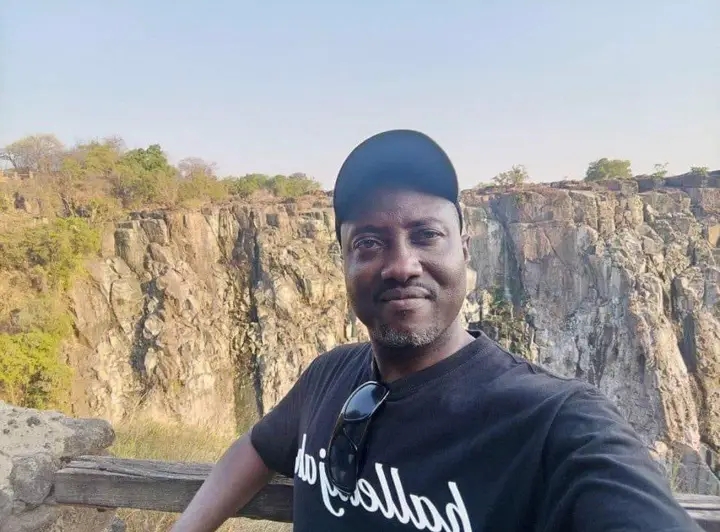
*THE LEGACY OF TUTWA NGULUBE, THE POLITICAL TITAN*
By Brian Matambo
There are men who pass through politics like shadows, present but hardly remembered. Then there are men who enter the arena and leave footprints deep enough for history to notice. Tutwa Sandani Ngulube belonged to the second category. He was not a whisper in public life. He was a voice. He was not a spectator in the national argument. He was a fighter. He was not merely a politician who occupied office. He was a political titan whose presence was felt in Parliament, in the courts, in the media, in the Patriotic Front, and in the defence of President Edgar Chagwa Lungu.
Tutwa Ngulube’s legacy cannot be understood through one title alone. To call him only a former Member of Parliament would be too small. To call him only a lawyer would be incomplete. To call him only a Patriotic Front loyalist would miss the larger picture. He was a lawyer, parliamentarian, political communicator, public defender, party warrior, family man, and a fearless voice in moments when many preferred silence. He carried law into politics and politics into public debate with the confidence of a man who believed that conviction must be spoken, not hidden.
As Member of Parliament for Kabwe Central, Tutwa represented one of Zambia’s most politically conscious constituencies. Kabwe is not a quiet town in the history of Zambian politics. It is a place of memory, labour, struggle, and political significance. To represent Kabwe Central required more than a seat in Parliament. It required presence. Tutwa had that presence. He brought colour, force, and argument into national affairs. He understood that representation was not simply about attending sessions and voting. It was about making the people feel that their voice had entered the room.
His legal background gave him a distinct edge. Tutwa was not a man who walked into political debate empty-handed. He came armed with legal reasoning, courtroom instinct, and a sharp tongue. In Parliament, on radio, on television, and in public discourse, he had the ability to turn a political matter into a legal argument. He could defend, attack, interpret, challenge, and provoke. His opponents may not always have liked his methods, but they could not easily ignore him. He had the rare ability to frame an issue in a way that forced the nation to respond..
But perhaps the strongest pillar of Tutwa Ngulube’s political legacy was his loyalty to President Edgar Chagwa Lungu. In the difficult period after the Patriotic Front left office, when the political winds shifted and many voices became cautious, Tutwa remained visible. He defended ECL. He defended the former First Family. He argued that the treatment of President Lungu and his family was not merely a question of law enforcement, but also a matter of political humiliation, selective pursuit, and an attempt to damage a legacy.
That loyalty mattered. In politics, loyalty is often praised in public but abandoned in private. Many stand close to power when the table is full, but step away when the storm gathers. Tutwa did not build his name on convenient loyalty. He stood as one of the recognisable voices willing to speak when others calculated the cost of speaking. For that reason, his name remains tied to the defence of ECL’s dignity, family, and political memory.
Tutwa was also a fierce political communicator. He understood the power of media before many politicians fully appreciated its force. He knew that politics is not fought only in Parliament or at party offices. It is fought in public perception, in interviews, in sound bites, in legal interpretation, and in the emotions of ordinary citizens. He could enter a media space and shift the temperature of the debate. Some politicians speak and disappear. Tutwa spoke and left a mark.
His style was not soft. It was not polished into diplomatic blandness. It was forceful, sometimes controversial, sometimes humorous, sometimes explosive. But it was never empty. He had the courage to be heard, and in the political life of a nation, that is no small thing. A democracy needs quiet administrators, yes, but it also needs loud advocates who disturb comfort, challenge narratives, and refuse to let one version of the story dominate the public square.
To his supporters, Tutwa was courageous. To his opponents, he was difficult. To the media, he was newsworthy. To the Patriotic Front, he was one of its boldest defenders. To the nation, he was unforgettable. That is the nature of political titans. They are not always universally loved. They are not built for universal approval. They are built for impact
Yet behind the fire was also a human being. Tutwa was a husband, a father, a friend, and a man remembered by those close to him for humour, warmth, and energy. His life was not only made of political battles. It was also made of family, friendship, music, and ordinary human affection. This matters because public figures are often reduced to their loudest moments. But every political warrior returns home as a father, a husband, a son, a friend. Behind the sharp public voice was a man loved by people who knew him beyond the headlines.
His death robbed Zambia of a voice that still had more to say. It robbed Kabwe of a son who had carried its name into national debate. It robbed the Patriotic Front of a fearless advocate. It robbed President Lungu’s circle of one of its most vocal defenders. It robbed the legal and political space of a personality that could not be manufactured, packaged, or replaced.
Tutwa Ngulube’s legacy is therefore not a small paragraph in Zambia’s political memory. It is the story of courage, loyalty, law, argument, controversy, humour, and conviction. He represented a generation of politicians who believed that public life was not for the faint-hearted. He understood that politics is a battlefield of ideas, narratives, loyalties, and power. He stepped into that battlefield with his voice raised and his armour on.
History will remember him not because he pleased everyone, but because he mattered. It will remember him because he stood where he stood without apology. It will remember him because he gave his party a voice in difficult times. It will remember him because he defended Edgar Chagwa Lungu when that defence was neither fashionable nor easy. It will remember him because, in an age of political caution, Tutwa Ngulube chose political courage.
And that is the legacy of a titan.
Tutwa Sandani Ngulube did not merely pass through politics. He fought in it, spoke through it, shaped it, and left behind a name that still carries weight. His chapter closed too soon, but his voice remains in the echoes of Zambia’s political memory.
Political titan ka!written by a friend or family member.
There is a simple befitting description of Mr. Tutwa Ngulube – he was a THUG and his thuggish behaviour permeated all his dealings as a lawyer, MP, politician and even as a family man.
When PF lost the elections in 2021, he tried to be cosy with the UPND but thank God, the UPND gave him a cold shoulder and rightly so. He was one of the PF officials who threatened to crush the bones of youths who where planning to demonstrate and the youths outwitted the Police Force (PF) by having an online protest.
Of course he played a major role in the “election” of Mr. Lungu at Mulungushi by the infamous acclamation and show of pangas in 2014 after the demise of Mr. Sata.
This man contributed immensely to the rot that was PF rule and made our lives miserable.
When PF cadres entered Pamozi hotel to disrupt a high profile meeting. He was laughing while other were panicking.. Good ridden, he was a nuisance.