

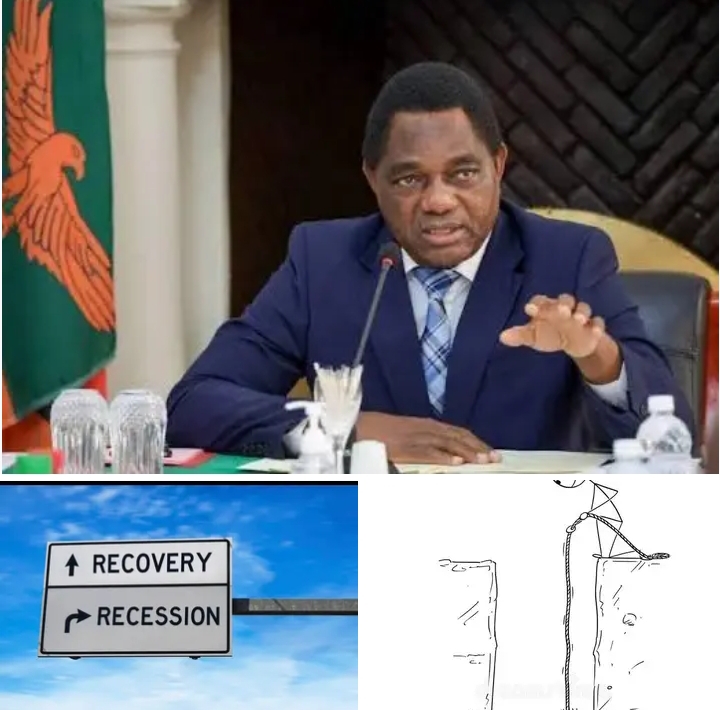
THE PAINFUL MEDICINE THAT SAVED THE PATIENT: REMOVAL OF SUBSIDIES AND UNDERSTANDING OPPORTUNITY COSTS
One of the most misunderstood decisions in Zambia’s economic recovery has been the removal of subsidies and the return to economic reality.
I have met some people who ask, “Why remove subsidies if they make life cheaper?” A subsidy is money that government pays to make something appear cheaper than its real cost. However, subsidies are not free. Someone always pays.
If government does not have the money, it borrows. If it borrows, future generations pay the bill. Thus, it was actually the government of rebranded masters of kaponyanomics who placed the burden on future generations. The UPND Alliance Government is fixing this mess.
Imagine a family earning K10,000 per month but spending K18,000. To maintain the illusion that everything is fine, the family borrows K8,000 every month. Life appears affordable, but it is not. The affordability is artificial. Eventually the debt becomes too much, the creditors arrive, and reality can no longer be avoided. That’s how Zambia defaulted and became a basket case.
During the reign of the now rebranded groups, borrowing increasingly became a substitute for production. Debt became a substitute for growth. Subsidies became a substitute for reform. The economy was being covered rather than cured.
President Hakainde Hichilema made a difficult decision. Instead of hiding the true condition of the economy, he chose to confront it. Painful as it was, Zambia had to return to reality before recovery could begin
This brings us to an important economic principle called opportunity cost. Every Kwacha spent on one thing is a Kwacha that cannot be spent on something else. If government spends billions maintaining unsustainable subsidies, that same money cannot be used for schools, hospitals, teachers, nurses, rural roads, water projects, or community development.
Should scarce national resources be used to temporarily hide economic problems, or should they be used to build long-term solutions?
Today, millions of Zambian children are benefiting from free education. Millions are learning on full stomachs through expanded school feeding programmes. Thousands of teachers and health workers have been recruited. Communities are accessing unprecedented resources through the Constituency Development Fund. These are not temporary price controls. These are long-term investments in Zambia’s future.
Many people also believe government can simply order prices to come down, but prices do not fall sustainably because of speeches or directives. Prices fall when production increases, when electricity becomes more reliable, when transport systems improve, when inflation declines, when investors gain confidence, and when the economy grows. That is how lasting affordability is created.
Economic recovery is not about making things look better. It is about making them better. It is not about appearances. It is about foundations. A country that refuses to face reality cannot solve its problems, but a country that confronts reality, however painful, creates the conditions for genuine progress.
The difficult decisions of today are often the foundations of tomorrow’s prosperity. The question before us is not whether the medicine was bitter. The question is whether the patient is recovering, and increasingly, the answer is becoming clear.
May the Almighty bless you. May the Almighty bless Zambia.
Saviour Chishimba
United Progressive People (UPP)
UPND Alliance Partner