

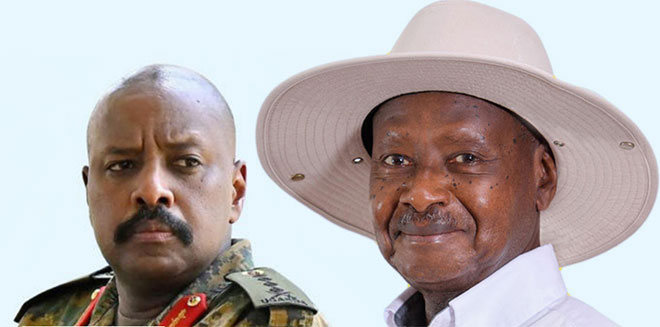
President Yoweri Museveni has said Uganda is considering allowing Starlink, the satellite internet service owned by billionaire Elon Musk, to operate in the country if it proves cheaper than existing underground fibre-optic connections.
The President revealed on Sunday that he has held discussions with Musk, who informed him that recent advances in satellite technology have significantly reduced costs. Museveni said the government is now studying whether Starlink could make digital connectivity more affordable for Ugandans.
“I have been in talks with Elon Musk; he has been telling me that his satellite, it is called Starlink. He has been telling me that satellite is now cheaper. We are studying that. If it is true, we shall allow Elon Musk to bring his satellites here if they can make digital connection cheaper than the underground,” Museveni said.
His remarks come less than two weeks to Uganda’s general elections, a period when internet and digital communication disruptions are widely anticipated, based on precedent from previous polls.
In anticipation of a possible internet shutdown, several Ugandans have reportedly imported Starlink equipment into the country to maintain online connectivity. This prompted intervention by authorities. The Uganda Revenue Authority (URA) imposed restrictions requiring anyone intending to import Starlink equipment to first obtain clearance from the Chief of Defence Forces, Gen. Muhoozi Kainerugaba.
In addition, the Uganda Communications Commission (UCC) wrote to Starlink expressing concern over the equipment that had already entered the country. In response, Starlink stated that it had not been licensed to operate in Uganda and subsequently cut off all internet connectivity provided through its equipment within the country.
For years, the government has invested heavily in the National Optical Fibre Cable Backbone, laying underground internet infrastructure along major highways to connect different parts of the country and support digitalisation and automation of public services.
Museveni recalled that Uganda previously relied heavily on satellite communication, which he said was prohibitively expensive and prompted a strategic shift to fibre-optic infrastructure.
“People were communicating by radio, by digital electronic through satellite, but it was very expensive. I am the one who worked very hard to bring the backbone – the underground network; the internet,” Museveni said.
He explained that the expansion of undersea cables linking Africa to Asia and Europe, including connections through Mombasa and Dar es Salaam, significantly reduced internet costs by enabling fibre connectivity into Uganda and beyond.
“Today, there is undersea cable to Mombasa, to Dar es Salaam, and then underground cable from Mombasa and Dar es Salaam to here. That is how the cost came down,” he said, adding that the fibre backbone is now being extended to more parts of the country as critical national infrastructure.
The President also revealed that the government had previously rejected attempts by telecommunications companies to monopolise internet service provision, insisting on an open and competitive market to protect consumers.
The government’s ongoing assessment of Starlink is expected to focus on cost, regulatory compliance, and how the service would integrate with Uganda’s existing digital infrastructure, amid heightened public interest in affordable and reliable internet access.