

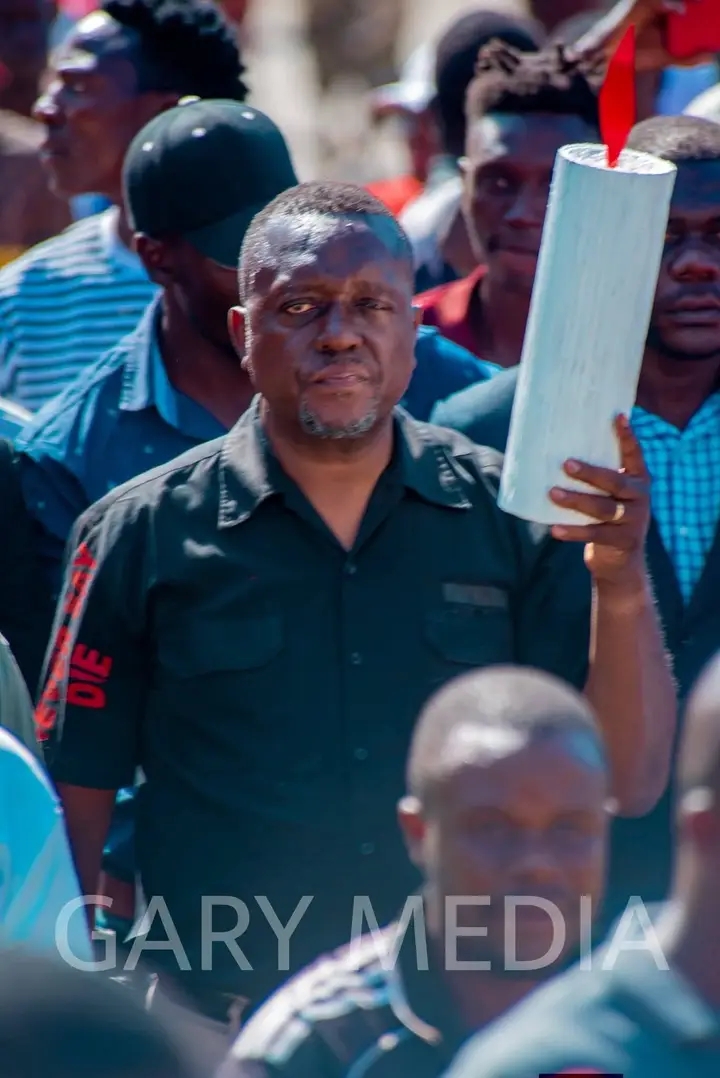
🇿🇲 CONTEXT | Why Gary Nkombo’s Mazabuka Clash Matters
Gary Nkombo’s confrontation with police in Mazabuka over the weekend is not merely about a cancelled campaign launch. It has become a test of how Zambia’s electoral institutions handle one of the most recognisable political figures to emerge from the ruling UPND’s ranks.
The former Local Government Minister and longtime Mazabuka lawmaker has accused police of unlawfully cancelling his campaign launch, deploying teargas against supporters and effectively suspending his electoral activities. In a strongly-worded statement, Nkombo described the actions as “politically motivated suppression” and part of what he called a “coordinated strategy to deploy every arm of the state against a legitimate independent candidate.”
“The Zambia Police Service has been weaponised not to protect the peace, but to protect the interests of those in power,” Nkombo charged.
Police tell a different story.
Southern Province Police Commissioner Moono Namalongo says officers intervened because Nkombo allegedly held the rally at an unauthorised location contrary to an agreed campaign schedule. According to police, repeated warnings were ignored before officers resorted to teargas to disperse supporters.
“Police were forced to disperse the supporters using tear smoke after a number of warnings,” Namalongo said.
At face value, this appears to be another routine dispute between politicians and law enforcement during an election season. The reality is more politically significant.
Gary Nkombo is not an ordinary opposition figure. He is one of the architects of UPND’s rise to power. As the party’s national election chairperson in 2021, he played a central role in coordinating the campaign that ultimately delivered President Hakainde Hichilema’s historic victory after years in opposition. Few politicians invested more political capital into the UPND project than Nkombo.
This history explains why the images from Mazabuka have generated unusual reactions online.
While opposition supporters predictably condemned the police intervention, what has been striking is the number of UPND sympathisers expressing discomfort with the treatment of a man many still view as one of the party’s key builders. Across social media, some ruling party supporters questioned whether the dispute should have escalated to teargas and campaign suspensions given Nkombo’s standing and contribution to the party’s success.
The optics matter.
Nkombo’s grievances extend beyond the weekend incident. He points to what he describes as a pattern of hostility, including an altercation on nomination day, his subsequent arrest, a court petition targeting independent candidates and the Electoral Commission’s decision to withdraw his approved candle campaign symbol. Viewed individually, each event has its own explanation. Viewed collectively, Nkombo argues they amount to systematic political pressure.
Whether that claim withstands scrutiny is another matter.
There is currently no public evidence proving a coordinated campaign against him. Yet politics is often shaped as much by perception as by legal fact. Once a narrative of unfair treatment gains traction, institutions face a higher burden to demonstrate neutrality.
This is particularly important because Nkombo is no longer competing as a member of a political party. He is an independent candidate. Independent candidacies have become one of the defining features of the 2026 election following disputes, defections and legal battles across multiple parties. How authorities handle these candidates will inevitably attract greater public scrutiny.
The broader question is not whether Gary Nkombo should be allowed to break campaign regulations if any were violated. No candidate should operate above the law. The question is whether similar standards are being applied consistently across the political landscape. Electoral credibility depends on equal treatment, equal enforcement and equal opportunity.
For UPND, the situation presents an uncomfortable political challenge. Nkombo is not attacking the party from the outside as a traditional opponent. He is a former insider whose criticisms carry weight precisely because of his history within the movement. His allegations therefore resonate differently from those made by long-standing opposition figures.
Mazabuka may ultimately resolve this dispute through electoral procedures and legal processes. The political significance, however, extends far beyond one constituency.
The incident has reopened questions about campaign fairness, institutional neutrality and how Zambia’s democracy treats those who fall out with the political establishments they once helped build.
As the election campaign intensifies, those questions are unlikely to disappear.
—For story tips, opinion submissions, advertising, partnerships or corrections:
📩 editor.peoplesbrief@gmail.com
Strong journalism depends on informed readers, trusted partners and community support.
© The People’s Brief | Ollus R. Ndomu
Verified. Contextual. Independent.