

WHY ZAMBIA’S $6.5 BILLION RESERVES ARE NOT NECESSARILY EVIDENCE OF GOOD ECONOMIC MANAGEMENT
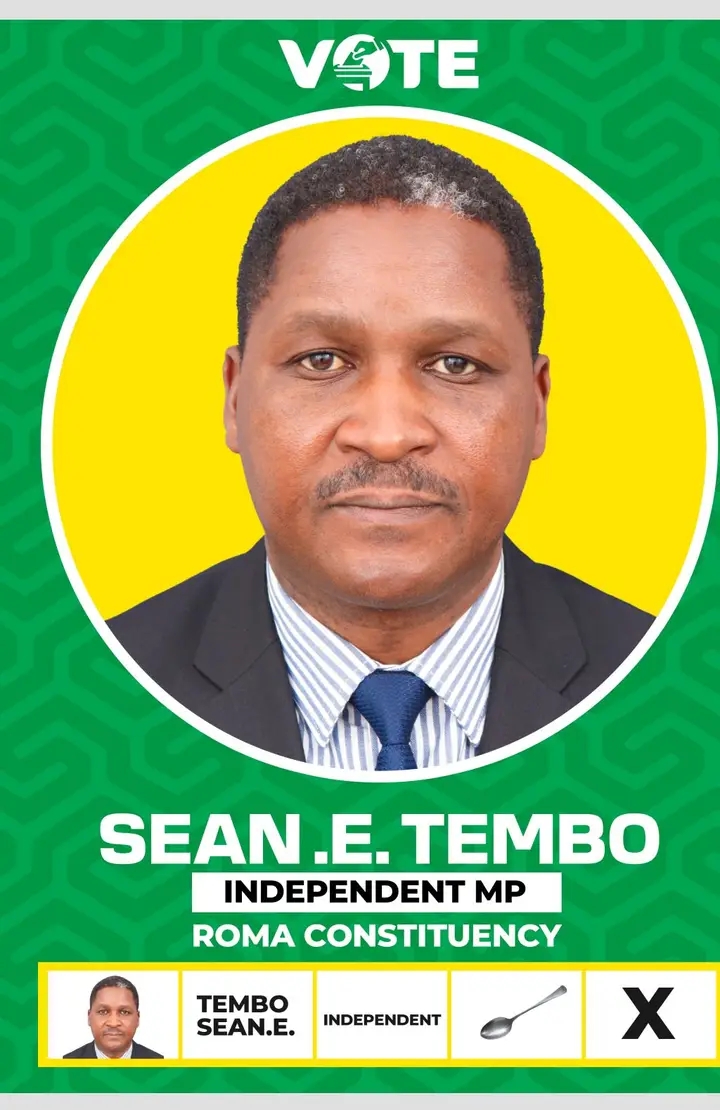
By Sean E. Tembo – Former PeP President & Aspiring Roma Constituency Independent MP
1. Ideally, a country’s increase in foreign reserves is supposed to be associated with good economic management. However, in our current scenario, this is not necessarily the case. To the contrary, and looking at the totality of factors, it is my considered view that Government’s claimed increase of foreign reserves to $6.5 billion actually represents poor economic management. Let me explain why.
2. The starting point is; what are gross foreign reserves (GFR)? This is money, typically in foreign currency, which a Government invests in low yield, low risk investments in other countries. The last time I checked, almost all of the Bank of Zambia’s GFR were kept in New York banks in the United States, such as JP Morgan Chase, The Bank of New York Mellon, Citigroup etcetera.
3. Basically, foreign reserves are to a country, what savings are to individuals. At individual level, savings are important because they act as a fall back, in case you hit hard times. However, savings are not an end in themselves. You cannot grow your wealth through savings, because the returns are generally very small. You need investments to grow your wealth, at individual level.
4. Similarly, at national level, foreign reserves are not an end in themselves. In fact, when Zambia deposits $6.5 billion in New York banks, what we are basically doing is that we are creating jobs for US citizens at the expense of Zambian citizens. Our money will be borrowed by US investors from the US banks, and used as capital to further industrialize their economy, while our private sector, here at home, remains dormant, due to lack of access to reasonably priced capital.
5. If I was Zambia’s Minister of Finance, instead of keeping $6.5 billion of foreign reserves in New York banks, and boasting about it, I would rather use $3 billion of that money to set up a local development finance institution (DFI) which would extend reasonably priced finance to the local private sector, and therefore help to develop the local economy, than enriching the already rich Americans in New York.
6. However, the above proposal of locally investing a portion of our gross foreign reserves would apply only if our GFR were real and not a fallacy. In Zambia’s case however, the $6.5 billion accumulation of GFR is nothing but a fallacy. I am sure that your immediate question is; how can savings be a fallacy? It’s either they exist or they don’t. Well, let me explain.
7. At personal level, your savings would be real, only if you are able to settle your liabilities, as and when they fall due. You cannot say you have K500,000 savings when you have defaulted on a K600,000 loan, and the bailiffs are grabbing your furniture and other assets? The K500,000 might exist in your savings account, but it is a fallacy. You are basically insolvent
8. The same applies to our country. I am quite confident that the $6.5 billion deposits do exist in those New York banks, but at the same time, the Government has been failing to settle it’s financial obligations for goods and services supplied by the private sector, as and when they fall due. In the national budget, the total amount of money that government owes the private sector is categorized as domestic arrears. When you check the 2021 national budget, you will note that domestic arrears stood at about K18 billion, and when you check the 2026 national budget, on page 4 specifically, you will note that domestic arrears stood at K84 billion as at 1st August 2025, and have since risen to K96 billion, as at 31st May 2026.
9. Now, if you do a little mathematics, you will note that the current Government has increased the country’s foreign reserves by about $3.5 billion, from about $3 billion in 2021, to the current $6.5 billion. And on the face of it, this might appear to be commendable work. However, during the same period, the Government has defaulted in paying private sector suppliers of goods and services by K66 billion (K84bn-K18bn) or approximately $3.6 billion. Additionally, during the past 5 years or so, Government increased it’s borrowings through bonds and Treasury Bills by approximately K181 billion ($10 billion) from about K78 billion in 2021, to the current K259 billion. On the other hand, foreign debt has gone up from $11.5 billion in 2021, to the current $16 billion, which is an increase of about $4.5 billion in 5 years.
10. In short, the current Government has borrowed a total of $18.1 billion ($3.6bn+$10bn+$4.5bn) in the past 5 years, and increased foreign reserves by $3.5 billion. That is excluding project loans. Is that a commendable job? I don’t think it is. Especially given the fact that when Government borrows locally, through domestic arrears and domestic debt, they basically kill local jobs by crowding out the local private sector from access to capital. And when Government increases foreign reserves by depositing money in New York banks, they create jobs in the United States of America, at the expense of Zambian citizens. That is why, from my standpoint, Zambia’s $6.5 billion foreign reserves are not necessarily evidence of good economic management.
///END
SET 27.06.2026
Ba Tembo are you labouring to support your cousin ba Mundubile who is planning to spend the money from reserves? Follow Godwin Lungu at money FM Facebook he is able to explain to you too well in simple English language and Nyanja.Ba Mundubile ba nga gwese Chalo.Ba za kongola chisawawa futi .He can be a very bad President I tell you.Ba funa ku ti gwesela mumu Ganda a ba.Some Nyimba residents who attended the rally realized late that ba Mundubile was threatening the money from reserves.I know HH will explain to the Nyimba people when goes there they will see the dangers of voting for Mundubile.Mundubile talked about spending the money but didn’t talk about investments.
What Tembo is forgetting is that HH is moving BIT -BY-BIT and everything is falling in it’s place.
HH is TOO STRATEGIC and has gotten his competitors WITHOUT CAMPAIGN MESSAGE and upset.
By the way UPND campaigns are kicking in on SUNDAY 28/06/26. WAPYA BAISA!!
ba Pastor Sean Tembo nabo! even proposing the country to set up a DFI. Seen is notorious for using selective memory, he doesn’t explain what became of development finance institutions like DBZ, LIMA Bank, Agriculture Finance Equipment Bank (AFE), Cooperative Bank in the past? As a people who only know how to ramsack and not build or manage anything.
Just go and preach, Sir, I even feel sorry for your Church members who will listen to your Sermons, for they will be mislead.
Well said..bo Simpo…
If we are to argue objectively. Tembo has nelt it. He is debating with facts and extracts from budgets not political lies fed to cadre opinion influencers.
What do you want to teach us about foreign reserves, you are now a parliamentary candidate, just concentrate on your campaigns. No wonder you get zeroes.
Better than having ZERO reserves.