

🇿🇲 INSIGHT | 2027 Budget Begins Here: What the Green Paper Means for You
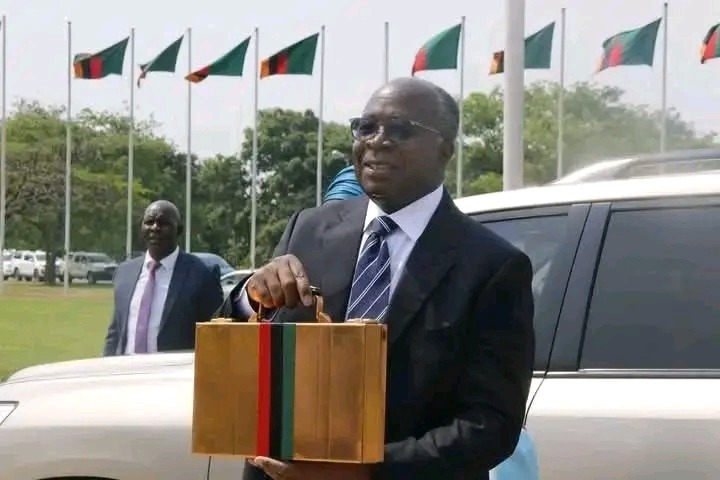
Before Government announces how much it will spend on roads, hospitals, schools, agriculture or Constituency Development Fund, it must first decide what kind of economy it expects to manage and how much money it can realistically raise, borrow and spend. That is essentially where Zambia is now. Cabinet has approved the Green Paper for the 2027-2029 Medium Term Budget Plan, setting the broad economic and fiscal direction from which the 2027 National Budget will be built.
The Ministry of Finance is expected to publish the document on September 26 and invite public reaction. Government’s own description of the budget process confirms that the Green Paper is a consultation document that precedes the eventual budget and sets the fiscal framework within which policy choices are made.
Think of the Green Paper as Government showing the country its financial map before deciding exactly how to make the journey. It is not yet the 2027 Budget. It does not, by itself, appropriate money or guarantee that every programme mentioned will receive funding. Instead, it tells citizens what Government believes the economy will look like, where it intends to find revenue, how it plans to manage borrowing and which areas should receive priority when expenditure decisions are made.
Zambia has used this process in previous budget cycles, with the Green Paper eventually feeding into the annual budget and the subsequent Medium Term Budget Plan.
The first important number is 6 percent. Cabinet says economic growth should average about 6 percent over the medium term, driven mainly by agriculture, mining, construction, wholesale and retail trade, information and communication technology, and financial and insurance services. That is Government’s projection, not a guaranteed outcome.
For citizens, the more important question will eventually be what sits underneath that number. Economic growth becomes meaningful at household level when expanding businesses hire workers, farmers earn more, mines create wider local supply chains and incomes grow faster than the pressures families face. GDP can tell Zambia whether the economic pie is expanding. It does not, on its own, tell us how widely the additional income is being shared.
The second message is about taxes and Government revenue. From 2027, Government plans to begin implementing a Medium-Term Revenue Strategy running to 2031. It intends to strengthen tax administration, broaden the tax base and rationalise incentives and exemptions. Those phrases deserve attention. Broadening the tax base can mean bringing more economic activity into the formal revenue system rather than repeatedly increasing the burden on taxpayers already captured by it.
Rationalising exemptions means Government will examine tax concessions and ask whether the economic benefits justify the revenue being surrendered. The details will matter because revenue policy eventually reaches workers, businesses, investors and consumers through the taxes Government collects and the services those taxes finance.
Digitalisation is also moving closer to the centre of fiscal policy. Cabinet says the plan includes rolling out the digital National Registration Card system and integrating Government systems and public-service payments through the Government Service Bus. The logic is straightforward: Government wants systems that can communicate with one another, improve revenue collection and reduce administrative gaps.
But digital integration also creates responsibilities around reliability, access, data protection and oversight. Efficiency is one side of a digital state. Public confidence in how those systems operate is the other.
Then comes debt. Government says it will continue raising money domestically and externally under the Medium-Term Debt Strategy, with priority given to concessional financing. It also plans liability-management operations to reduce refinancing pressure and says annual borrowing plans will be strictly implemented. This is particularly important after Zambia’s recent experience with debt distress and restructuring. Borrowing itself is not necessarily the problem.
Governments borrow to finance development. The harder questions are how much is borrowed, at what cost, in which currency, over what period and whether the projects financed generate enough economic value to justify the obligation. Zambia’s next fiscal chapter will therefore be judged partly by whether debt restructuring produces lasting discipline rather than simply room to borrow again.
Government’s spending priorities reveal the broader economic philosophy behind the plan. Cabinet says resources will increasingly support private sector-led growth, productivity, economic diversification, value addition and job creation under the Grow Zambia Agenda, the Ninth National Development Plan and Vision 2030. The emphasis on value addition is particularly important. Zambia has spent decades exporting commodities and importing a significant share of finished products. If copper production rises but domestic manufacturing, suppliers and employment do not expand alongside it, part of the economic opportunity remains outside the country.
The same principle applies to agriculture. Producing more maize, soybeans or other crops creates one level of value. Processing, packaging, transporting and exporting higher-value products creates another.
But there is a warning running through Cabinet’s projections: the weather. Government has identified possible El Niño-induced drought during the 2026/2027 agricultural season as a significant risk. A severe agricultural shock does not remain on the farm. Lower production can affect food prices and household incomes, increase pressure for food imports and relief programmes, reduce electricity generation where water availability is affected and force Government to redirect money originally intended for other priorities.
That is what Cabinet means when it warns that drought could constrain “fiscal space”. Put simply, an emergency can arrive with its own bill, leaving less money for everything else.
This explains Government’s decision to strengthen fiscal buffers and place food security among its immediate concerns. A buffer is the financial equivalent of keeping something aside for a difficult season. Zambia learned during the 2024 drought how quickly assumptions about electricity, agriculture, growth and public expenditure can change when rainfall fails. Planning for another possible shock before it arrives is therefore part of prudent budgeting.
The real test will be whether preparation extends beyond Treasury projections into irrigation, water management, energy resilience, strategic food systems and support that reaches vulnerable farming communities early enough to make a difference.
Citizens should pay attention now because the Green Paper comes before many choices are locked into the Budget. Government has invited comments once the document is published. The Ministry of Finance has previously described public participation as part of national budget preparation and has formally invited citizens, businesses and organisations to make tax, expenditure and policy proposals. This is the stage at which farmers can examine agricultural priorities, businesses can scrutinise proposed tax policy, civil society can test social spending assumptions and ordinary taxpayers can ask whether Government’s priorities correspond with pressures in their communities.
The Green Paper therefore matters less for the sophistication of its economic language than for the choices hidden inside that language. Six percent growth is an ambition. Revenue mobilisation determines who helps finance the state.
Expenditure priorities determine where that money goes. Borrowing determines what future taxpayers inherit. Drought preparedness tests whether Government can protect its plans when conditions change. The 2027 Budget will eventually put kwacha figures against many of these choices.
The Green Paper tells Zambians where Government intends to go before the money starts moving.
– The People’s Brief | Ollus R. Ndomu