

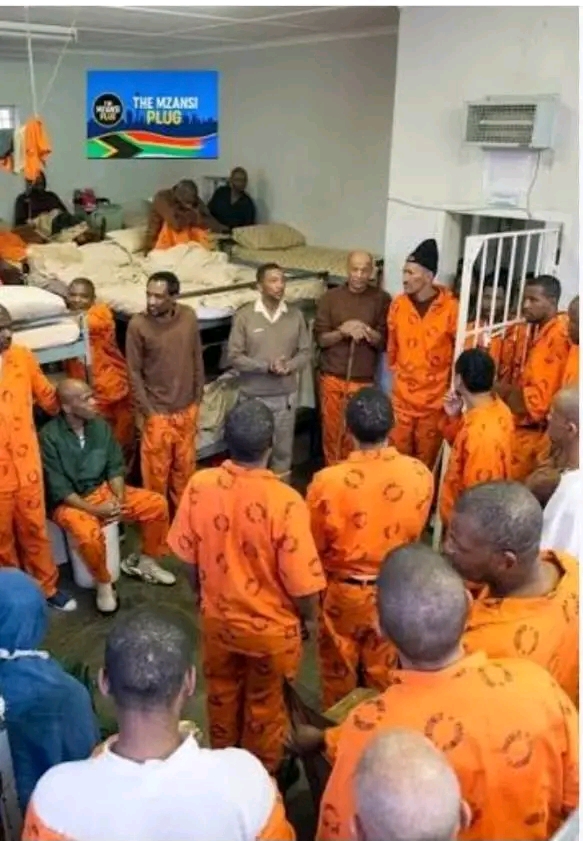
4 732 ZIMBABWEANS IN SOUTH AFRICA PRISONS SERVINH JAIL TIME
The Department of Correctional Services says more than 30,000 foreign nationals are currently incarcerated in South African prisons, including 4,731 Zimbabwean offenders, as government moves closer to implementing a prisoner transfer agreement between the two countries.
In an interview on Newzroom Afrika, Correctional Services spokesperson Singabakho Nxumalo said South Africa and Zimbabwe had signed a Memorandum of Understanding (MOU) establishing a framework for cooperation between their correctional services.
He said the agreement would eventually allow sentenced offenders to serve their prison terms in their countries of origin, while also strengthening information sharing and cooperation between the two countries.
“What happened is that South Africa and Zimbabwe concluded a memorandum of understanding in a way that establishes a framework for cooperation between correctional services in South Africa and Zimbabwe prisons and correctional services,” Nxumalo said.
However, he stressed that the agreement did not mean prisoners would immediately begin crossing the border.
“This is a framework. The parole regime is not the same for all countries,” he said.
Nxumalo said South Africa’s prison population currently stood at 173,955 inmates, representing overcrowding of 62%.
Of that number, 30,527 were foreign nationals, with 15,284 classified as sentenced offenders and the remainder awaiting the outcome of their court cases.
Zimbabwe accounted for 4,731 offenders, followed by Mozambique, Malawi and Lesotho among the largest groups of foreign nationals in South African correctional facilities
Nxumalo said the sentenced offenders represented the group that could potentially qualify for interstate transfers once agreements were concluded with their respective countries.
He said there was, however, no exact figure yet for how many Zimbabwean prisoners would eventually be transferred because differences in sentencing and parole systems still had to be addressed.
“In some countries, their parole regime is that if you are sentenced to life, you serve your entire term in a correctional facility. Whereas with South Africa, you will serve at least 25 years,” he said.
He added that research conducted by Correctional Services found that more than 80% of foreign nationals surveyed indicated they would prefer serving their sentences in their home countries to remain closer to their families.
Nxumalo said housing foreign nationals also carried a significant financial burden for the state.
South Africa spends R483 per inmate each day, with the department estimating that incarcerating 30,527 foreign nationals costs about R14 million a day, or approximately R5.4 billion a year.
He said the department was prioritising agreements with neighbouring SADC countries because they accounted for the largest number of foreign nationals in South African prisons.
Nxumalo said transferring foreign prisoners would help ease pressure on correctional facilities but would not solve South Africa’s overcrowding crisis on its own.
“We are doing that, but it will never be enough until we solve the issue of crime,” he said.
He said overcrowding remained a broader criminal justice challenge involving court backlogs, sentencing, violent crime and the need for alternatives to incarceration, requiring cooperation across the justice system rather than Correctional Services alone.