

59 paternity tests among 230
DNA requests since January!
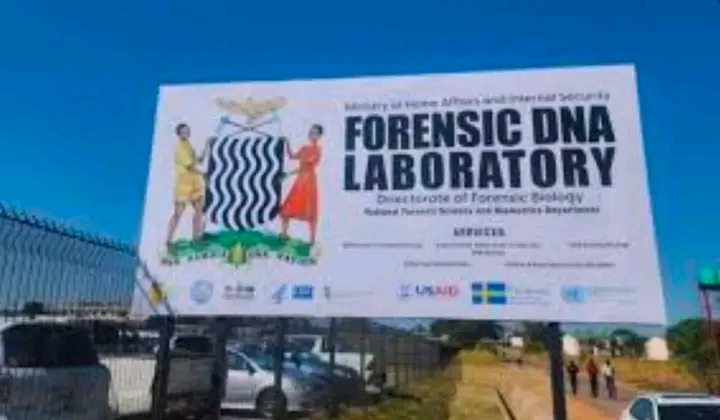
The National Forensic Science and Biometrics Department under the Ministry of Home Affairs and Internal Security recorded 230 requests for DNA testing between January and June 2026, among them 59 to determine paternity, according to official statistics.
Acting State forensic analyst Innocent Makasa said in an interview that the total also included two maternity cases, two kinship disputes and 14 human identification cases referred by the forensic pathology unit.
Dr Makasa said that the 59 paternity tests were conducted exclusively at the request of the courts.
“When courts handle cases that question a child’s paternity, such matters are sent to us for DNA analysis. We conduct the tests, and within 21 days, the results are returned to the court, which then proceeds with the legal process. The department does not accept direct requests from individuals, only from judicial authorities.”
He acknowledged public criticism that DNA testing sometimes disrupts families, but stressed that in many instances, the results have confirmed paternity and helped preserve marriages.
On the maternity cases, Dr Makasa said that one involved a woman disputing the identity of a deceased child, while the other concerned a child allegedly stolen in Kafue and later recovered.
He said that kinship claims typically emerge during inheritance disputes, especially when families contest a child’s relationship to the deceased.
Of the 230 cases received, only 63 have been fully analysed and completed, namely 41 paternities, two maternity cases, three kinship, one human identification and 16 criminal cases.
Seventy-six criminal cases remain incomplete due to the unavailability of reference samples from suspects, which are essential for matching.
Another 91 cases are still pending analysis, including 18 paternities, one kinship, 13 human identification and 59 criminal cases.
Dr Makasa said that forensic samples are stored in the database for cases where perpetrators are unknown, pending future identification.
“For example, in defilement cases, a vaginal swab is taken from the victim. The police must then provide a reference sample from the suspect to complete the analysis. If the suspect is known, both scene and suspect samples are analysed together, allowing for quicker conclusions.”
Looking ahead, Dr Makasa revealed that by next year, the department plans to establish a forensic toxicology laboratory to analyse deaths by poisoning and drug-related cases and a physics pattern and impression unit to handle documents and firearms (fingerprints).
-ZDM