

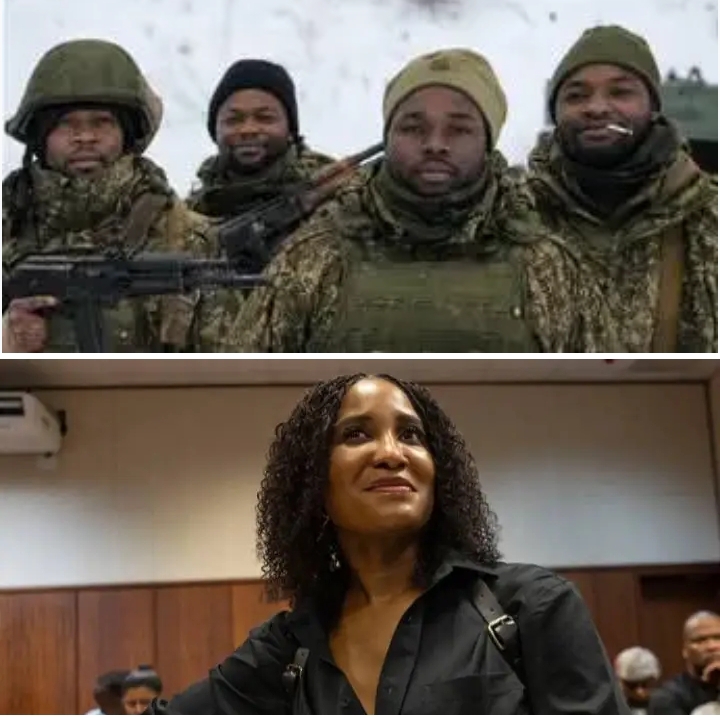
6 ZIMBABWEANS PLEAD GUILTY AS RUSSIAN MERCENARIES IN SA COURT AFTER US$25K OFFER
Six Zimbabwean men who planned to use South Africa as a secret springboard to Russia to join the war in Ukraine have pleaded guilty in a South African court under South Africa’s tough mercenary law.
Soul Magaya, Stembiso Mlalazi, Prince Calvin Tinarwo, Tatenda Muchete, Brighton Muripa and Victor Shoshore were arrested on July 21 while allegedly en route to Russia. On Friday, October 9, they pleaded guilty to violating South Africa’s Regulation of Foreign Military Assistance Act 15 of 1998
The Act which commenced on 18 September 1998 intends to regulate the rendering of foreign military assistance by South African juristic persons, citizens, persons permanently resident within the Republic and foreign citizens rendering such assistance from within the borders of the Republic, and to provide for matters connected therewith
According to News24 and court papers, the scheme was straightforward and lucrative. Four of the men had been promised a $25,000 sign-on bonus and $2,500 a month to fight, while the other two acted as fixers, arranging travel and liaising with a Russian recruitment agent.
The case has exposed the modus operandi of recruiters. They do not fly recruits directly from Harare to Moscow. Instead, they use intermediaries, fake civilian job adverts and cross-border travel through South Africa to quietly move prospective fighters toward Russia’s military
The guilty pleas come as African governments scramble to stem the pipeline. Ghana has formally raised recruitment concerns with Russian officials. Kenya is pushing for the return of its citizens captured while fighting for Russia. Botswana has issued public warnings and says it has intercepted nationals at airports and sent them home.
In Zimbabwe, police in June arrested a man accused of recruiting five people to join the Russian army — also via a planned journey through South Africa.
The scale of deception is now documented. An investigation published on October 6 by the Institute for Security Studies identified 289 digital assets — including websites, Facebook pages and Telegram channels — allegedly using forged endorsements, fake security guard vacancies and promises of generous benefits to lure Africans. Many victims believe they are going for civilian employment or a year of security training in Russia before returning home.
The Zimbabweans’ case has refocused attention on South Africa’s own scandal involving former President Jacob Zuma’s family. Duduzile Zuma-Sambudla, the former president’s daughter, was investigated in November last year after her half-sister, Nkosazana Bonganini Zuma-Mncube, filed a sworn affidavit accusing her and two others of luring 17 South African men to Russia.
According to the affidavit, the men believed they would receive a year of training and return to South Africa. Instead, they were allegedly handed over to a Russian mercenary group and sent to the front lines in Ukraine.
Zuma-Sambudla denied wrongdoing, saying she had been deceived. She resigned as a lawmaker in November 2025 as the allegations surfaced. Police investigations are ongoing and she has not been formally charged.
For the six Zimbabweans, the dream of quick dollars has ended in a criminal record. For African governments, the case is a stark warning that the war in Ukraine is no longer distant — its recruiters are operating at airports, on WhatsApp groups and in townships across the continent.