

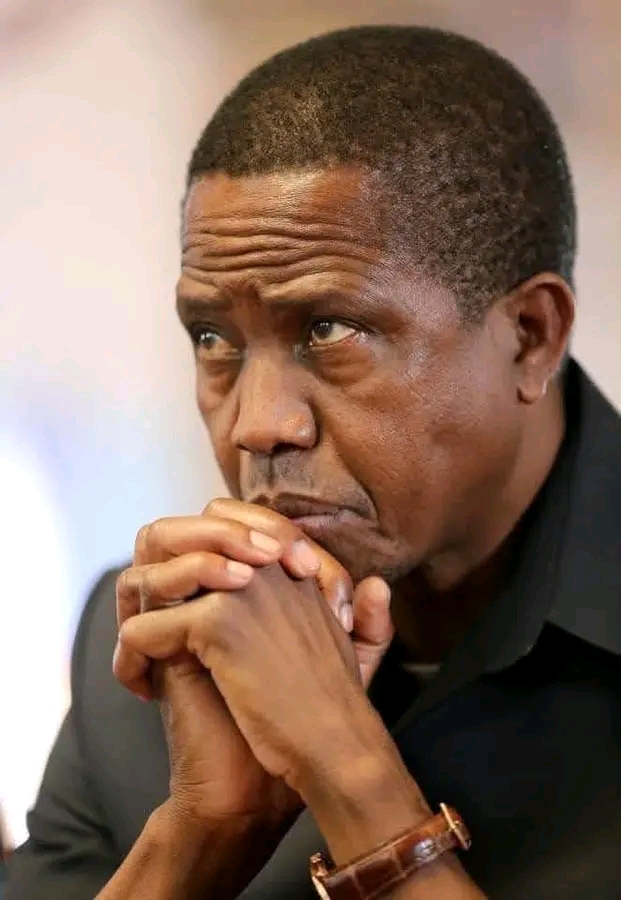
AUTOPSY, NOT POLITICS, The Law Has Taken Over – MAKEBI, Stop Misleading the Nation on the Lungu Case
By Tobbius C. Hamunkoyo- LLB
The passing of Edgar Chagwa Lungu in South Africa has stirred emotion across Zambia, Africa, and beyond, but clarity must prevail over speculation. What is being conducted is an autopsy, not merely a routine postmortem.
A postmortem may involve any examination after death, even external, while an autopsy is a detailed internal forensic procedure involving organs, tissues, and toxicology, especially where the cause of death is unclear or suspicious.This distinction is very important in law and medicine because it determines the strength and reliability of evidence in any potential criminal proceedings.
This matter was triggered by serious public allegations, including sentiments expressed by Raphael Nakacinda on the South African Broadcasting Corporation, alongside widespread claims suggesting possible poisoning to have been the cause of death to Dr Edgar Chagwa Lungu, these issues legally compelled South African authorities to act.
Under international practice and domestic law, the responsibility to investigate lies with the country where the death occurred, in this case South Africa, through the South African Police Service and its forensic institutions. This is not a political choice but a statutory duty as opposed to claims by Makebi Zulu.
Importantly, this process is entirely a function of the State, carried out by state institutions, state officers, and ultimately under the authority of the Head of State within the legal framework of that country. It has nothing to do with private individuals or political actors. Once a death is suspected to involve criminal elements, family consent is not required because the law treats the body as potential evidence under state custody, ensuring that no interference, concealment, or destruction of facts occurs. If such consent were mandatory, justice could easily be obstructed.
This legal position is well established across common law jurisdictions, including Zambia and South Africa. Where a death is sudden, unexplained, or suspicious, the State assumes full responsibility to act in the public interest. Therefore, claims suggesting that the process depends on family consent by Makebi Zulu are legally incorrect and dishonestly presented.
Equally misleading are assertions that the Government of Zambia or Hakainde Hichilema is conducting the autopsy. Zambia’s role is strictly diplomatic, engaging state-to-state with South Africa to ensure transparency and protect national interest, while the investigation itself is exclusively under South African jurisdiction and authority.
Globally, this approach is standard and consistent. In Kenya, the death of Chris Msando an election officer in 2017 led to a state-led autopsy; in the United Kingdom, the poisoning of Alexander Litvinenko in 2006 a British-naturalised Russian defector and former officer of the Russian Federal Security Service (FSB) who specialised in tackling organised crime also triggered a full forensic inquiry, and in Nigeria, coroners routinely order autopsies in suspicious cases.
This principle you may wish to know that it is universal, where there is credible suspicion, the State, not individuals, must act independently and decisively through its lawful institutions. It is therefore important that figures such as Makebi Zulu and Emmanuel Mwamba refrain from misleading the public on settled legal principles.
Zambia is a sovereign State, and equally, South Africa is a sovereign State with its own legal obligations. What is taking place is a matter strictly between states, executed through their bound institutions and leadership, not a platform for personal narratives or political manipulation.
This is not a moment for speculation or politicisation, but for legal clarity and institutional respect. An autopsy is not opinion, it is evidence. The only path forward is to allow the law to lead, the State to perform its duty, science to speak, and the truth to stand beyond dispute.
Well spoken sir, not the rubbish narrative, Makebi and fugitive Mwamba have been feeding us on.
Let the police service take action on all television stations that carried out false broadcasting on their News especially KBN and Diamond.There was an assumption that the body was stolen from the morgue.
I think misinformation especially by those who published wrong news should face consequences
Excellent legal explanation. Not some of the nonsense and twisted lies coming out of the opposition. Well done