

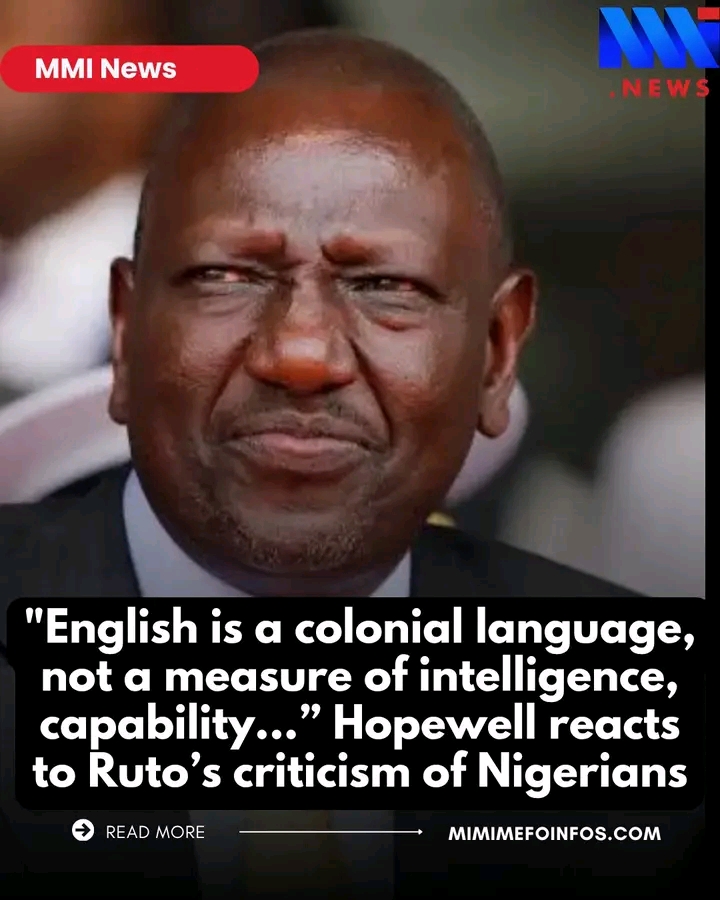
Kenyan President William Ruto is facing criticism after remarks suggesting that Nigerian-accented English can be difficult to understand, triggering a wave of reactions across social media.
Speaking to Kenyans living in Italy on Monday, Ruto said listeners would “need a translator” to understand Nigerians speaking English, while praising Kenya’s education system and describing Kenyan English as among “the best in the world.” The comments, which drew laughter from his audience, quickly circulated online.
The remarks prompted backlash from Nigerians and other Africans, many of whom accused the Kenyan leader of belittling a fellow African nation. Zimbabwean journalist Hopewell Chin’ono said English, as a colonial language, should not be used as a measure of intelligence or national progress.
Both Kenya and Nigeria, former British colonies, use English as an official language, though each has developed distinct accents shaped by local linguistic influences. Nigeria’s more than 500 indigenous languages contribute to its unique cadence, while Kenya’s mix of Bantu, Nilotic and Cushitic languages shapes its own spoken English.
Critics online argued that Ruto’s comments reflected outdated colonial attitudes, while others pointed to Nigeria’s global cultural and literary influence. Former Nigerian senator Shehu Sani referenced figures such as Nobel laureate Wole Soyinka and authors Chinua Achebe and Chimamanda Ngozi Adichie in defending Nigeria’s linguistic and intellectual contributions.
Some social media users also urged Ruto to focus on domestic challenges such as the rising cost of living and unemployment, rather than making controversial public remarks.
Online exchanges between Kenyans and Nigerians are common, often blending humour and rivalry across topics such as economics, culture and politics. Earlier this month, Nigerian President Bola Tinubu faced criticism from Kenyans after claiming Nigerians were better off than citizens of other African countries.
While there has been no official response from Ruto’s government, some Kenyans have defended the president, saying his comments were meant humorously and have been taken out of context.
Nigeria remains the country with the largest number of English speakers in Africa, and its locally developed form of the language—often referred to as Nigerian English—continues to influence global usage through its expressions and widespread diaspora presence.
#MMINews #Africa #Nigeria #Ruto #Englishlanguage