

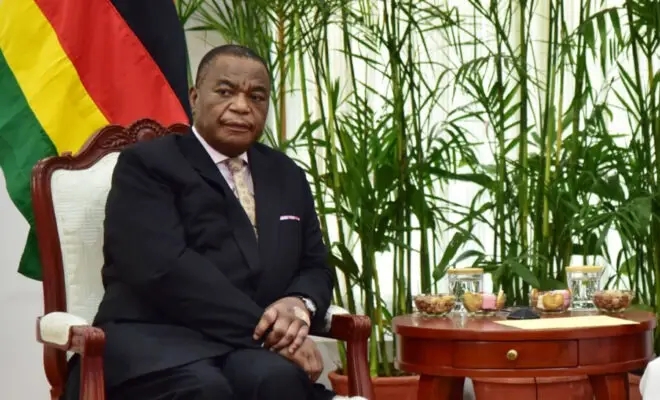
Zim Breaking News : Taming the Lion? The Unthinkable Consequences of Firing VP Chiwenga
Any attempt to remove Vice President Constantino Chiwenga outside constitutional processes would likely trigger military intervention, a parliamentary stalemate, and a deepening fracture within ZANU-PF, according to political analysts.
With Chiwenga’s historical role as former defence forces commander and his central part in the 2017 political transition, an extra-legal dismissal would almost certainly be resisted institutionally, leading to a prolonged governance crisis and raising fundamental questions about the durability of Zimbabwe’s 2013 Constitution.
While the Constitution provides a clear process for the removal of a Vice President requiring a two-thirds parliamentary majority following an investigation into misconduct or incapacity under Section 96 the question of what happens if those procedures are ignored or short-circuited remains a deeply sensitive subject within the country’s governance framework.
General (Retired) Chiwenga is not a conventional political figure. After a decades-long career in the Zimbabwe Defence Forces, culminating as Commander of the Zimbabwe Defence Forces, he transitioned into the executive branch as First Vice President. His role in the political transition of November 2017 widely referred to as “Operation Restore Legacy” is a matter of public record. During that period, the military intervened to facilitate the resignation of the late President Robert Mugabe, an event that reshaped the country’s political landscape.
Since entering civilian office, Chiwenga has remained closely associated with the national security establishment. He continues to hold significant influence among active and retired uniformed personnel, as well as within the war veterans’ community.
Analysts who study regional governance caution that an extra-legal removal of the Vice President would likely produce several outcomes:
- Institutional Gridlock
Any attempt to dismiss Chiwenga without following parliamentary procedures would almost certainly be challenged in the courts. The Constitutional Court has previously ruled on matters of executive succession, but legal experts note that a ruling alone cannot compel compliance if one party rejects judicial authority. This could lead to a standoff between different branches of government. - Reaction from the Security Sector
Given Chiwenga’s long history within the defence forces, an irregular dismissal would likely be viewed by senior military command as a threat to institutional stability. While the Zimbabwe Defence Forces have publicly stated their commitment to the rule of law, retired senior officers have in the past issued statements warning against unilateral political actions that could destabilize the state. Analysts suggest that the military’s preferred response would be to demand the reversal of the dismissal through legal channels, but the possibility of barracks-level unrest cannot be dismissed. - Fractures Within the Ruling Party
ZANU-PF, as the governing party, has historically managed internal disputes through structured factional negotiation. However, an attempt to remove a sitting Vice President without consensus would likely deepen existing divisions. Party discipline, which has been a hallmark of ZANU-PF’s longevity, would face its most serious test since independence. The result could be a prolonged period of policy paralysis as the party focuses on internal realignment rather than governance.
The Future for Zimbabwe
Looking forward, most analysts agree that the likelihood of an extra-constitutional removal remains low precisely because the risks are so high. A stable political environment benefits all stakeholders, and the existing constitutional framework while not immune to pressure provides a pathway for resolving leadership disputes without resorting to institutional breakdown.