

🇿🇲 EXPLAINER | Xavier Chungu: From Free Education Critic to State Security Suspect
Former Zambia Security Intelligence Service (ZSIS) Director General Xavier Chungu has gone from dominating online political debate to facing one of the country’s most serious national security charges.
Early yesterday morning, Mr Chungu’s political camp announced on social media that the former intelligence chief had been picked up by authorities and taken in for questioning at Force Headquarters in Lusaka. Hours later, the situation escalated dramatically. Information emerged confirming that he had formally been charged under Section 4 of Zambia’s State Security Act, a powerful and rarely invoked provision carrying possible jail terms of between 15 and 25 years.
The development instantly transformed what initially appeared to be a routine police summons into a major national security and political story.
Mr Chungu is not an ordinary opposition figure. He once sat at the center of Zambia’s intelligence system. He operated inside the architecture of classified state operations, security structures, and sensitive government information. That background now matters because Section 4 specifically targets the unlawful communication, possession, or disclosure of information linked to the defence and security interests of the Republic.
In simple terms, the State believes the former intelligence boss may have crossed a legal line.
The law itself is broad and uncompromising. It criminalises communicating sensitive security-related information to unauthorized persons, especially by individuals who obtained such information through government office or privileged state access. The penalties are severe. Conviction can attract between 15 and 25 years imprisonment.
But this is where the story becomes politically combustible.
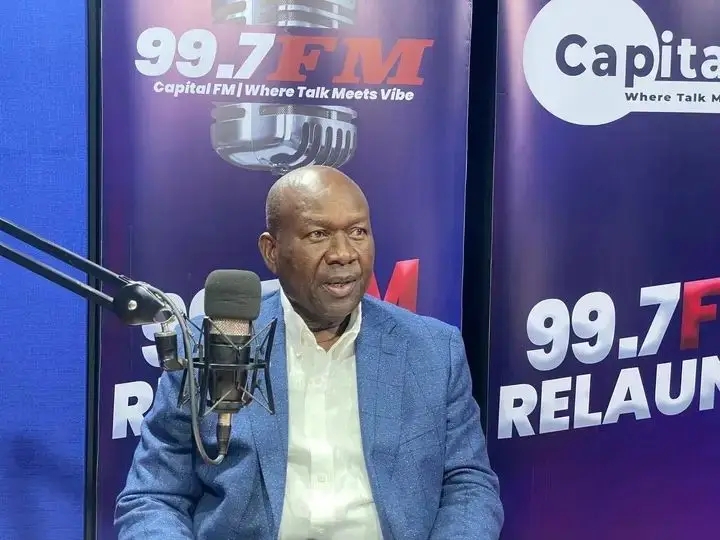
Just a day before his arrest, Mr Chungu had already set social media ablaze after openly attacking the UPND government’s flagship free education policy, one of President Hakainde Hichilema’s most politically protected reforms. Appearing on Capital FM, the former intelligence chief dismissed the policy entirely.
“What is free about that education?” he asked.
“Everybody is paying for their children. They are buying them clothes, they are buying pens and papers.”
He further argued that free education had overstretched schools and collapsed classroom standards, claiming some classrooms designed for 25 pupils were now carrying over 100 learners.
The remarks triggered immediate backlash online.
For many supporters of the ruling party, free education is not merely policy. It is the UPND’s single biggest social achievement since taking office in 2021. Enrollment numbers surged. Thousands of vulnerable children returned to school. The policy was later anchored into law. Criticising it politically is one thing. Rubbishing it entirely touches a far more emotional national nerve.
Then came the arrest.
Authorities have not yet publicly detailed the exact information or statements forming the basis of the State Security Act charge. That omission now creates the central national question: what exactly did Xavier Chungu allegedly communicate that crossed from political commentary into state security territory?
This distinction is critical.
In democracies, former intelligence officers remain bound by continuing confidentiality obligations even after leaving office. States protect classified systems aggressively because intelligence structures survive partly through secrecy and controlled information flows. But democratic systems also protect political expression, criticism, and public debate.
This case now sits dangerously between those two worlds.
Supporters of Mr Chungu will likely argue that the arrest reflects shrinking democratic space during an already tense election season. Government supporters, meanwhile, may argue that national security laws cannot suddenly become irrelevant simply because the accused is politically active.
The legal battlefield ahead will therefore center on one core issue: was this protected political speech, or unlawful communication of security-sensitive information?
The answer will matter far beyond one man.
Because once a former intelligence chief stands accused under state security legislation during an election season, the conversation stops being ordinary politics. It becomes a test of how Zambia balances state security, constitutional freedoms, political contestation, and public trust in institutions during one of the country’s most polarized democratic moments in recent years.
—At The People’s Brief, we believe journalism must explain power, not fear it. Support independent public-interest reporting, partner with us through advertising, sponsored features, or collaborative storytelling. For news tips, opinion pieces, partnerships, and adverts:
editor.peoplesbrief@gmail.com
© The People’s Brief | Ollus R. Ndomu
Inquire with the United Nations; this individual is a serious criminal. He has been providing arms to the rebels in Angola to sustain their conflict. He has embezzled a significant amount of Zambian funds that were held in an offshore account. This person poses a risk of causing anarchy in the country; he is untrustworthy and, moreover, lacks intelligence despite his experience in the intelligence agency.