

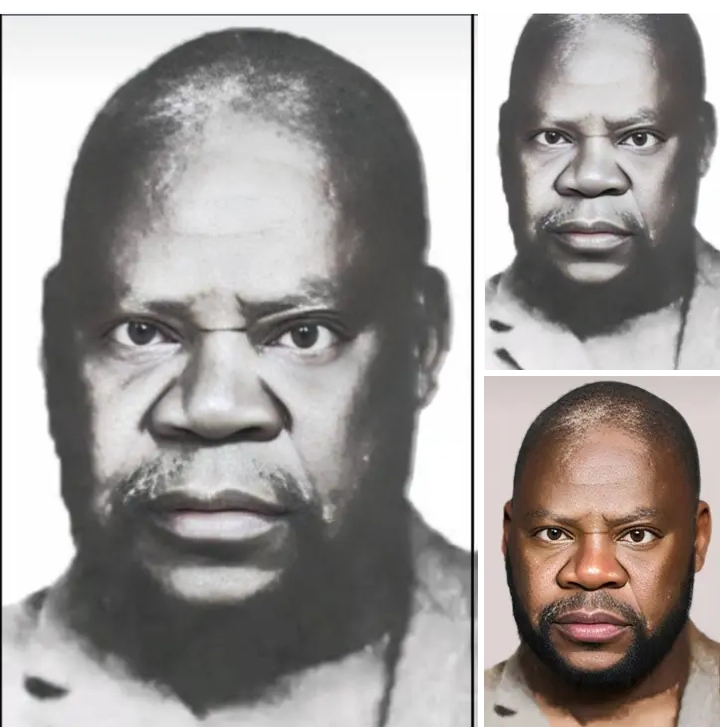
JOHANE MASOWE FOUNDED THE LARGEST BLACK CHURCH IN ZIMBABWE IN 1932, VIEWED AS A “NATIONALIST”, THREAT TO RHODESIA GOVT
Masowe had several aliases, deported from SA
By Fanuel Viriri
Johane Masowe established one of the largest African-led churches and was viewed as a threat by colonial Rhodesia.
This forced him to emigrate to the Korsten district in Port Elizabeth, South Africa.
Masowe’s teachings were nationalistic in nature and his church grew in leaps and bounds and threatened the established churches, who labeled him false.
Born in 1914 as Shoniwa Masedza Tandi, he was known by his prophetic name Johane Masowe — “John of the Wilderness.” He founded “Inzwi raMwari”— “The Voice of God Church” — in 1932. He should not be confused with Johane Marange.
According to author and researcher Clive Dillon- Malone in his 1978 book “The Korsten Basketmakers”, “Inzwi raMwari” church drew its inspiration from its “messianic and elusive figure, Johane Masowe.”
Dillon-Malone wrote that Masowe hid himself not only from government authorities, but also from his own followers.
He used many aliases, including Jack Sithole or J.S., Titus Muchuchu or T.M., and Peter Masedza or Shoniwa . He was born in Makoni, near Rusape. He went to work in Salisbury in the 1920s before moving to Norton, where “he either died and was resurrected, or saw a vision calling him to prepare the way of Jehovah.”
Because he was seen as a threat to the colonial government, he was at one time restricted to his home area. Widely viewed as a nationalist, and unable to bear official pressure, he left the country for the Korsten district in Port Elizabeth, South Africa. He faced similar pressure in South Africa and was later deported back to Southern Rhodesia.
This persecution forced church members into self-reliance and the development of manual skills for which they became known.
When Masowe was deported, the bulk of church members settled in Zambia in 1964, while the largest portion remained in Rhodesia.
Conspicuous in the public eye in Zimbabwe, Zambia, Kenya, and Botswana, they became known for producing tinware and basketry. Their women are also distinctive in their white dresses and head cloths.
Dillon-Malone said Masowe was considered a threat to the government because of his Black consciousness teachings. The church also drew strength from its unique blending of traditional and biblical thought patterns, with the charismatic figure of Johane Masowe at its center wrote Dillon-Malone.
Although a Jesuit himself, Dillon- Malone said he did not fall into the trap of “white-established churches which are often too ready to dub as false or heretical any religious movement that succeeds in drawing away from their folds their hard-earned African Christians.” when he wrote the book Korstein Basketmakers.
Masowe was born in Gandanzara village, Makoni District, the second of six sons and a daughter. His followers refer to him as Izwi raMwari — the Word or Voice of God — and Mudzimu waMwari — the Spirit of God. For them, he is the unique divine messenger and saviour for African peoples.
His calling came in 1932 while he was ill in Salisbury. He said he had a vision where he died and was told his name was “John,” a reference to John the Baptist. After recovering, he spent 40 days fasting and praying on Marimba Hill near Norton, surviving only on wild honey. He reported hearing God speak to him from a burning bush, similar to Moses.
The original movement, known as the Masowe Apostles or vaPostori, observed Saturday as the Sabbath and worshipped barefoot in open spaces called masowe — “wilderness.” Men shaved their heads and all wore white garments. They rejected formal church buildings and emphasized direct spiritual experience.
Masowe also crossed into Matabeleland in the late 1930s where many Ndebele were baptized. The Apostles later set up headquarters in Bulawayo.
He died on 13 September 1973 in Ndola, Zambia, aged 58. A synod was held at Gandanzara in 1974, but Masowe left no appointed successor because his role was considered singular and unrepeatable.
His prophetic name later gave rise to a separate movement, the Johane Masowe weChishanu Church, though Masowe himself never named a church after his own person. #fblifestyle #history