

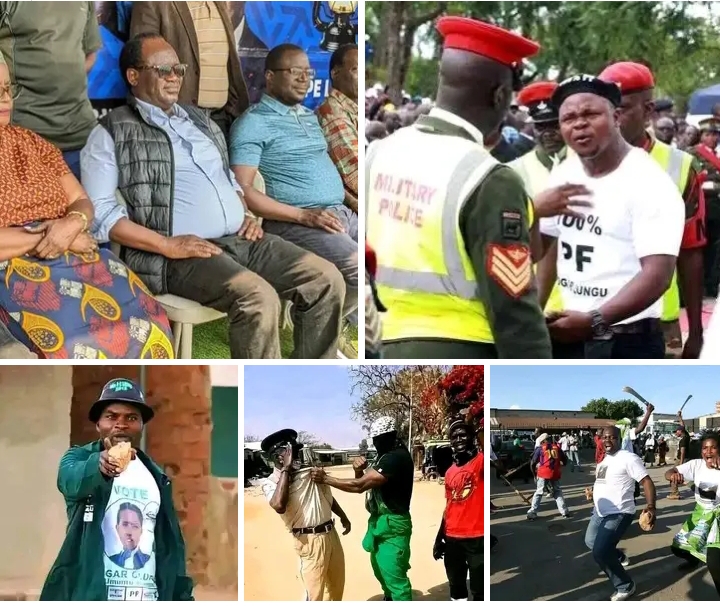
EXPOSING THE SO-CALLED LUNGU FUNCTIONING ECONOMY
As Zambia navigates complex economic terrain ahead of the 13 August general election, vocal sections of society frequently voice frustrations over the rising cost of living. In public forums and digital spaces, some citizens have even begun comparing current conditions to those of the Patriotic Front (PF) era under former President Edgar Lungu. Commentators fondly recall a period when they felt more financially secure, frequently noting that households could easily afford three meals a day.
This nostalgia reached a peak when the National Reconciliation Party for Unity and Prosperity (NRPUP) running mate, Makebi Zulu, declared during a campaign rally that their alliance would take the Zambian economy back to the Lungu days and even double the so-called benefits. Addressing supporters, Zulu explicitly promised, “We will take you back to living the way you did under Lungu if we win”.
However, economic analysts counter that this entire premise is built on a dangerous fiscal illusion. The seemingly stable prices and cash circulation under the previous administration did not stem from robust economic productivity; rather, they resulted from a government that simply stopped paying for its own consumption, artificially inflating the economy.
A prime example of this artificial economy was the national fuel subsidy mechanism. The previous regime kept fuel pump prices deceptively low by buying petroleum entirely on credit, leaving behind a staggering national fuel debt that peaked at over US$900 million.
Instead of managing a functioning energy sector, President Hakainde Hichilema and the UPND government inherited an unsustainable credit loop. Through deliberate structural reforms and a shift to a private-sector-led model, the current administration has systematically dismantled this legacy, reducing the petroleum debt to approximately US$210 million.
THE BURDEN OF INHERITED ARREARS
Fuel was not the only sector operating on unpaid bills. The previous regime sustained the illusion of a liquid economy by withholding vital payments across the entire public sector. They left behind a massive backlog of local road contractors, hospital medical suppliers, and stranded pensioners whose terminal benefits remained unpaid for decades. This systematic non-payment also hit local government workers, who routinely went without salaries for several months, sometimes for up to a full year, forcing the current administration to divert billions of Kwacha to steadily liquidate these inherited domestic arrears.
Realistically, had the UPND government found a functioning economy in 2021 instead of a nation in default with over K70 billion in domestic arrears and $17.27 billion in external debt, Zambia’s current reality would look entirely different. Without the massive backlog of inherited financial obligations, the billions of dollars spent merely clearing old debts would have directly funded lower consumer costs, enhanced price stability, and robust domestic growth.
These apparent hardships do not stem from current policy failures but rather reflect the heavy price of clearing decades’ worth of unmetered consumption. Makebi Zulu’s promise to return to the Lungu days is not a pledge for prosperity—it is an admission of a desire to return to a fabricated economy that brought the nation to the brink of crisis in the first place.
Business,three meals a day mu PF,unless you were a party cadre,people be honest.Stop lying bane…