

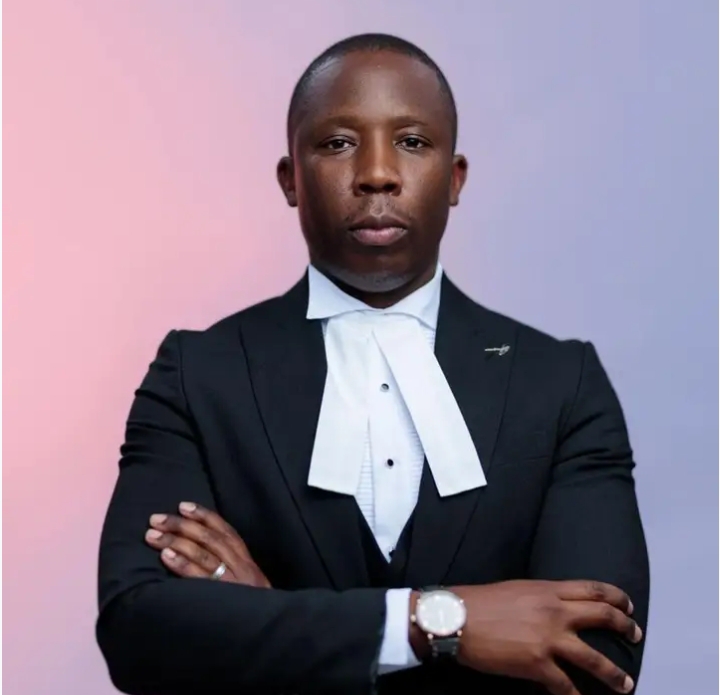
By George Nkhuwa
ABOUT THE THEFT OF OVER K5.8 BILLION BY HENRY KAPOKO
Henry Mulenga Ngosa Kapoko was serving as Chief Human Resource Development Officer at the Ministry of Health between 2007 and 2008. Around the same time, Naomi Gladys Musopelo Chawinga, having formed a company called Algonquin Management Consultants, began soliciting workshop business from the Ministry of Health to organise training for members of staff.
In due course, Naomi was contacted by Kapoko, who informed her that some of her proposals, particularly a request to conduct a workshop for auditors and accountants, had been approved by the Ministry of Health. Kapoko then requested her bank details so that transfers could be made.
Funds were subsequently deposited into the Algonquin account. In one instance, Naomi was instructed to withdraw K250,000 and hand it over to Kapoko. He accompanied her to the bank and told her to give him the money, claiming that he had received instructions from the Permanent Secretary that the funds were required for other purposes.
According to Naomi, this became a consistent pattern over the following months. Funds would be deposited into her company’s account for workshops that were either not conducted or irregularly handled. Once the money was deposited, Kapoko would instruct her to withdraw the funds and hand them over to him, often stating that they were needed by the Permanent Secretary.
On several occasions, she withdrew large sums in cash and gave them directly to him. In total, the transactions involved billions of Kwacha, with over K5.8 billion (rebased) forming the basis of the theft charges, and K6.84 billion (rebased) traced in money laundering transactions through the account.
A report was subsequently filed with the Anti-Corruption Commission (ACC), which launched investigations after it was discovered that Kapoko had accumulated properties and assets disproportionate to his known income. These included houses in Lusaka’s Roma, Woodlands, and Olympia areas, as well as several motor vehicles and business interests operating under companies such as Best Home Lodge, Hensaka Enterprises, and Kahekam Limited.
Kapoko was eventually arrested and charged with multiple offences, including theft by public servant and money laundering. In his defence, Kapoko maintained that the payments were properly authorised and related to legitimate training activities. He argued that he did not personally receive the funds and that the transactions were conducted within normal Ministry procedures.
The trial court rejected his defence and convicted him. He was sentenced to 9 years’ imprisonment with hard labour for theft by public servant and 9 years’ imprisonment with hard labour for money laundering, with the sentences running consecutively, making a total of 18 years.
Dissatisfied with the decision, Kapoko appealed to the High Court. A panel of three judges ordered, among other things, that the sentences run concurrently, thereby reducing the total sentence to 9 years’ imprisonment with hard labour.
Still dissatisfied, Kapoko appealed to the Court of Appeal.
The Court of Appeal upheld the core findings of the lower courts, holding that Kapoko played a central role in the misappropriation of public funds and in channelling those funds through private entities. The Court found that the payments made under the guise of training were not properly accounted for and that the funds were moved through various transactions and assets linked to him.
Consequently, he was sentenced to 9 years’ imprisonment for theft by public servant and 5 years’ imprisonment for money laundering, with the sentences running consecutively, bringing the total to 14 years’ imprisonment with hard labour.
This case highlights that a public officer who uses their position to divert public funds, even indirectly through third parties or private companies, commits serious criminal offences. It further underscores that failure to follow proper procurement procedures, coupled with unexplained wealth, can serve as strong evidence of corruption and lead to conviction.
Case Citation: Henry Mulenga Ngosa Kapoko v The People (Appeal No. 117, 118, 119 of 2021) [2023] ZMCA 368 (22 December 2023)
Justice was done by the Judiciary. Kapoko is doing well, thank you, on prison. The only surprise is why accounting and internal audit staff in the Ministry of Health were not investigated.