

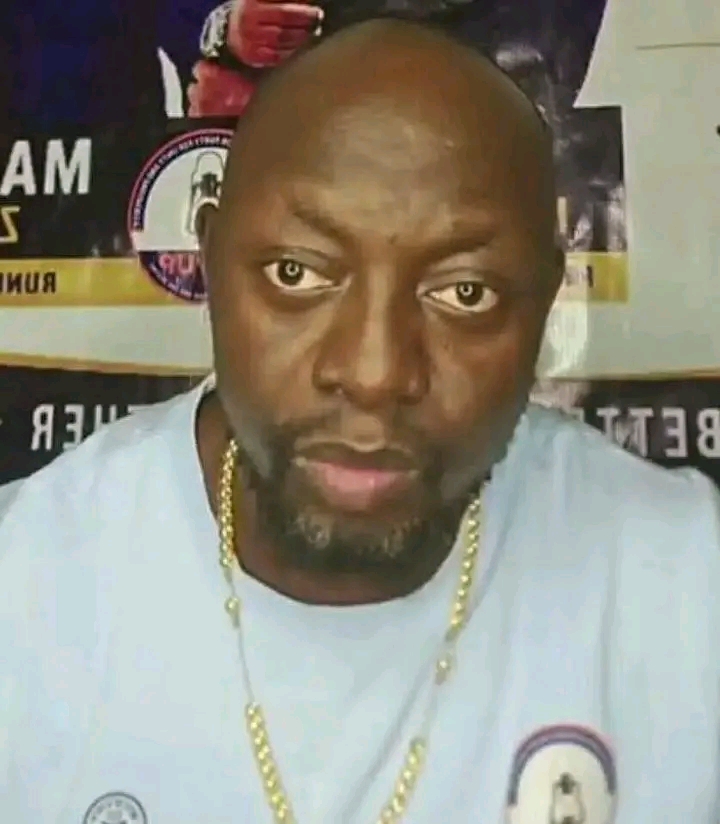
GUEST ARTICLE: Amnesty International and the arrest of Emmanuel JJ Banda
By Sikaile Sikaile
The Need for a Comprehensive, Evidence-Based Assessment of Human Rights Concerns in Zambia
Subject: Request for a comprehensive review of documented allegations concerning Jay Banda Emmanuel and the broader human rights situation in Zambia
Dear Colleagues,
I wish to place on record additional information concerning Jay Banda Emmanuel that I believe deserves careful consideration in any assessment of the human rights situation in Zambia. My concern is that discussions surrounding his recent return to Zambia have concentrated heavily on due process while giving insufficient attention to his reported history of violence, intimidation and public statements advocating violence.
As someone who has dedicated more than a decade to human rights advocacy and engagement with Amnesty International, I believe that our commitment to human rights requires us to examine the full record of relevant conduct, listen to victims, verify available evidence and apply the same standards consistently, irrespective of political affiliation.
1. Previous incidents involving alleged violence against police officers and a journalist
Jay Banda Emmanuel has been associated with reported incidents involving violence against police officers in Lusaka, Zambia. I also wish to draw attention to the reported assault on journalist Mr Peter Sukwa, who was covering a voter registration exercise in Zambia’s Eastern Province before the 2016 general elections.
According to the account I have documented, Mr Sukwa was beaten, urinated on and doused with petrol in circumstances that allegedly exposed him to the risk of being burned alive. These are extremely serious allegations involving the safety and dignity of a journalist carrying out his professional duties.
The alleged victims and any available witnesses, medical records, police records, contemporaneous reports and other supporting documentation should be considered in establishing the facts.
I have previously highlighted these matters in reporting submitted to the United Nations Secretary-General before 2021. The victims and other relevant individuals may be able to provide further information concerning the incidents. In 2025, I also renewed my efforts to seek accountability by writing to the Zambian Government and demanding answers concerning human rights matters I had documented.I am prepared to make the relevant records available for appropriate review, subject to the protection of victims, witnesses and confidential information.
My purpose in raising these matters is not to substitute personal assertions for a judicial finding. It is to ensure that serious reported incidents are not overlooked when assessing an individual’s public conduct and the wider human rights environment.
I am prepared to make the relevant records available for appropriate review, subject to the protection of victims, witnesses and confidential information.
My purpose in raising these matters is not to substitute personal assertions for a judicial finding. It is to ensure that serious reported incidents are not overlooked when assessing an individual’s public conduct and the wider human rights environment.2. Public broadcasts and statements concerning President Hakainde Hichilema and the Tonga community
I also wish to draw attention to Jay Banda Emmanuel’s publicly accessible broadcasts in which, according to the recordings and accounts available to me, he called for the killing of President Hakainde Hichilema. I further refer to broadcasts in which statements were reportedly made advocating the elimination of members of the Tonga ethnic community.
2. Public broadcasts and statements concerning President Hakainde Hichilema and the Tonga community
I also wish to draw attention to Jay Banda Emmanuel’s publicly accessible broadcasts in which, according to the recordings and accounts available to me, he called for the killing of President Hakainde Hichilema. I further refer to broadcasts in which statements were reportedly made advocating the elimination of members of the Tonga ethnic community.If authenticated, contextualised and established by the relevant evidence, such statements raise grave concerns that extend far beyond ordinary political disagreement.
Calls for the assassination of a political leader must not be conflated with legitimate criticism of that leader’s policies. Similarly, statements advocating the destruction or elimination of an ethnic community warrant particular scrutiny under the applicable criminal law and international legal standards.
If authenticated, contextualised and established by the relevant evidence, such statements raise grave concerns that extend far beyond ordinary political disagreement.
Calls for the assassination of a political leader must not be conflated with legitimate criticism of that leader’s policies. Similarly, statements advocating the destruction or elimination of an ethnic community warrant particular scrutiny under the applicable criminal law and international legal standards.
Where the evidence establishes direct and public incitement to genocide, international law recognises this as a distinct and exceptionally serious offence. Whether the statements in question meet that legal threshold must be determined through a careful examination of their content, context and intent.
I therefore urge my colleagues to examine the original recordings, preserve relevant evidence and assess the statements against the applicable legal standards rather than dismissing them as political rhetoric without investigation.
3. Conduct surrounding the 2026 general elections
During the 2026 general elections, I monitored live broadcasts in which Jay Banda Emmanuel reportedly discussed the political situation alongside individuals associated with opposition leader Mr Brian Mundubile.
I am particularly concerned about broadcasts in which an election victory was reportedly declared within 24 hours of voting and supporters were subsequently urged to take to the streets. According to the information I observed, supporters subsequently began destroying billboards bearing President Hakainde Hichilema’s image.
These events require a careful factual assessment. The timing and content of the broadcasts, the exact words used, the subsequent conduct of supporters and any evidence establishing a connection between the statements and the damage should all be examined.
It is important to distinguish peaceful mobilisation and political expression from incitement to violence or the destruction of property. The former are legitimate components of democratic participation; the latter may engage the law, depending on the facts.
I also appealed to members of Jay Banda Emmanuel’s family to counsel him concerning the direction of his public conduct. I did so because I was concerned about the possibility of escalating political hostility and its consequences for public safety.
4. My own record of political criticism and human rights advocacy
I have consistently criticised Zambian governments when I believed their policies, decisions or conduct warranted scrutiny. My engagement has included demands for accountability, respect for constitutional principles and the protection of human rights.
However, my criticism of political leaders has never required me to advocate their assassination, call for the elimination of an ethnic community or encourage people to attack those with whom I disagree.
During President Edgar Lungu’s administration, we engaged in political criticism on substantive issues without calling for his killing. The same principle must apply to President Hakainde Hichilema and every other political leader.
I believe that the ability to criticise government is indispensable to democracy. But freedom of expression should not be confused with an unrestricted licence to threaten lives, encourage violence or promote the destruction of communities.
Political opposition must be free to present alternative policies, challenge government decisions and mobilise citizens peacefully. At the same time, government authorities must respect the rights of critics, opposition supporters, journalists and civil society organisations.
The standards must be consistent in both directions.
5. My appeal to Amnesty International
I respectfully ask my colleagues to consider the following:
1. Examine the historical record: Review the reported incidents involving police officers and journalist Peter Sukwa, together with the documentation and testimony available from victims and witnesses.
2. Assess the original evidence: Examine the relevant broadcasts and communications concerning threats against President Hakainde Hichilema, statements about the Tonga community and events surrounding the 2026 elections.
3. Consult affected individuals: Where safe and appropriate, engage victims, witnesses, journalists and other people with direct knowledge of the reported incidents.
4. Apply international law accurately: Distinguish legitimate political criticism from threats, incitement to violence and any conduct that may meet the legal elements of an international crime.
5. Examine the circumstances of his return: Assess the legal procedures surrounding Jay Banda Emmanuel’s return from Mozambique without allowing that separate question to displace consideration of the reported conduct for which he may be required to answer.
6. Maintain impartiality: Apply the same evidentiary standards to allegations involving government authorities, opposition figures and other non-state actors.
My request is not that Amnesty International endorse the Zambian Government or take a political position in its favour. It is that the organisation examine the available evidence comprehensively and ensure that its public assessments reflect the full range of relevant human rights concerns.
I remain committed to the principle that human rights belong to everyone. Protecting the rights of an accused person does not require us to disregard the rights of alleged victims. Equally, allegations against an individual must be investigated fairly rather than treated as established criminal guilt without the appropriate legal process.
Human rights advocacy loses its credibility when it becomes selective. Our responsibility is to defend the rights of all people, insist on accountability for credible violations, and resist attempts to turn political allegiance into a substitute for evidence.
I have maintained documentation concerning human rights issues in Zambia from 2014 to the present. I am willing to share relevant material through appropriate channels and to assist with a factual review of the incidents and allegations outlined above.
My appeal is for a thorough, impartial and evidence-based assessment that places the safety and dignity of victims, the rights of accused persons and the integrity of human rights monitoring at the centre of the process.
Yours sincerely,
NOTE: The author of this article is Human Rights Advocate and Governance, and Development Researcher
Also follow this page please
ZED AFTER SIX October 17, 2026
Well articulated Mr. Sikaile Sikaile.
Good