

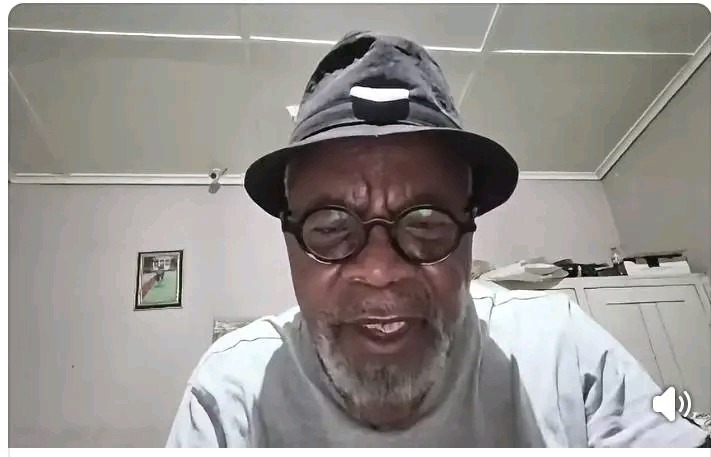
AN APPEAL TO MY YOUNG BROTHER, PRESIDENT HAKAINDE HICHILEMA _ By: Katele Kalumba, Dr
My dear young brother, President Hakainde Hichilema,
I come to you tonight not as a partisan, not as the representative of a political party, but simply as a citizen of Zambia—a senior citizen, a septuagenarian who has lived through much of this country’s political history and experienced, personally, some of its darkest moments.
I speak from experience.
I have been hunted down like an animal by forces that, I was told, had instructions to shoot to kill. I had to preserve my life, and I found a way to do so. Eventually, I surrendered myself to the courts of law.
I was accused of stealing a BMW belonging to the intelligence service.
I spent seven months in custody—longer than you did during your own period of incarceration.
During that time, I experienced things that no human being, particularly an elderly person, should have to endure.
I experienced what I believe was poisoning and various forms of abuse and humiliation. I will, however, always remember with gratitude the nurses at the prison clinic who treated me with humanity.
I therefore speak today with a firm but deeply concerned voice.
I speak as a senior citizen.
I speak as someone who has spent decades studying and participating in public policy, nationally and internationally.
I speak as someone who has travelled extensively, observed different political systems and cultures, and spent more than forty years trying to understand how nations govern themselves and how societies descend into political conflict—and how they can find their way back.
And I speak to you because I know you.
Mr President, please listen to this appeal.
You have now been inaugurated as President of the Republic of Zambia. Whatever happened during the election and whatever disagreements remain concerning it, the country must now find a way forward.
I urge you, therefore, to consider releasing Brian Mundubile, Makebi Zulu, Xavier Franklin Chungu, and the other people currently detained for political or politically related matters, particularly those who have not yet been brought before the courts.
Where the law permits, exercise the constitutional and executive discretion available to you.
Lower the temperature.
Give Zambia some breathing space.
If you want to be heard by Zambians across the political divide—by people who still believe deeply in our country and in what Zambia stands for—you must create the conditions in which they can listen to you without fear.
Our founding generation, despite its mistakes and contradictions, gave us the powerful idea of One Zambia, One Nation.
And those of us who fought for the restoration of multiparty democracy in 1991 did so because we believed that political disagreement should be settled through democratic institutions rather than repression.
I know something about that struggle.
My home at 90 Kalingalinga Road, now known as Kamloops, became one of the places where we met and strategised about how to restore multiparty democracy.
Ask Akashambatwa. Ask Bob Sichinga. Ask Mbita Chitala. Ask others who were part of that period.
Many people sacrificed.
I sacrificed.
I had comfortable positions and salaries abroad—in Geneva, in Florence and elsewhere—but I returned home because I believed Zambia was worth the risk.
When I met Frederick Chiluba one snowy evening in Geneva, I intended to take him to an expensive restaurant. He declined and asked me to take him instead to Manora Restaurant. That simple encounter told me something about the man and helped persuade me to return home.
I came back to Zambia and took leave so that I could return to the University of Zambia Medical School and teach, using academia as my cover while participating in the struggle for democratic change.
There were young people who came to listen to us. There were musicians who composed songs about freedom. There were intelligence and security officers who, in their own ways, sometimes protected us. There were members of the military who helped ensure that meetings could take place.
There were risks.
There were arrests.
There was fear.
But there was also an extraordinary belief that Zambia could become a democratic country.
I remember young people such as Muhabi Lungu, then a UNZA student, coming to listen.
I remember the efforts to get material out of ZNBC and the risks people took to communicate with the country.
I remember working with people such as Deepak Patel.
These are not stories I tell to glorify myself.
I tell them because democracy has a cost.
And those of us who paid some of that cost have a responsibility to remind succeeding generations why we did it.
Mr President, I have advised you before, including through channels that were highly confidential. I am therefore asking you now, as one Zambian speaking directly to another:
Please do not ignore this warning.
The political climate is becoming dangerously tense.
It does not have to remain so.
You have the opportunity to change the direction of the national conversation.
Release those whose continued detention is no longer necessary.
Ensure that everyone facing legitimate criminal allegations is brought before a court and afforded due process.
Where charges are weak or politically coloured, allow the appropriate legal mechanisms to resolve them.
And then concentrate on governing.
You have presented the Grow Zambia agenda as an ambitious programme for the country’s development. Whatever one’s political affiliation, Zambia needs economic growth, jobs, investment, infrastructure, better public services and a future for its young people.
That work cannot be carried out effectively in an atmosphere of permanent political confrontation.
The opposition also has a legitimate constitutional role.
An opposition is not an enemy of the Republic. Parliament is not an extension of the Executive. Political disagreement is not treason.
And democratic competition should not be treated as an obstacle to national development.
Mr President, I am particularly concerned about the continuing political contestation surrounding petitions and attempts to remove or disqualify opposition figures.
You have a substantial parliamentary majority. That gives you considerable capacity to govern and legislate. It should also give you the confidence to tolerate disagreement.
The greater the political space you allow, the less necessary coercion becomes.
I say this respectfully because I know you personally.
You are not Idi Amin. You are not Yoweri Museveni. You are not Paul Kagame. You are not Samia Suluhu Hassan.
You are Hakainde Hichilema of Bwengwa.
Go back, metaphorically, to the child you were.
Remember the values with which you were raised.
Remember what it means to come from a community where people depend upon one another.
Remember that the Presidency is temporary, but the Republic is permanent.
Whatever difficulties you experienced in your own political journey, do not allow those experiences to become the inheritance of another generation of Zambians.
You are now President of the Republic of Zambia.
That office gives you an opportunity that very few Zambians will ever have:
the opportunity to heal rather than deepen political wounds.
Be generous.
Be magnanimous.
Be the statesman that history may yet remember.
Let the courts do their work where there are genuine criminal matters.
Let political opponents breathe.
Let Parliament debate.
Let the media question.
Let civil society speak.
Let citizens disagree.
And then let your Government demonstrate that it can deliver.
Grow Zambia—but grow it together.
My appeal tonight is therefore not made in anger.
It is made from experience.
It is made from the perspective of a senior citizen who has already lived through political persecution, imprisonment, political struggle and national transformation.
I have seen what happens when political leaders refuse to listen.
I have also seen what becomes possible when leaders have the courage to step back from confrontation.
Mr President, you still have that opportunity.
Lower the temperature. Open the political space. Release those who can lawfully be released. Let due process prevail. And give Zambia a chance to breathe.
You are President of all Zambians—not only those who voted for you.
And I say this as your elder, your compatriot and your fellow Zambian:
Choose reconciliation where reconciliation is possible.
May Zambia remain One Zambia, One Nation.
Good night, Mr President.
And good night, fellow Zambians.@HH#Zambians#Viralpost#SADC#AU
Septuagenarian without much to do has to spend all the time spewing rubbish. If there was treason let the people face the law. The problem with barbarians they want the president to be the law. That is why people steal.
Very useless crap not worth reading.
Criminal suspects need court process.
Not presidential privaleges or interference with justice.
A septuagenarian with a criminal record. What did you leave behind for the country. Old man put up or shut up. Tell us what those alleged weapons were meant to serve? It seems you know a thing or two. You smoke too much from the news paper cuttings old folk.just enjoy you remaining time.
There goes a septuagenarian, who some few weeks ago was under a heavy dose of a cheap substance. Mr. Man enjoy your private life. We’ve had a lot of you to the extend that whatever comes from you is stinking and sickening. You have not lived up to the expectation of a senior citizen unfortunately. You are a sad example of a bitter useless old politician with nothing to show to the young politicians.
typo error ” extent”
Yes,can someone show this idiot the video he posted in which he was actually threatening and warning HH,calling him a Satanist.
It is almost like he was aware about what Mundule and company where about to do to HH.Now that Mundubile has failed,he wants to sound wise just to launder himself
Mwanawasa was deadly wrong to let you prostrate before his feet begging for leniency on that presidential podium in front of Zambian’s.Something happened to Mwanawasa that day.Ask the late Brenda Muntemba
Witchcraft who used to disappear during mmd .
Utter rubish from this gentleman. People he supported before elections are alleged to have committed serious crimes and he himself was involved in hate speech against the President for which he could be indicted. Let only the Courts deal with these issues.
How can a convicted criminal speak otherwise? The man is in no position to offer advice let alone call HH his young brother. HH is the Head of State if this thug has any sense of decency.
Ar UNZA he swindled. As a Politican he stole. Who would want to listen to theiving kelptonmanic?
No sense of self awareness…nor introspect. Utter embarassment to the Royal establishment where he hails