

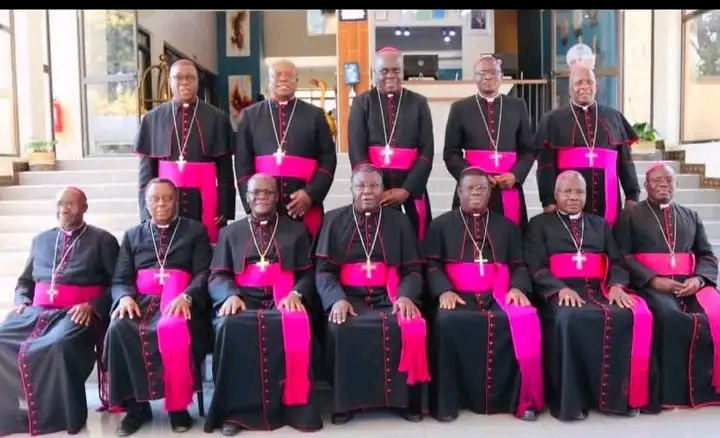
ARE CATHOLIC BISHOPS THE ONLY ORGANIZATION ALLOWED TO MAKE DECISIONS OF HOW ZAMBIA 🇿🇲 SHOULD BE RULED- DEMOCRACY TRUSTS THE BALLOT BOX.
By Dr. Larry Mweetwa
In their pastoral statement issued on November 20, 2026, the Zambia Conference of Catholic Bishops (ZCCB) rightly reminds the nation of our shared history and the virtues of servant leadership. Yet, in urging President Hakainde Hichilema to unilaterally foreclose the ongoing national conversation regarding presidential term limits, the Bishops overlook a fundamental truth of constitutional democracy: the ultimate check on executive power is not a statutory bar it is the sovereign voter at the ballot box.
As the great constitutional thinker Thomas Jefferson observed, “I know no safe depository of the ultimate powers of the society but the people themselves.” Similarly, Abraham Lincoln defined democracy as government “of the people, by the people, for the people”—not government by institutional gatekeepers who decide in advance whom the electorate is permitted to choose.
Let us be entirely clear on what proponents of reviewing Article 106(3) of the Zambian Constitution are and are not arguing. Nobody is suggesting that Zambians stop voting for their preferred candidates, nor is anyone dismantling multiparty competition. If citizens are dissatisfied with President Hichilema or the United Party for National Development (UPND), the Constitution guarantees their absolute right to vote them out of office in a free and fair election. However, to legally compel millions of citizens to remove a leader they genuinely wish to retain simply because that leader has served two terms is to substitute a constitutional technicality for the living will of the electorate.
The ZCCB argues that “we have not forgotten where we came from, and we are not going back”. While the 2001 Oasis Forum movement was a proud chapter in resisting executive overreach, history is a guide, not a straitjacket. As the philosopher Edmund Burke famously noted, “A state without the means of some change is without the means of its conservation.” Zambia’s constitutional architects understood this wisdom.
Under Article 5 of our Constitution, sovereign authority belongs to the people of Zambia. Under Article 88, citizens possess the explicit constitutional right to petition Parliament to amend non-entrenched clauses of the Constitution.
Crucially, Article 106(3)—which restricts a President to two terms—is a non-entrenched provision. Unlike the Bill of Rights protected under Article 79, the framers of our supreme law intentionally left presidential tenure open to legislative amendment via a two-thirds parliamentary majority. Following the lawful procedures laid out in the Constitution to amend a clause within that very Constitution is not an attack on the rule of law; it is the rule of law in action. Indeed, Zambia already recognized the logic of voter choice when Parliament removed two-term limits for mayors and council chairpersons, allowing local communities to decide whether to retain performing leaders.
Finally, while the Catholic Church has long been a respected voice in Zambia’s social and moral life, we must remember that Zambia is a pluralistic republic governed by constitutional institutions, not by ecclesiastical decree. The ZCCB is one voice among many alongside other Christian mother bodies, traditional authorities, trade unions, youth movements, and millions of ordinary citizens whose aspirations deserve equal weight in the public square.
As the legal maxim goes, Vox populi, vox Dei—the voice of the people is the voice of God. If Zambia is truly committed to democratic maturity, we should not fear a constitutional process that empowers citizens and their elected representatives to deliberate openly. Let those who oppose a third term make their case to the voters, and let those who support continuity make theirs. In a true democracy, the people and the people alone should have the final say.
These are lame arguments. The question is ” When was it discovered that people wanted term limits to be removed? And what method was used? Why did this come from nominated MPs and so soon after an election?” The second term has just started and some group has concluded that the President will not complete his projects?
People are not stupid.
Tayali threw the cat out the bag. This is about eating and self preservation. That is not a good basis for removing term limits.