

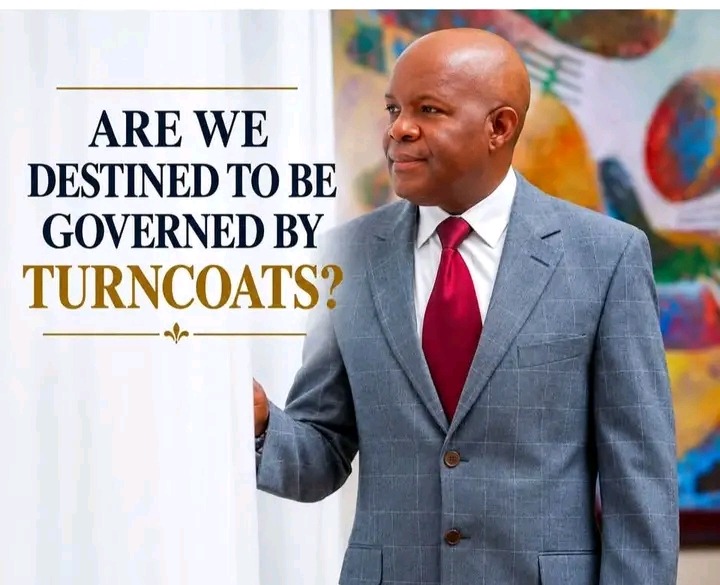
ARE WE DESTINED TO BE GOVERNED BY TURNCOATS?
The politics of turncoats where politicians switch party allegiance opportunistically for power or survival leads to governance decay, voter cynicism, and democratic instability.
It is eroding democratic ethics and public trust. Voters feel betrayed.
Constituents vote for a specific party platform and set of values; when a representative switches sides, it mocks the mandate given by the electorate.
This is deepening cynicism. Constant floor-crossing fosters public belief that all politicians are self-serving, leading to lower voter turnout and civic apathy. This leads to political and legislative instability. Toppling governments become the order of the day. Defections are frequently used in “horse-trading” or engineered crises to destabilise or collapse political parties.
The end result is compromised oversight. Anti-defection laws, while meant to curb chaos, often force blind party loyalty, while unprincipled switching reduces genuine policy debate. In the end, what we have is degradation of party systems, leadership, and weakened ideologies.
Parties transform from ideological institutions into vehicles for personal ambition and patronage. This demoralises the base. Rewarding late-arriving opportunists alienates long-term, battle-tested party loyalists who did the foundational grassroots work. This is a recipe for poor governance and policy implementation as transactions take precedent over policy.
Turncoats are typically focused on securing their next position or survival rather than long-term public welfare, leading to inefficient governance and corruption.
Are we destined to be governed by turncoats?
Politics, when reduced to nothing but a selfish hustle, loses every shred of nobility it ought to command. Unfortunately, this is the sorry state of affairs in Zambia today, where political turncoats have perfected the art of treating political parties like disposable ladders, stepping on them to climb up, only to kick them away once they have reached the top.
Across Zambia’s political landscape, loyalty has become a scarce commodity. Principles have been thrown to the dogs. Political parties are no longer seen as ideological platforms that embody vision, values, and service to the people. Instead, they have been reduced to mere vehicles of personal ambition, useful only until something shinier, or more profitable, comes along.
The result? A theatre of absurdity where defections are no longer newsworthy because they happen with shameless regularity. Politicians dump the parties that birthed and nurtured them at the drop of a hat, offering laughable justifications that fool no one. They mouth off about “injustice” and “consultations with stakeholders” when everyone knows the real issue is either a lost adoption contest, dwindling patronage, or naked greed for more power. And this is shamelessly done
with reckless abandon, showing no regard for the party that once made them relevant.
Without any iota of exaggeration, it is not out of place to opine in this context that today’s kingmaker becomes tomorrow’s castaway if the political arithmetic no longer adds up in his favour. Yesterday’s “lifelong commitment” to a political party evaporates overnight once the promise of a fatter appointment or a juicier contract beckons from another platform.
This culture of betrayal is having a devastating effect on governance and democracy itself. Politics should ideally be about ideas about contesting visions for society and offering the electorate a clear choice. Instead, our politicians have collapsed politics into a game of musical chairs, where the only thing that matters is where one is sitting when the music stops.
Take a hard look at the political actors in Zambia today. Many of the so-called “big names” have swapped parties so many times that they no longer represent anything but themselves. They lack any ideological commitment. They are not guided by the interest of the people. Their only compass is personal gain.
Even worse, some of them have the gall to expect, and often demand, that their followers must blindly move with them each time they jump ship, as if loyalty to individuals has now replaced loyalty to ideas and causes. They expect the people to play the fool to pretend that a defection today cancels out everything they proclaimed yesterday. And, sadly, many times, the people oblige them.
It is a vicious cycle that deepens the poverty of leadership and governance. Political turncoats rarely deliver on any real mandate because they are too busy scheming for their next political meal ticket. They do not build institutions; they build only themselves.
A classic example can be seen in the behaviour of politicians who, after benefiting immensely from a party’s structure, securing elective offices, appointments, and influence, suddenly discover a litany of “grievances” only when their ambitions are threatened. Without shame, they move to the next available platform, pretending to have found new ideological love. But deep down, it is the same old hustling spirit at work.
If these defections were at least driven by principle, the story would be different. If a politician left a party because it abandoned its manifesto, betrayed the people, or became complicit in tyranny, there could be an honourable argument. But no, the defections are almost always driven by crude, primitive, self-serving calculations.
This disease has become national. But the shamelessness with which it is practised here should alarm anyone who still hopes for meaningful democracy in Zambia. It has entrenched a cynical culture where young people see politics as a dirty game, where morality is mocked, and where service to the people is the last thing on any politician’s mind.
One particularly distasteful dimension of this culture is that political betrayal is now rewarded, not punished. Politicians who defect are immediately welcomed with fanfare by their new hosts, no questions asked. They are given “waivers” to contest elections, often at the expense of loyal, long-standing members. In other words, loyalty is punished, and betrayal is rewarded, a perverse incentive system that only breeds more treachery.
How then can the people trust their leaders? How can political parties build any serious structure for the future when their ranks are filled with fair-weather friends? How can democracy grow when political commitment is treated as a market commodity to be bought and sold to the highest bidder?
The ordinary citizens of Zambia must realise that the real victims of this political prostitution are not the parties themselves, but the people. Each time a politician defects for personal gain, it erodes the stability and coherence of the political system. It breeds confusion, weakens accountability, and leaves the electorate more disillusioned.
It is time to call things by their names. A man who uses a party like a ladder and kicks it away is not a leader; he is a mercenary. He is not a democrat; he is a trader in power. Zambia deserves better than a revolving door of self-serving politicians whose only loyalty is to their stomachs.
Going forward, political parties themselves must take some blame and must begin to enforce stricter internal discipline. There must be serious consequences for betrayal. Also, voters must become less tolerant of political harlotry. A candidate’s history of defections should be an automatic red flag for anyone who still believes politics should serve the common good.
The future of Zambia depends on building a political culture where loyalty, principles, and service are valued above quick personal gains. Until that happens, the disgraceful practice of using and abandoning political parties like disposable ladders will continue, and the people will continue to pay the price.
Zambian politicians must rise above this shameful culture. It is not just about winning elections; it is about building a society where trust, loyalty, and commitment to the public good mean something again.
Enough of the turncoat politics. Enough of the shameless betrayals. Zambia deserves better.
Fred M’membe
SP President
Mmembe, your criticisms are exhausting! Mr. Know-it-all, the problem is that you lack self-awareness; you might become a leader if you can grow in this area. Otherwise, you are just a time-waster and noise-maker.
Hatrages it will kill fred mmembe all the time speaks with his emotional.
Fred has valid points in this Article, Guys, I agree with him. Late Daniel Munkombwe’s timeless phrase: “Politics of the belly” and its twin phrase: “Ba mushanina u bwali”. Majority of Zambian Politicians are about their “stomachs” and not “public service”