

Augustine Mukoka and the Politics of Selective Memory
Augustine Mukoka’s latest attack on the Army Commander is not military analysis. It is political theatre dressed up as expertise.
Mukoka has positioned himself as a paid Tonse mouthpiece, and his latest intervention reads less like an objective examination of military conduct and more like the work of a bitter individual determined to settle political scores.
But politics cannot repeal facts, and anger cannot rewrite military command structures.
The facts Mukoka cannot wish away
A Major operates within a hierarchy and under the command of much more senior officers. Decisions taken within a military operation cannot automatically be attributed to one officer simply because his name appears somewhere in the chain of events.
There are operational procedures governing military deployments and command decisions that cannot simply be unpacked in public for political entertainment.
Mukoka should not mistake his lack of knowledge of those procedures for evidence that those procedures did not exist.
If he has evidence of individual wrongdoing, let him produce it.
Name the order. Identify the commander. Establish the responsibility. Produce the evidence.
Otherwise, this is simply retrospective political accusation.
An incident twenty-six years ago cannot be a tool for political convenience
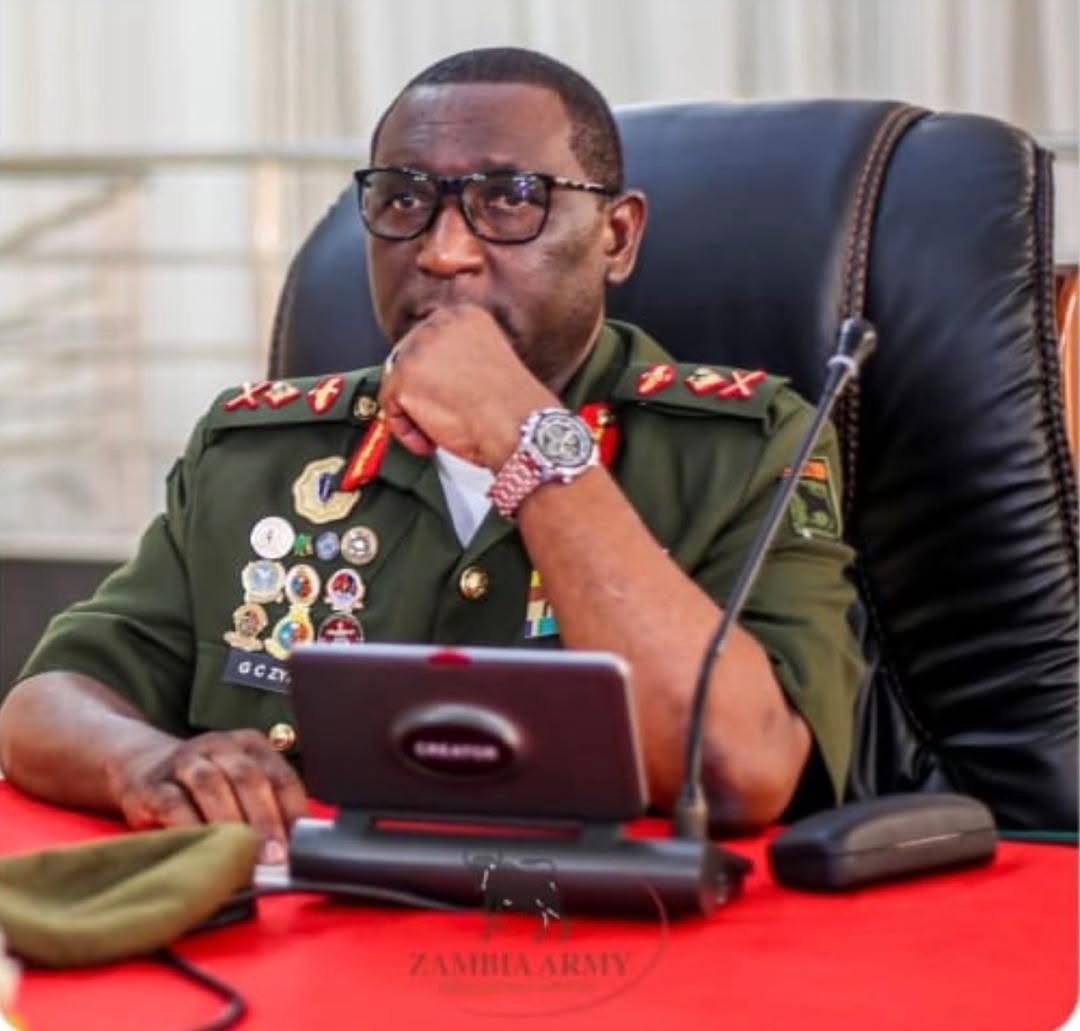
How does one seriously judge a Lieutenant General in 2026 solely through the prism of events involving him as a Major more than two decades ago?
Military careers evolve. Responsibilities change. Ranks change. Command authority changes.
The Major of 26 years ago is not the Lieutenant General of today.
If Mukoka wishes to assess Zyeele’s present record, then he should discuss Zyeele’s present record.
Anything else is selective memory masquerading as accountability.
Preventing bloodshed is not cowardice. Stopping illegal mining is not cowardice. It’s bravery.
When a potentially riotous situation involves individuals armed with pangas, axes, stones and assorted implements, the responsibility of a professional security force is to prevent escalation and protect life.
Containing violence before it becomes a tragedy is not cowardice. Preventing illegal mining is not cowardice.
It is courage exercised with discipline, and strategic timing.
The objective of a security operation is not to produce dramatic images of confrontation. It is to restore order while protecting life and property.
Sometimes the success of a security operation is precisely that the catastrophe never happens.
Why blame the Army and Army Commander alone?
The public witnessed a broader security response involving the Zambia Army, Zambia Air Force, Zambia National Service and Zambia Police Service, operating through established coordination and command arrangements.
So why the obsession with pinning everything on the Army?
If Mukoka is criticising a collective security response, he should analyse the collective response.
If he is accusing an individual officer, he must establish that officer’s precise responsibility.
What he cannot legitimately do is take a complex multi-agency operation and manufacture a convenient political narrative in which one institution becomes the villain.
That is propaganda, not accountability.
The public must demand a higher standard
Mukoka is entitled to criticise Government. He is entitled to criticise the security services. He is entitled to criticise the Army Commander.
But nobody is entitled to mislead the public.
Zambians should demand the same standard from political commentators that they demand from public institutions:
Evidence. Context. Command responsibility. Due process.
Do not allow old incidents to be selectively resurrected for present-day political battles.
Do not allow a collective security operation to be falsely reduced to the actions of one institution.
And do not confuse political hostility with military expertise.
A clear public call
Zambians should reject political sensationalism masquerading as military analysis.
If Augustine Mukoka has credible evidence against the Army Commander, let him present it through the appropriate constitutional and legal channels.
If he has evidence of unlawful conduct, let the competent authorities investigate it.
But if all he has is political rhetoric, selective history and personal accusations, then the public should treat it for what it is:
political campaigning, not evidence.
Our security institutions must remain accountable to the Constitution and the law. But accountability must never become a licence for political scapegoating.
Bring the evidence. Establish the facts. Follow the law. Let the truth prevail.
That is the standard Zambia deserves