

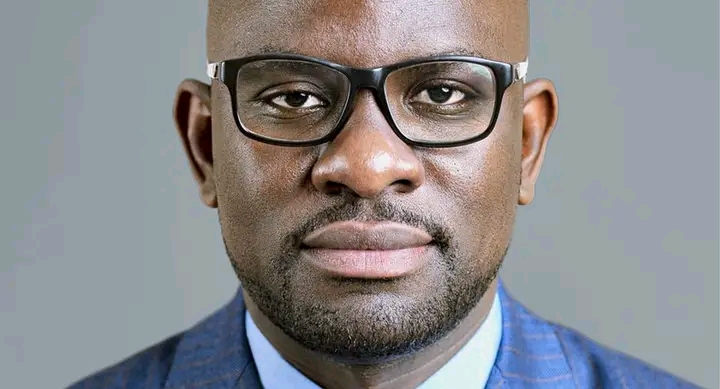
Mpundu’s ‘ready to die or kill’ election warning leaves police, voters and AI with questions
TONSE Alliance Presidential Affairs Chairman Binwell Mpundu has found himself at the centre of an electoral storm after a video in which he declared himself ready to “die” or “kill” over the upcoming elections was posted on his Facebook page, deleted, and then disowned as artificial intelligence.
Lusaka, 10 August – This episode has left the country with a familiar election-season cocktail: high stakes, heightened emotions, police concern, accusations, denials and, now, AI apparently being invited to the campaign trail.
In the video, which Mpundu later deleted, he expressed concern over guidance from the Electoral Commission of Zambia that a ballot paper could still be considered valid even if the voter’s mark was not a cross, provided the voter’s preferred candidate was clearly indicated.
But rather than simply arguing over ticks, crosses and ballot-paper geometry, Mpundu raised the temperature considerably.
“These elections, there is a lot at stake for some of us. Our lives are at stake, and we are betting our necks on these elections. We are ready to die and we are ready to kill,” he said in the video.
Mpundu went on to say that he was prepared both to be killed and to kill because, in his view, things could go badly enough during the elections to put the lives of some people at risk.
The video, however, did not remain online long enough to become a permanent digital monument to election-season rhetoric.
After deleting it, Mpundu issued an apology and said the entire episode was the work of artificial intelligence.
According to Mpundu, he had not had access to his Facebook account for several days after allegedly being removed from it by a hacker. He said his administrators only posted content he approved and insisted that he had not made the remarks contained in the video.
“I’m not very active on social media and I have been made aware of a video posted on my page which is all artificial intelligence as I have not made any such video,” Mpundu said.
He apologised for the sentiments circulated in the video, leaving the public with the unusual task of deciding whether the problem was a politician, a hacker, artificial intelligence, or the increasingly complicated relationship between all three.
Police, meanwhile, are taking the matter considerably less humorously.
Police Spokesperson Godfrey Chilabi said authorities were studying the video and the sentiments attributed to Mpundu before issuing an official statement.
Chilabi described the message as “very unfortunate” if Mpundu was indeed the person speaking in the footage.
He warned that statements of that nature, particularly during an electoral period, could frighten voters and undermine confidence in the electoral process.
“We are in an electoral period or era before voting, and such messages have the potential to scare electorates,” Chilabi said.
He added that police did not expect such statements from a politician with a significant following among members of the public.
In other words, while politicians may campaign for votes, police would apparently prefer they did not campaign with existential threats attached.
The matter has also attracted the attention of Democratic Advocates for Good Governance Executive Director Fabian Mutale, who said he had reported Mpundu to police.
Mutale said he considered the remarks to be in bad taste, particularly with the country only days away from elections.
“I don’t think Zambians should be made to live in fear and in terror,” Mutale said, urging law enforcement agencies to thoroughly investigate the statements and ensure that citizens were not incited to engage in violence.
The controversy comes at a sensitive moment in the electoral calendar, when political rhetoric is already running hot and even the humble ballot mark has acquired enough significance to generate heated debate.
For now, however, the central question is not whether a voter’s mark is a cross, a tick or another unmistakable indication of preference.
It is whether the man who appeared to promise that he was ready to “die” or “kill” actually said it.
Mpundu says AI did.
Police say they are studying the evidence.
Mutale says he has reported it.
And the deleted video, having briefly entered the political bloodstream before disappearing, has left everyone waiting for the next instalment of Zambia’s increasingly crowded election-season drama.
-Nkanionline 2026 #NewsOnDemand