

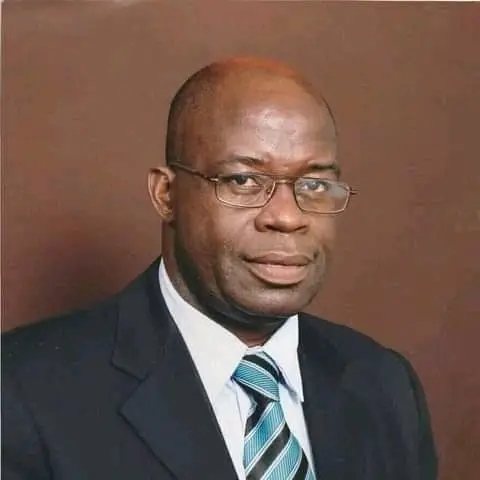
By Charles Kakoma
CAN POLITICAL RALLIES WIN AN ELECTION?
In the run-up to the 1991 Presidential and General Elections, UNIP President and Zambia’s Republican President Dr Kenneth Kaunda, was pulling crowds at his political rallies. His main political challenger was the Movement for Multiparty Democracy (MMD) leader Frederick Chiluba. Dr Kenneth Kaunda’s huge rallies were particularly attended by women who were singing solidarity songs about him. When elections came, Dr Kenneth Kaunda lost to Frederick Chiluba. KK was shocked as he could not believe that all those followers did not vote for him, especially the women. This prompted him to ask the big question; where were all the women who were following him behind?
Ten years later in 1991, General Christon Tembo, who had just resigned as Republican Vice President and formed the Forum for Democracy and Development (FDD), decided to run for the presidency. FDD came with a bang especially in Lusaka and many people in Lusaka were saying that FDD was forming the next government. Some of my friends were enticing me to join FDD and stand on its ticket in Zambezi West Constituency. I refused and told them that FDD was only in Lusaka and was not on the ground in many parts of the country. I opted to stand on the UPND ticket. When elections came, Gen Christon Tembo lost . He only managed to get a few Parliamentary seats in Lusaka and the Eastern Province. The presidential election was won by Levy Mwanawasa of the MMD. I also won as an MP on the UPND ticket in Zambezi West.
One can also draw lessons from other political heavyweights like Benjamin Mwila who formed his own political party and was pulling crowds during elections but never made it to State House .
In 2021, Edgar Chagwa Lungu, who was the Republican President and Patriotic Front (PF) candidate was pulling crowds throughout the country. When elections came, he lost to Hakainde Hichilema of the United Party for National Development (UPND).
The current political excitement generated by the rallies held by Brian Mundubile and Makebi Zulu of the Tonse/ Pamodzi Alliance in Kitwe, Kabwe and Petauke cannot be any different from other political bubbles in Zambia’s history.
People attend rallies for various reasons.
Some people attend rallies because of certain expectations. They expect to receive campaign materials much as T-shirts, caps, chitenge and money. Some political parties like the PF commercialized politics by its “tantameni” strategy to woo votes. Tantameni in Bemba language meant telling people to line up or form a queue in order to receive money.
Therefore, when people hear that there is a political rally, they troop to the rallies in anticipation of some benefits.With the high levels of poverty in the country, some of the people attend rallies for all political parties. In rural areas, some women have even composed generic songs which they sing for any candidate. They just substitute the name of the candidate to suit the occasion. After attending the rally and no “kamo-kamo” is given, they go away feeling disappointed and will not vote for them.
People also attend rallies because they are attracted by music especially if the musicians are popular artists. In the abscess of meaningful entertainment, some people who are not doing anything productive at home also go to attend political rallies. It becomes a source of entertainment. This is particularly so for people that are bold at home. Children who are under 18 years old and not even qualified to be voters also find rallies attractive.
Other people just like to go for rallies out of curiosity. They just want to know who the candidate is, how he or she looks like. It would not be surprising to find that some people have gone to a Tonse Pamodzi Alliance rally to see with their necked eyes who this Mundubile or Makebi is.
One can therefore argue that crowds at political rallies do not necessarily translate into voters. Of course, if a political party organises a rally and is poorly attended, it is a flop and a sign of poor performance in the fourth coming elections.
Successful political parties hold rallies as a supplementary support activity to boost its overall campaign strategy. It is political naivety to rely on political rallies to win an election.
The best political campaign strategy is BOOTS ON THE GROUND.
This is the strategy from the Anderson Kambela Mazoka school of political thought. From the day Mazoka formed UPND, he embarked on community engagement as a strategy to convince people to follow him and the UPND. He opted to engage opinion leaders, headmen, chiefs, church leaders, students, lecturers, labour leaders, farmers, teachers, health workers and other community leaders and opinion influencers.
Mazoka embarked on political party grassroots mobilisation by forming
UPND branches and wards throughout the country. The grassroots leaders embarked on door to door campaigns. Mazoka travelled throughout the country almost quietly planting the seed for the UPND revolution. It was a perfect strategy because, with the Public Order Act in place, he could not have managed to popularise the party using public rallies. He was certainly going to be stopped. When elections came in 2001, Anderson Mazoka pulled a surprise. Many people believe he won the presidential election but was not allowed to form government.
From the Mazoka days, his successor, Hakainde Hichilema, has continued with the grassroots mobilisation strategy. While in opposition, HH traversed Zambia. He has been to all corners of Zambia reinforcing grassroots mobilisation. He has planted foot soldiers at every polling station who are doing door to door campaigns.
People should, therefore, not be surprised that HH is not holding public rallies now. It is a strategy. The time will come for him and his running mate to hold political rallies after the grassroots are game. Watch the space.
With only about 50 days to go before elections, the opposition have a toll order to start forming campaign teams in every ward throughout the country who can campaign for them. The best bet for the opposition is public rallies. But with 116 districts and 226 constituencies to cover in 50 days, it is almost impossible especially that they are travelling by road. Even if they cover one district per day, they will only cover 50 districts out of 116.
It will be difficult for people, especially in rural districts, to vote for a president they have never seen. To add salt to injury, most of the party structures of the former ruling party, the PF, have gone to the UPND through defections. If the Tonse Pamodzi Alliance is banking on the PF structures to campaign for them, then they are in for a rude shock. HH is winning and winning big. The best the Tonse Pamodzi Alliance will do is to put up a good show through public rallies.
@Charles Kakoma, I concur with you. UPND IS IS ROOTED political party ever. Indeed Brian and Makebi are in for a shock.