

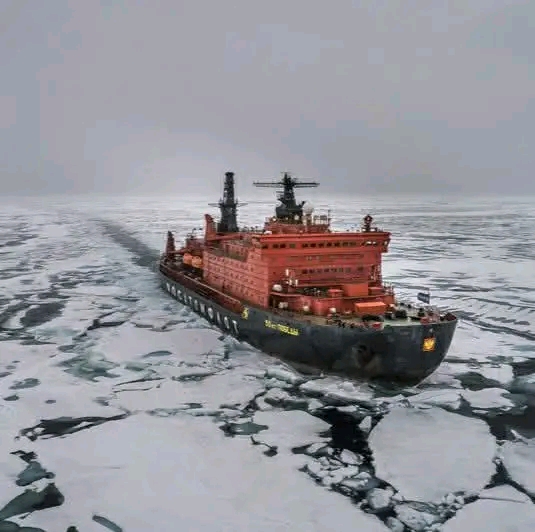
BREAKING: China Tests Arctic Sea Route to Bypass Red Sea and Suez Canal
China is testing a new maritime route through the Arctic Ocean that could allow its commercial vessels to reach Europe while avoiding several increasingly volatile waterways in the Middle East and surrounding regions.
The route could reduce Chinese shipping dependence on the Indian Ocean, Red Sea, Gulf of Aden and Bab el-Mandeb, waterways that have faced growing security risks, attacks, blockades and geopolitical tensions particularly amid the wider conflict involving Israel, the United States and Iran.
China has also sought to reduce exposure to risks including attacks by Somali-based pirates in the Indian Ocean.
According to reports, a Chinese test vessel sailing through Arctic waters reached Europe in approximately 18 days. That represents a major potential reduction compared with traditional routes through the Red Sea and the Suez Canal, which can take around 40 days, depending on conditions.
The development could have major geopolitical and economic implications. A viable Arctic route would give China an alternative corridor to European markets while reducing its dependence on strategically sensitive maritime chokepoints in the Middle East.
It could also challenge the strategic importance of countries seeking greater influence over the Red Sea and its surrounding waters. Turkey, the United States and Israel have all sought to strengthen their strategic positions in and around the wider region, while countries including Saudi Arabia, Pakistan and Turkey have explored greater cooperation on Red Sea security. Ethiopia has also shown growing interest in gaining greater access to regional maritime routes.
The growing competition suggests that the Red Sea could become an increasingly contested strategic zone in the years ahead potentially resembling the current confrontation surrounding the Strait of Hormuz.
China’s Arctic experiment appears to show that Beijing is already preparing alternatives rather than relying exclusively on vulnerable Middle Eastern shipping corridors.
However, the Arctic route is also generating concern among environmental organizations. Increased commercial shipping through fragile Arctic waters could accelerate environmental pressures, including disturbances to ecosystems and potentially contribute to the risks associated with rapidly changing Arctic sea-ice conditions.
China’s search for alternative maritime routes is therefore becoming more than an economic issue it is emerging as a major geopolitical and environmental story with consequences extending far beyond the Arctic.
Stay tuned for further developments.