

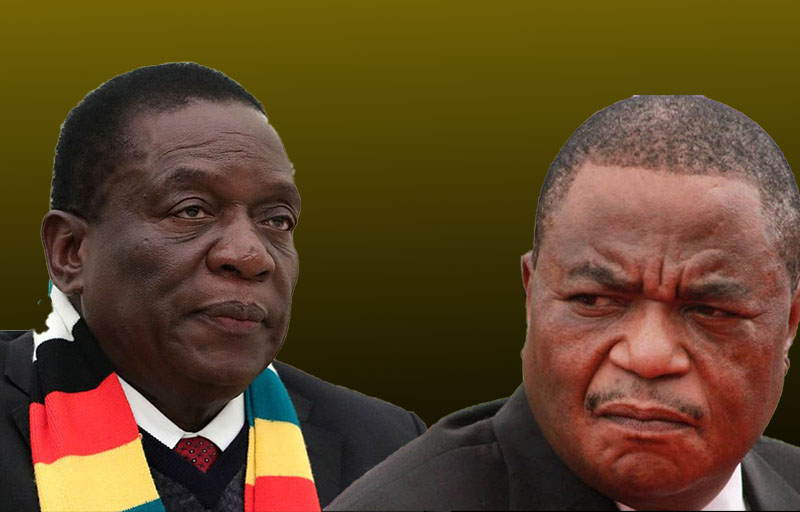
President Emmerson Mnangagwa mounted a spirited defence of his economic record on Friday after his deputy Constantino Chiwenga questioned whether Zimbabwe was repeating the mistakes that led to the 2017 coup that brought the two men to power.
In a pointed challenge to the government’s performance, Chiwenga called for a “brutal and honest self-appraisal” of Zanu PF’s record, asking whether the ruling party remained in touch with the aspirations of ordinary Zimbabweans.
The diverse opinions from the podium, on the fourth day of Zanu PF’s annual conference in Chinhoyi, exposed the tensions at the heart of the party’s succession struggle, with Chiwenga widely viewed as a leading contender to replace Mnangagwa.
The vice president has been at odds with Mnangagwa over constitutional amendments championed by the president’s allies that extended his stay in office by two years, to 2030, beyond the end of his constitutionally prescribed second and final term in 2028.
Although Chiwenga did not directly mention the proposed extension, his questions about whether party resolutions genuinely reflected the wishes of the people appeared to challenge the process through which Mnangagwa’s continued presidency is being pursued.
The former army commander, who played a central role in the military coup that ended Robert Mugabe’s rule in November 2017, appeared keen to draw a distinction between his own political outlook and that of Mnangagwa’s administration.
Introducing the president, Chiwenga returned to a familiar theme in his criticism of officials he accuses of exploiting the state for personal gain, having previously used the Shona term zvigananda to describe those feeding off public resources. His chief target is Kudakwashe Tagwirei, the ambitious millionaire tycoon who has been rushed to the upper echelons of the party by Mnangagwa.
“Let us not forget that the Second Republic was founded on the pursuit of renewal, reform, results-based governance, and national development. That promise imposes upon us an enduring obligation to deliver results that exceed all past achievements,” Chiwenga said.
“What led to the emergence of the Second Republic? It emerged from correcting the rot that was prevailing. Are we not repeating the same mistakes? That is the question we should be asking ourselves.”
The remarks amounted to a challenge to Mnangagwa to demonstrate that the political order established after Mugabe’s removal had delivered a meaningful break from the failures of the previous administration.
Chiwenga also cast himself as an advocate of accountability and popular interests at a time when the dispute over Mnangagwa’s tenure has become a defining issue within Zanu PF.
Mnangagwa responded by citing economic growth, declining inflation and improvements in public infrastructure, presenting his administration’s record as evidence that the “Second Republic” had delivered on its promises.
“We are all observing huge improvement in our welfare, be it food security, water, improvements to school infrastructure, hospitals, roads or even our houses we live in, they are now of a high standard,” Mnangagwa said.
“In 2025, our GDP grew by 8,3 percent and is projected at 5 percent in 2026. Through our astute monetary policy, annual inflation has come down to 2,8 percent and is accompanied by price stability.”
He said Zimbabwe’s gross domestic product had grown from US$16 billion when the “Second Republic” took office to US$66 billion, while GDP per capita had risen from US$1,200 in 2017 to US$3,500.
“These achievements are praise-worthy,” Mnangagwa said, arguing that the figures demonstrated the country’s progress under his leadership.
Chiwenga, however, questioned whether the party’s policies and resolutions were genuinely responding to the needs of Zimbabweans, a challenge that also carried implications for the debate over Mnangagwa’s proposed extension.
“We must ask ourselves the difficult questions: Are our resolutions truly coming from the people?” he said.
“The strength of Zanu PF emanates from the people… We must continually measure whether our programmes, born from our revolution, are genuinely lifting livelihoods, addressing community needs, and generating sustainable value across the nation.”
The dispute comes as Mnangagwa has signed constitutional amendments to keep him in power until 2030, delaying the succession contest and potentially prolonging Chiwenga’s wait for the presidency.
Chiwenga’s intervention suggested that the battle is not only about who succeeds Mnangagwa, but also about competing claims over the legacy of the 2017 coup and whether the ruling party has remained faithful to the promises made when Mugabe was removed.
Zanu PF’s conference ends on Saturday, when the party is expected to release its resolutions.-Zimlive