

CIKULU BWACHA AND FILI UKO TULEYA SYNDROME: LESSONS FROM THE EMIRATES
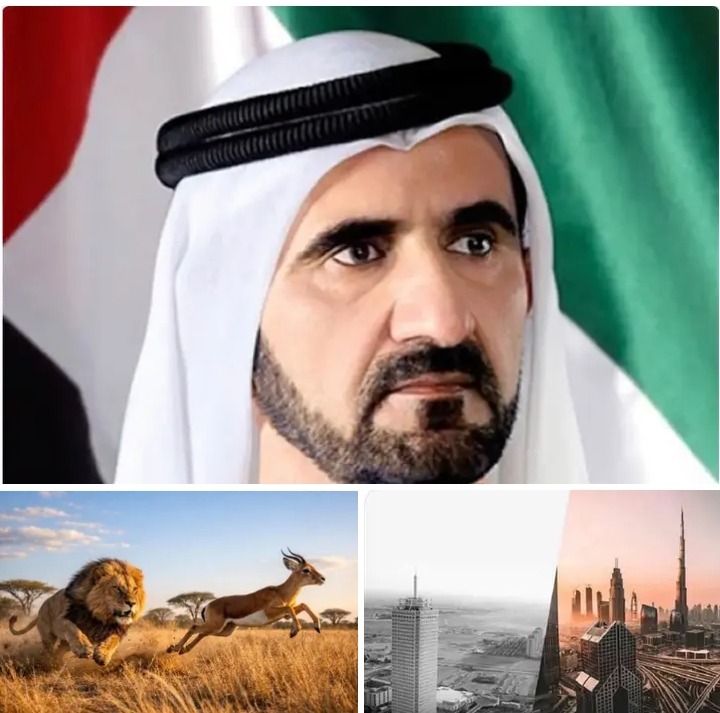
There is a powerful lesson used by Sheikh Mohammed bin Rashid Al Maktoum, Ruler of Dubai and Vice President and Prime Minister of the UAE, to describe the reality of competition. I extensively and intensively studied the UAE model 10 years ago. Sheik Mohammed says that every morning, the gazelle wakes knowing that it must outrun the lion or perish. The lion wakes knowing that it must outrun the gazelle or starve. Whether you are the lion or the gazelle, when the sun rises, you had better be running.
That lesson is critical for Africa, and particularly for Zambia. We have two expressions that describe a mentality which can become extremely dangerous when transferred into national development, namely, “Cikulu bwacha” and “fili uko tuleya.” Cikulu bwacha essentially means “as long as day breaks.” Tomorrow will come, somehow we shall manage. Fili uko tuleya means, approximately, “it is up to where we are going”, let us continue moving and somehow things will sort themselves out when we get there.
These expressions can communicate resilience and optimism in ordinary life, but a nation cannot develop on Cikulu bwacha and fili uko tuleya. Development must be structured, systematic and strategic. A country must know where it wants to be in ten, twenty and thirty years. It must identify the industries that will take it there, determine the infrastructure, technology, skills and capital required, build the appropriate institutions, assign responsibilities, establish measurable targets, finance the programme, execute it and continuously measure results.
This is why President Hakainde Hichilema’s repeated emphasis on being methodical is extremely important. From the beginning of his presidency, President HH has repeatedly explained that his administration is being methodical in approaching national problems. More recently, when swearing in the first four ministers of his new Cabinet, he again emphasised another important principle that we must not merely work hard, but we must work smart.
These are not small expressions. They describe the culture Zambia needs for accelerated development. Being methodical is the opposite of fili uko tuleya. Working smart is the opposite of simply expending enormous energy without a properly designed system. Working smart means knowing the destination before beginning the journey. It means sequencing interventions correctly. It means using technology, data, capital, skills and institutions intelligently. It means ministries working as components of one national system rather than as isolated administrative islands.
A country can work extremely hard and remain poor. Millions of people can wake up at 05:00 every morning, work until sunset and remain trapped in low productivity activities. The transformation comes when hardworking people are supported by smart institutions, technology, infrastructure, capital and properly designed systems that multiply human productivity. This is one of the great lessons from the Emirates.
The UAE did not wake up one morning and discover Dubai. Its leaders deliberately positioned the country in aviation, ports, logistics, tourism, finance, real estate, technology and international investment. They built institutions around those ambitions, mobilised capital, attracted skills and connected their economy aggressively to international markets. That is development by design.
The UAE also does not simply tell its businesses to work hard and then leave them to face the world alone. It has institutions providing export credit insurance, financing solutions, political risk protection and market intelligence. Its diplomatic machinery facilitates trade and investment. It has programmes designed to identify promising enterprises and develop them into national champions.
The United States operates through different institutions but understands the same principle. American companies competing internationally can receive export credit support, insurance, commercial diplomacy and government advocacy. This is an important lesson for Africa.
Powerful nations stand behind their corporations. Their companies enter our countries looking for minerals, contracts, markets, agricultural commodities and investment opportunities with sophisticated financial institutions, technology, intelligence, diplomatic networks and enormous pools of capital behind them.
The lion is organised. The gazelle cannot survive by simply hoping tomorrow will be better. Zambia therefore needs to deepen the methodical approach into a comprehensive national production and export architecture. Imagine identifying 100 high potential Zambian enterprises in agriculture, agro processing, mining services, engineering, pharmaceuticals, technology, tourism, manufacturing, renewable energy and other strategic industries and systematically developing them into regional and eventually global champions.
I am referring to political companies or briefcase companies. These must be real productive enterprises, selected transparently according to capability, governance, innovation, employment creation, value addition and export potential. Finance them competitively. Help them acquire technology. Guarantee qualifying export credit. Connect them to universities and research institutions. Open international markets for them. Use our embassies as commercial intelligence centres. Connect SMEs to mining and industrial supply chains. Use public procurement strategically and transparently to deepen domestic productive capacity. Then measure everything in terms of factories established, tonnes produced, technologies developed, jobs created, imports substituted and export dollars earned.
Our ambassadors should know more than diplomatic protocol. They should know what Zambia can sell in the countries to which they are accredited, who the buyers are, what standards are required, what major tenders are coming and which Zambian businesses are capable of supplying them. Copper must lead to downstream industries. Agriculture must lead to agro processing. Strategic minerals must support manufacturing. Universities must feed research and innovation into industry. SME financing must produce enterprises capable of graduating from microbusinesses into serious corporations.
Our country must operate as one coordinated growth system. That is systems thinking. Structured, Systematic, Strategic, Methodical and Measurable. The world will not stop while Zambia develops. The lion is running. The gazelle is running. America is running. The Emirates are running. China is running. India is running. Other African countries are running. Zambia cannot wake up every morning saying Cikulu bwacha “as long as day breaks” and then proceed on fili uko tuleya “it is up to where we are going, and somehow things will sort themselves out.”
Hope is important. Resilience is important. Hard work is indispensable, but accelerated development requires more. Know where you are going. Build the system to get there. Work hard. Work smart. Measure the results. Correct course. Keep moving. That is what being methodical means. When the sun rises, Zambia must already be running, and we must know exactly where we are going.
Zambia Forward, TOGETHER in UNITY 🇿🇲
Saviour Chishimba
President
United Progressive People (UPP)
UPND Alliance Partner