

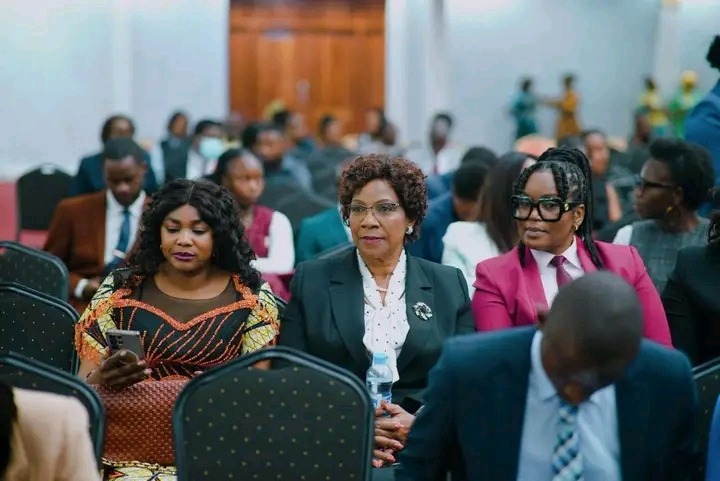
CONSTITUTIONAL REFORM HELPS LIFTS WOMEN TO 60 SEATS IN PARLIAMENT
Zambia now has 60 women in the National Assembly, a total made possible by the constitutional reform enacted under President Hakainde Hichilema.
Of the 224 members returned in the 13 August vote, 34 were women and 190 men. Two constituencies, Mandevu and Lumezi North, are yet to go to the polls.
A further 26 women have entered Parliament through the 40 proportional representation seats created by the Constitution of Zambia (Amendment) Act No. 13 of 2025. Without that reform, women would make up roughly 15 per cent of the House. They now account for close to 23 per cent.
Women also went beyond the allocation set aside for them. Twenty PR seats were reserved for women, and women took all 20, then five of the 15 youth seats and one of the five seats for persons with disabilities.
The UPND has 41 women in Parliament, 20 elected and 21 through proportional representation. The NRPUP has 14, nine elected and five through PR. Four sit as independents and one for Citizens First.
Among those entering through the new seats are UPND deputy secretary general Gertrude Imenda, former Lusaka deputy mayor Ketty Nanyangwe, Dr Irene Muyenga, and Democratic Party president Judith Kabemba, alongside youth members including Jemimah Mwaba and Fatima Moono Sicheele
The reform was designed to broaden who sits in the chamber. On the first count, it has done so, adding in a single Parliament almost as many women again as the electorate returned.
We appreciate the introduction of Proportional Representation in Parliament, which has increased the participation of women, young people, and persons with disabilities in the political process. However, their representation remains relatively low.
During the fielding and adoption of candidates for the August 2026 General Elections, political parties, including the ruling UPND, still had low levels of participation and representation of women, youth, and persons with disabilities. While Proportional Representation can contribute to improving their representation in Parliament, more needs to be done at the political-party level.
Political parties should deliberately increase the number of women, young people, and persons with disabilities who are adopted as candidates during elections. Greater inclusion at the candidate-adoption stage would give these groups a stronger opportunity to participate directly in elected positions and contribute to decision-making.
Proportional Representation is an important step towards inclusive political participation, but it should be complemented by concrete measures within political parties to ensure that women, youth, and persons with disabilities are meaningfully represented at every level of the electoral process.