

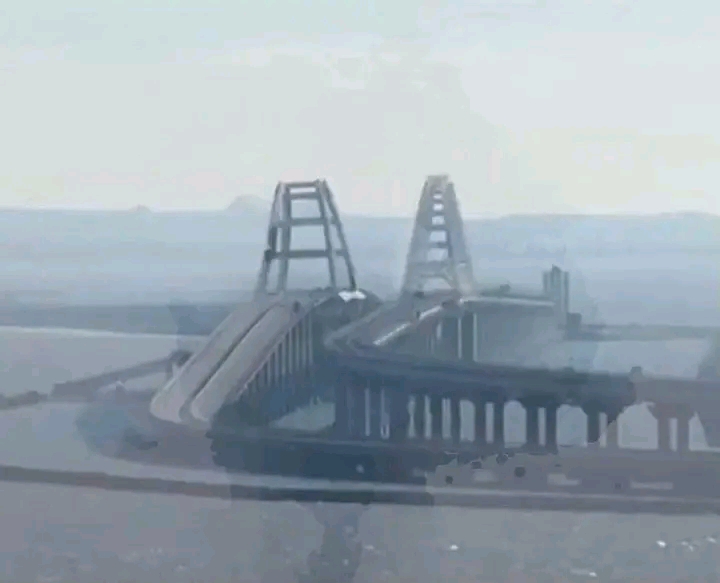
CRIMEAN BRIDGE ARCH REPORTED DAMAGED AS TRAFFIC RESTRICTIONS CAUSE LONG QUEUES
Reports of damage to an arch of the Crimean Bridge have raised concerns about the road span following the overnight attack on November 16. Russian authorities acknowledged the strike, announced restoration work and initially suspended road traffic, leaving approximately 2,000 vehicles waiting on both approaches, according to Russian channel Mash.
The arch is a load-bearing part of the crossing. Vertical hangers transfer weight from the roadway into the curved steel structure, which works with connecting beams and supports to carry the span and passing vehicles across the shipping channel.
If the arch has bent or shifted from its designed position, that could affect how those loads are distributed. Deformation can place additional strain on connections and bracing, potentially requiring weight restrictions, reduced traffic or substantial repairs. The consequences depend on the precise location and severity of the damage.
Russian and Ukrainian monitoring channels have reported visible deformation, including an alleged 15-degree tilt. Neither that measurement nor the extent of structural damage has been independently verified. The circulating photographs and 3D reconstruction do not establish how far the arch has moved from its original alignment.
Russia’s Transport Ministry said specialists were assessing whether vehicles could cross in alternating directions through the available roadway. Such an arrangement would allow limited movement while reducing capacity and prolonging queues.
Authorities also announced two warming points on the Krasnodar approaches, providing shelter and hot drinks for waiting drivers. Passenger trains experienced earlier delays, although the ministry subsequently said railway services were operating.
Kremlin spokesman Dmitry Peskov described the damage as insignificant while acknowledging that assessment work continued. His statement that transport was moving did not specify whether normal road access had resumed.
For the crossing, the lasting consequence will depend on whether the reported arch deformation affects its safe carrying capacity. A bridge can remain standing while still requiring major restrictions—and repairs to a load-bearing structure can be considerably more demanding than replacing damaged road surfacing.