

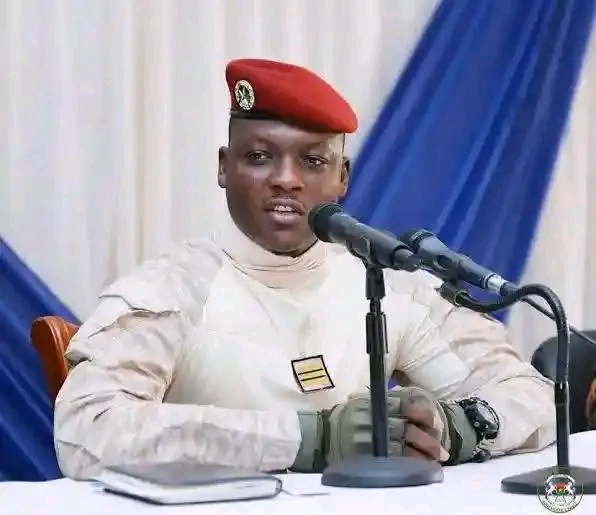
“Democracy is slavery. There is no democracy in this world. They impose it when they want and, to establish it, they kill.”
Those were the words of Burkina Faso’s Captain Ibrahim Traoré during an interview marking the first anniversary of the Popular Progressive Revolution in April 2026.
He also offered his own definition of imperialism:
“Imperialism is the individual who wants to dominate the other, keep him in slavery and oppress him.”
Traoré’s argument is rooted in a question that has troubled many Africans for generations: why has democracy sometimes been used as a justification for foreign intervention, military operations and the overthrow of governments?
He pointed to Libya, where the 2011 NATO intervention, conducted under a UN-authorised civilian protection mandate, contributed to the overthrow of Muammar Gaddafi. The country subsequently descended into years of political fragmentation and armed conflict.
But his remarks raise another difficult question: if an externally imposed political system is rejected, what system guarantees ordinary citizens the freedom to choose their leaders and hold them accountable?
The debate goes beyond Burkina Faso. It concerns who gets to define democracy, who benefits from it, and whether African countries should be free to develop political systems that reflect their own histories and aspirations.
Is Traoré challenging the hypocrisy surrounding Western democracy, or is his rejection of the system opening another difficult debate about political accountability in Africa?