

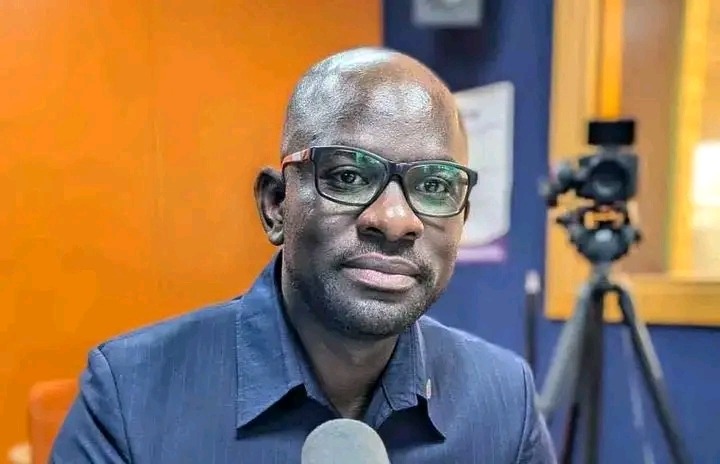
DIALOGUE OF TRAPPED BINWELL MPUNDU
By DAVID KANDUZA
THE landscape of Zambian politics is no stranger to dramatic pivots, but the latest maneuver by Tonse-Pamodzi Alliance chairperson for presidential affairs, Binwell Mpundu, stretches the boundaries of political credibility.
Only weeks after shocking the nation with an inflammatory statement declaring he was “ready to die or kill” over the August 2026 elections, Mr Mpundu has reemerged.
This time, he is not brandishing rhetorical weapons; instead, he is holding an olive branch, publicly pleading for a ’roundtable’ reconciliation with President Hakainde Hichilema.
An objective analysis of this sudden transformation reveals a narrative less about a genuine desire for national peace and more about individual political survival, opportunism and an underlying lack of respect for the office of the Head of State
However, looking closely at the timeline of his actions, this sudden shift appears less like a genuine change of heart and more like a tactical U-turn designed to escape accountability.
To understand why the public and political analysts view Mr Mpundu’s appeal with deep skepticism, one must revisit his actions over the last month.
In the intense final stretch leading up to the August 13, 2026, general elections, Mr Mpundu posted a shocking video on his Facebook page declaring he was “ready to die or kill” over the outcome of the polls.
Following immediate condemnation from the Church, civil society and State House, Mr Mpundu and his alliance partners tried to scrub the evidence.
They claimed the video was an Artificial Intelligence (AI) deepfake.
When that narrative failed to hold, Mr Mpundu was forced to admit the video was genuine, shifting his excuse to a claim of “self-defense”.
Concurrently facing pre-existing charges of seditious practices for separate incidents of allegedly inciting violence, Mr Mpundu failed to appear before the Lusaka Magistrates’ Court.
Despite a bench warrant being issued for his arrest and the court summoning his sureties to explain his whereabouts, Mr Mpundu effectively vanished from the local scene, with recent reports tracking his broadcast communications to a hideout in Europe.
It is against this backdrop of legal evasion and inflammatory rhetoric that Mr Mpundu’s sudden demand for a “round table” must be evaluated.
Writing from a safe distance abroad, he now laments that Zambia’s politics has become “primitive and dirty,” warning that “tomorrow will be too late.
This approach lacks the necessary respect for the Head of State and the rule of law for several reasons.
Evading Justice while requesting favours: You cannot reasonably scream fire in a crowded theater, flee the country to escape a court-ordered arrest and then expect to dictate terms of reconciliation to the sitting President.
By substituting legal accountability with a demand for political dialogue, Mr Mpundu is attempting to use “peace talks” as a shield against criminal litigation.
Mr Mpundu’s appeal frames the current political tension as a mutual misunderstanding between equal factions.
Ultimately, national unity and political reconciliation are vital pillars for Zambia’s democratic maturity, but they cannot be built on a foundation of hypocrisy.
For an appeal to a sitting Head of State to be genuine, it must be accompanied by a willingness to face the consequences of one’s own rhetoric.
Mr Mpundu’s sudden pivot from violent ultimatums to a demand for a high-level roundtable is a transparent attempt to substitute legal accountability with political theater.
True respect for the Office of the President—and the Zambian people—demands that leaders who preach peace first answer to the law.
Until Mr Mpundu steps out of the shadows, cooperates fully with law enforcement, and offers an unconditional apology for his inflammatory remarks, his olive branch will remain a hollow gesture born of political survival.
Mr Mpundu’s sudden outreach is a classic political maneuver: escalate to create leverage, retreat when challenged, and then demand a truce to escape consequences.
If he truly respected President Hichilema and the people of Zambia, his first step would not be a public relations campaign calling for an elite roundtable.
It would be a humble submission to the law enforcement agencies currently investigating his violent rhetoric.
Until he accounts for his actions, his appeal for peace cannot be viewed as genuine.
It remains a tactical retreat by a politician who spoke too aggressively, hid when it got hot and is now trying to negotiate his way back to safety.
No no no!!!