

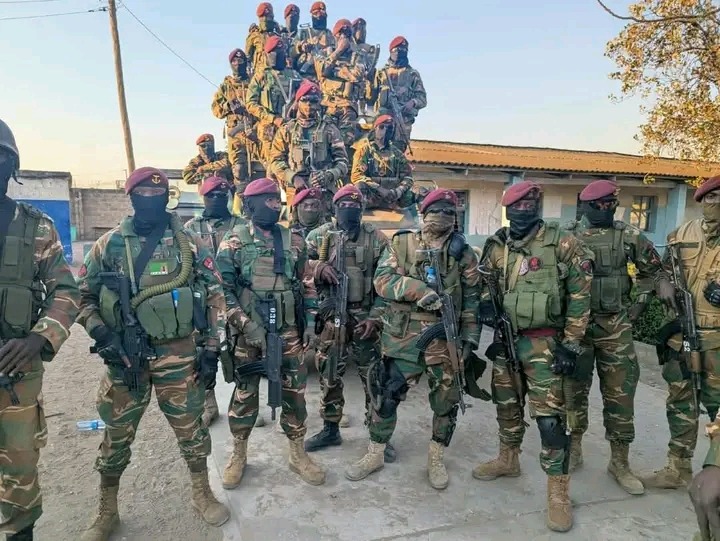
DO NOT TURN THE ZAMBIA ARMY INTO A POLITICAL BATTLEGROUND.
By Dr. Martin MUSHUMBA
THERE comes a point in political contestation when criticism ceases to be legitimate scrutiny and begins to become dangerous to the nation. I believe Zambia must pay close attention to that point.
In the aftermath of the 2026 general elections, there has been an increasingly troubling pattern in which sections of the political opposition have extended their criticism beyond the Government and its policies to the Zambia Army itself and, more recently, its senior leadership.
Questions surrounding the conduct of the elections, the deployment of security personnel and particular military operations are legitimate subjects for public debate. In a democracy, no public institution should be beyond scrutiny.
But there is an important distinction between holding an institution accountable and deliberately destroying public confidence in it. That distinction appears to be getting lost.
The Zambia Army is not a political party. It is not UPND. It is not PF. It does not belong to the President, the Government or the opposition. It belongs to the Republic of Zambia. That simple fact should guide our political discourse.
Our Constitution envisages a Defence Force that is professional, disciplined, patriotic and non-partisan. It also places the Defence Force under civilian authority and within the framework of the Constitution and the law.
This constitutional arrangement is fundamental to Zambia’s democratic stability. It means that the military must not become a political instrument. At the same time, politicians must be extremely careful not to drag the military into partisan politics through rhetoric designed to undermine its legitimacy.
No one is saying that the Zambia Army should be immune from accountability but that political contestation must not become a campaign to undermine one of our country’s most important institutions.
If a soldier commits an offence, that soldier must be investigated. If a military procurement process is corrupt, it must be investigated. If public resources have been misappropriated, the relevant institutions must act. If military personnel abuse civilians, there must be accountability. If a deployment raises constitutional or legal questions, those questions should be subjected to appropriate scrutiny. That is what a constitutional democracy is supposed to do.
We should therefore be careful about the political culture we are creating. Today, political anger may be directed at one Army Commander. Tomorrow, it could be directed at another. Today, the target may be the military. Tomorrow, another national institution could become the object of similar attacks.
Eventually, citizens may begin to trust neither the military, the police, Parliament, the Electoral Commission, the courts nor any other institution of the State. That would be a profoundly dangerous Zambia.
What is concerning now is the growing tendency to publish extraordinarily serious allegations through social media and political platforms and present them to the public as established facts before competent institutions have investigated them.
Allegations of murder, corruption, electoral manipulation, political coups, war crimes, tribalism and other grave offences cannot responsibly be treated as facts merely because they have been repeated many times. An allegation is not a finding. A social-media post is not a court judgment. An anonymous source is not automatically credible evidence. A politically convenient narrative is not an investigative report. Similary, repetition does not transform an allegation into truth.
The mere presence of soldiers in an election-period security environment does not, by itself, establish electoral interference, a coup or an attempt to subvert democracy. If evidence exists of unlawful conduct, let that evidence be examined. If wrongdoing occurred, let those responsible answer for it. But institutions should not be convicted through political rhetoric before evidence has been tested.
Political parties are temporary. Governments are temporary. Presidents are temporary. Army commanders are temporary. The State is permanent. The soldiers serving Zambia today will continue serving the country after today’s political actors have left office. The institution itself must therefore be protected from the political passions of any particular electoral cycle.
Persistent claims that the Army is partisan, politically captured or inherently hostile to democratic processes can have consequences far beyond the immediate political dispute. They can weaken public confidence in the institution, damage civil-military relations and create suspicion between citizens and those entrusted with defending the country. That is not merely a question of reputation. It is an institutional concern.
A country cannot maintain a healthy civil-military relationship when the military is continually portrayed as illegitimate or politically captured without credible evidence to support such claims. Once confidence in national institutions begins to erode, rebuilding it can take years, sometimes generations. Therefore, those who genuinely want the Army to remain outside politics must resist the temptation to make the institution itself a political battlefield.
If we want a professional and non-partisan Defence Force, then soldiers must be allowed to remain soldiers and political parties must remain political parties. Political parties should not determine the reputation of the Army through propaganda or unsupported allegations.
The Army has safeguards for maintaining it’s neutrality. It remains accountable to the Constitution and civilian authority. But accountability should be pursued through lawful institutions, credible evidence and established investigative processes and not through trial by social media.
In a nutshell, Zambia’s democracy should not be built on the destruction of institutions due to political disagreements. Zambia must reject the practice of making allegations first and seeking evidence later. That is not accountability. It risks becoming political weaponisation.
The author is a Public Policy Specialist and Higher Education Quality Assurance Expert
This is one of the most well thought through writing I have read in recent postings. It is very sober, appealing and fact based. Doc, it’s clear you went through the PHD processing mill and come out refined with the honor signed and sealed. I will read this again.