DO ZAMBIAN COURTS GO ON VACATION?
Picture this:
You have a serious legal problem. You have gathered your documents, instructed your lawyer, polished your arguments and mentally prepared yourself for The Battle of The Century.
You arrive at the Court Registry like a man who has come to collect his money.
Then someone looks at you and says:
“Ba boss… the Court is on vacation.”
You freeze.
“Vacation? What do you mean vacation? So, the judges have gone to Livingstone? Is someone currently applying sunscreen at the Registry?”
Well, not quite.
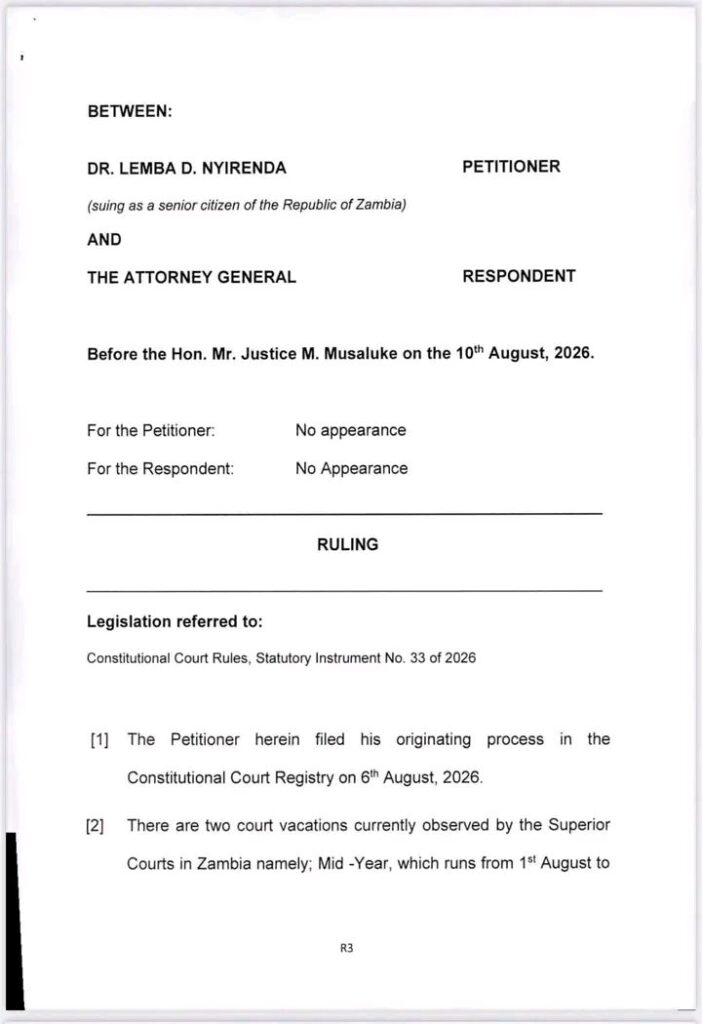
This is what the Constitutional Court recently explained.
Yes, Zambia’s Superior Courts have designated court vacation periods. The mid-year vacation runs from 1 to 31 August, while the Christmas vacation runs from 11 December to 11 January.
But before we start imagining judges in slippers, swimming trunks and holding a Maheu, let us clarify something.
Court vacation does not mean the judiciary has shut down and everyone has gone on holiday.
Rather, during vacation, there are special rules governing the filing of court process.
Order 18 Rule 2(2) of the Constitutional Court Rules says that, unless the Court gives you permission, you “shall not file” court process during vacation.
Translation?
You cannot just storm into the Registry during vacation and say, “Bwana, receive my papers.”
If you genuinely need to file something, you first seek leave of the Court.
Now, what exactly is leave?
In simple English, leave simply means permission from the Court.
You approach the Court and essentially say:
“My Lord, I know the Court is on vacation, but this matter is urgent and I need to file these papers now. Please allow me.”
The Court then considers the request and decides whether to give you permission.
So, leave is not forgiveness after you have broken the rule. It is permission you obtain before doing what the rule ordinarily prohibits.
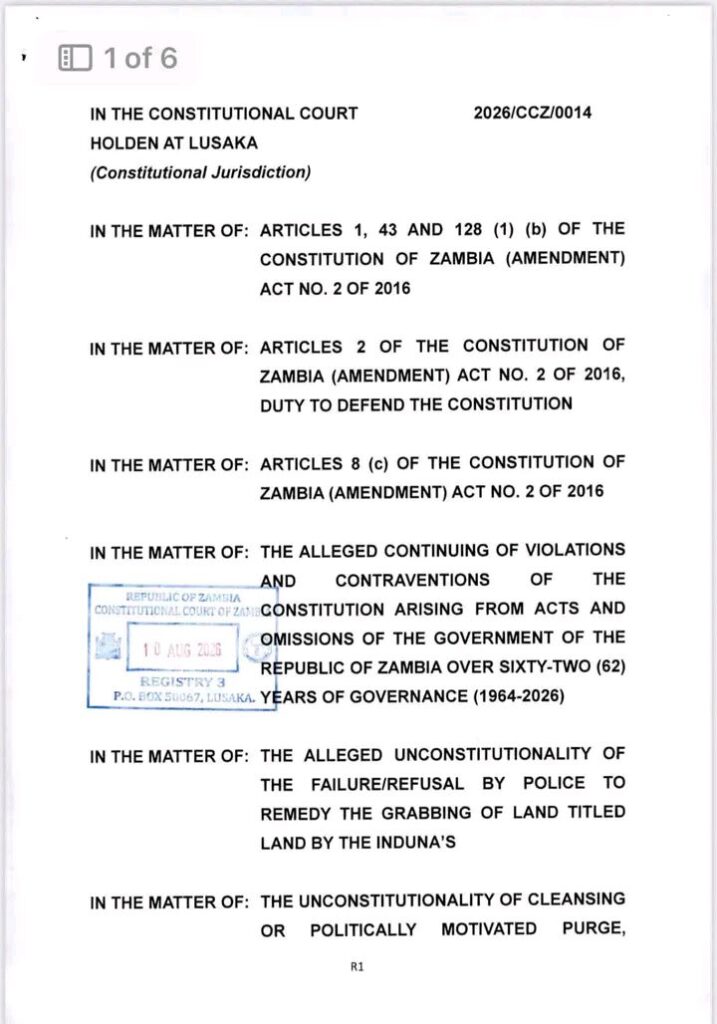
In the case before the ConCourt, the petitioner filed his originating process on 6 August 2026 without obtaining that leave. The Court therefore said, in essence:
“My friend, not so fast.”
The process was declared non-receivable.
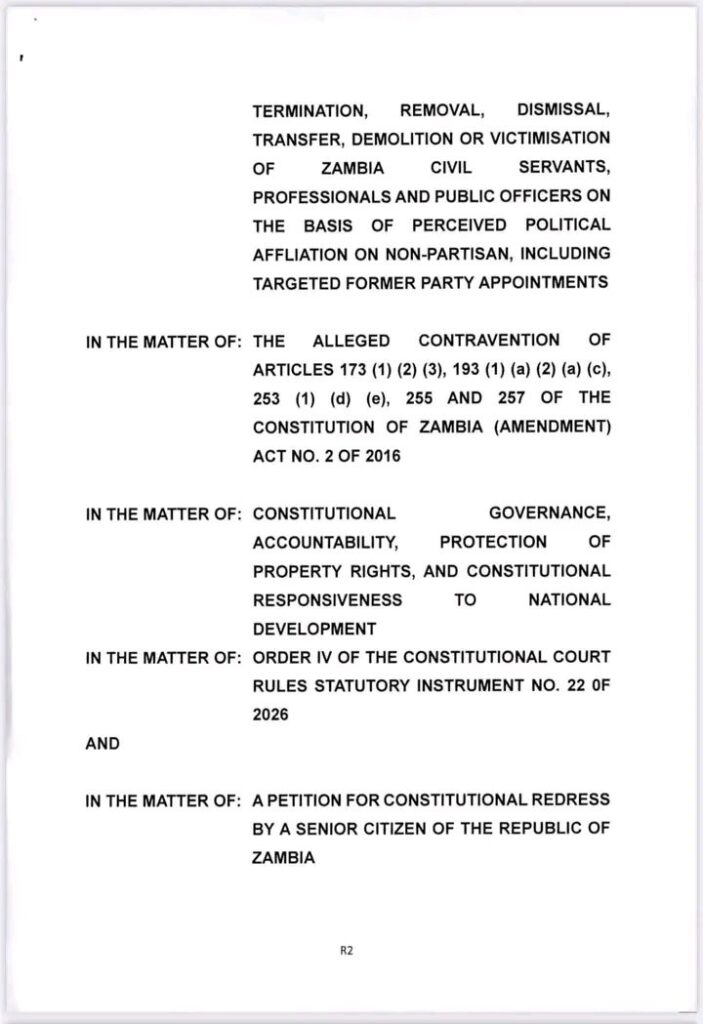
And just like that, the Court never reached the substance of the constitutional complaints. The case was stopped at the procedural gate.
So, Do Zambian Courts Go on Holiday?
Yes, but not in the way you and I go on holiday.
The courts have vacation periods, but they do not simply disappear. Urgent matters can still be dealt with through the proper procedure.
WHAT DOES THIS MEAN FOR THE ORDINARY CITIZEN?
If you have a genuine urgent matter during vacation, the doors are not necessarily locked.
But you cannot ignore the Rules and hope the Registry will say, “Ba lawyer, just leave the papers here.”
Moral of the Story?
In court, having a good case is only half the battle.
You must also know when, where and how to bring it.
Because sometimes the judge does not defeat your case.
The calendar does.
And as every Zambian knows: even if you are carrying a very important letter, if you arrive at a government office after working hours, someone will simply tell you, “Come tomorrow.”
Disclaimer:
My commentary on this decision is no more a legal critique than a campfire tale is a treatise on thermodynamics. It is, rather, a dramatized retelling, a lively reenactment if you will, of the judicial clash, unburdened by the solemn drudgery of analysis and delivered with the unapologetic zest of a storyteller who knows a good duel when he sees one.