

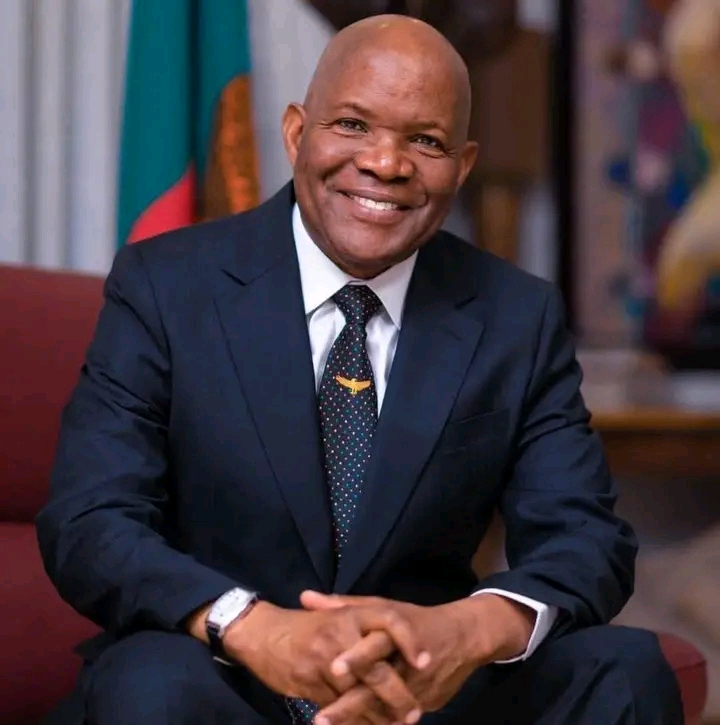
DR FRED M’MEMBE CALLS ON LAZ TO DEFEND PRESIDENTIAL TERM LIMITS AND CONSTITUTIONAL DEMOCRACY
2 NOVEMBER 2026
The President of the Socialist Party (SP), Dr Fred M’membe, has called on the Law Association of Zambia (LAZ) to take a clear and proactive position in defence of Zambia’s constitutional democracy, particularly the protection of presidential term limits under Article 106 of the Constitution.
Dr M’membe made the call in a letter dated 2 November 2026, addressed to the President of LAZ, in which he requested the Association’s Council to convene an Extraordinary General Meeting (EGM) to deliberate on any proposal to amend Article 106 and determine the Association’s position on the matter.
He expressed concern over public calls by ruling party officials and supporters for the Republican President to remain in office beyond 2031, arguing that such developments made it necessary for key institutions to take a firm stand in protecting the Constitution.
Dr M’membe also cited the petition presented to Parliament on 28 October 2026 by the Zambia Youth Organisation Consortium, through nominated Member of Parliament Mr Francis Kope, seeking the removal of presidential term limits. He noted that Mr Kope had undertaken to initiate the process of having the petition presented to the National Assembly.
The SP President observed that the removal of term limits for mayors and council chairpersons through the Constitution of Zambia (Amendment) Act No. 13 of 2025 demonstrated the importance of vigilance whenever constitutional safeguards were at risk of being weakened.
On the constitutional requirements for amending Article 106, Dr M’membe pointed to the provisions of Article 79, which prescribe the procedures for constitutional amendments, including the requirement for a two-thirds majority of all members of the National Assembly at the relevant readings. He further referred to the Constitutional Court’s June 2025 judgment concerning Bill 7, which he said underscored the importance of wide public consultation before constitutional amendments were initiated.
Dr M’membe argued that the protection of presidential term limits should not be left to chance, stressing that constitutional changes affecting the tenure of the Republican President required serious public scrutiny and broad national consultation.
He further urged LAZ to publicly state its position on whether any proposed change to the presidential tenure should proceed without a national referendum. Dr M’membe maintained that, in his view, an office of such national importance should not have its constitutional limits reshaped by a parliamentary majority without the direct consent of the people.
Recognising the need for a broad national response, Dr M’membe also proposed that LAZ engage the Zambia Conference of Catholic Bishops, the Council of Churches in Zambia, the Evangelical Fellowship of Zambia, the Non-Governmental Gender Organisations’ Coordinating Council (NGOCC), and other organisations that previously worked together under the Oasis Forum in 2001.
He said such engagement could help determine whether a common platform was once again necessary to defend constitutionalism, democracy and the rule of law.
Dr M’membe emphasised that the SP respected the independence of LAZ and was not asking the Association to adopt the position of any political party. Rather, he called on the legal body to discharge its mandate independently and uphold the principles of constitutional governance.
He recalled that LAZ, alongside church mother bodies and the NGOCC, played an important role in the national effort to protect presidential term limits in 2001. He said the SP would be willing to participate in any common platform that emerged, without seeking to lead or claim ownership of the initiative.
Given the national importance of the matter, Dr M’membe requested a written response from the LAZ Council within seven days of the date of his letter. He further indicated that he would make the letter public and share the Council’s response once received.
The SP maintains that the Constitution must remain the foundation of Zambia’s democratic governance and that any attempt to alter safeguards governing presidential tenure must be approached with transparency, meaningful public consultation and respect for the will of the Zambian people.