

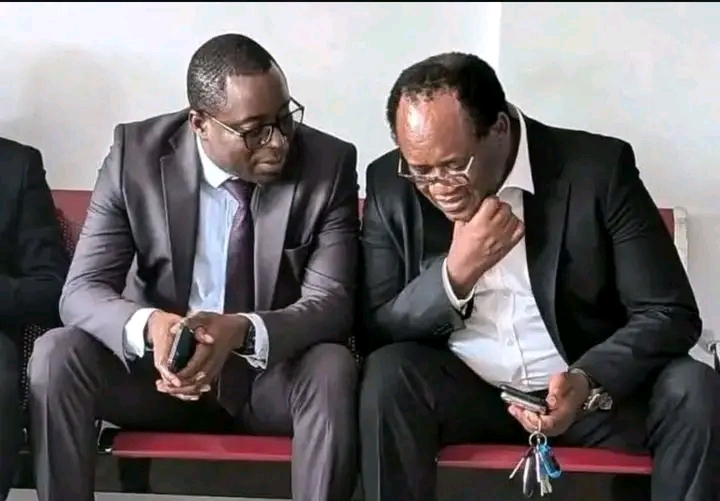
DRAMA IN LUSAKA MAGISTRATE’S COURT: MUNDUBILE, ZULU DEFENCE WALKS OUT, ACCUSED INVOKE RIGHT TO COUNSEL AS PLEA IS DEFERRED
By Changala Siame BBA/MBA-FINANCE
LUSAKA – Wednesday, 11 November 2026
The sedition case against opposition leader Brian Mundubile, presidential candidate of the National Reconciliation Party for Unity and Prosperity (NRPUP) / Tonse Pamodzi Alliance, and his running mate Makebi Zulu, today took a dramatic turn in the Lusaka Subordinate Court when the defence withdrew from proceedings and the two accused persons were left to address the court themselves.
The matter, listed for plea and allocation, could not proceed after the defence insisted that preliminary issues be determined before plea.
1. BACKGROUND: THE CHARGES
Mundubile and Zulu face two counts of seditious practices contrary to Section 57(1) as read with Section 60(1)(c) of the Penal Code, Chapter 87 of the Laws of Zambia.
The State alleges that on 14 August 2026, a day after the 13 August 2026 General Election, the two jointly:
1. Made preparation for a seditious act by a post on the Facebook page “Makebi Zulu”; and
2. Published a seditious publication by a simultaneous live stream on their respective Facebook pages.
The prosecution alleges that during the livestream they claimed that their party’s Parallel Vote Tabulation (PVT) showed they had won the presidential election and a majority in Parliament, questioned the delay in announcing results, and called for immediate publication and independent verification.
The accused deny the charges. They remain presumed innocent until proven guilty under Article 18 of the Constitution.
2. HOW THE CASE GOT TO LUSAKA
The case was originally commenced in Solwezi. The defence challenged jurisdiction, arguing the alleged offences were committed in Lusaka, where both accused reside, were apprehended, and were held in custody.
On 5 November 2026, Solwezi High Court Judge Edward Luputa Musona ordered the transfer, holding that Lusaka was the appropriate territorial forum under Section 69 of the Criminal Procedure Code, and exercising powers under Section 80 CPC.
“In this case, the accused persons reside in Lusaka, a fact which was not disputed, they were apprehended there, and were in custody there” – Justice Muson.
Today’s appearance in Lusaka was therefore the first substantive appearance before the Lusaka Magistrate’s Court following that transfer. Reports confirmed the two appeared for a possible plea and allocation.
3. WHAT HAPPENED IN COURT TODAY – PLEA STALLED
The Court had set today for plea.
However, the defence raised preliminary objections, including the contention that the matter ought to be referred to the High Court for determination of constitutional questions, and that those issues must be resolved before plea is taken.
After exchanges between the Bench and Bar, the Court ruled that plea should proceed. The defence then sought a 10-minute adjournment to consult – a request that was widely reported on social media today.
Upon return, defence counsel informed the Court that they could not act against the instructions of their clients and therefore had to withdraw from the proceedings.
This is consistent with the fundamental principle of legal ethics: counsel cannot take a plea on behalf of an accused person without clear, informed instructions, particularly where the accused disputes the propriety of the plea being taken at that stage.
4. THE ACCUSED ADDRESS THE COURT THEMSELVES
With counsel having withdrawn, Mundubile and Zulu – both lawyers by training – addressed the Court in person.
They invoked their constitutional right to legal representation and to a fair trial under Article 18 of the Constitution of Zambia, arguing that they were not in a position to continue without counsel of their choice.
They sought time – initially 7 days, effectively 14 days – to seek counsel, take instructions, and properly raise the preliminary issues before the Court.
After further submissions, the Court ruled in their favour on the adjournment, granting them time to secure representation and prepare their preliminary applications.
The development has been reported as the two having “fired” their legal representation, with commentators noting that both accused are qualified lawyers capable of conducting their own defence if they elect to do so.
5. THE SEPARATE CCTV / RAID VIDEO CONTROVERSY
Running parallel to today’s sedition proceedings is a contentious evidentiary battle in the related bail proceedings.
The State has applied to have removed from the court record the CCTV video footage of the raid at Makebi Zulu’s residence – footage the defence contends is relevant to the circumstances of the arrest and the events that followed.
Media reports today headlined: “State Seeks to Remove Video of Raid at Makebi Zulu’s Residence from court record.
The defence position, as articulated in court and in public discourse, is that the footage is material evidence and should not be expunged. The State’s position is that the material is not properly before the court at the bail stage and is prejudicial.
The Court is yet to make a final determination on that application. Legally, the question turns on relevance, admissibility, and the distinction between a bail hearing and a trial – a bail hearing does not determine guilt, but the court may consider evidence relevant to whether bail should be granted.
6. THE OTHER FRONT: TREASON CONSTITUTIONAL BAIL
The sedition case must not be conflated with the separate treason case in which Mundubile, Zulu and 16 others – total 18 accused – face treason and related charges and have been in custody at Mukobeko Maximum Security Prison in Kabwe since late August, for over 70 days.
In that matter, the Lusaka High Court – a three-judge panel led by Justice Mulenga / Justices Derrick Mulenga, Davies Chibwili and Ireen Wishimanga – has been hearing a constitutional bail application.
On 10 November 2026, the Court ruled that the constitutional bail application is properly before the court, clearing the way for the substantive hearing. Treason is ordinarily non-bailable under Zambian law, which is why the accused have invoked the Constitution to seek bail.
Zulu has also been granted leave to represent himself in those constitutional proceedings.
7. LEGAL SIGNIFICANCE OF TODAY’S RULING
Today’s events raise three critical legal points:
a) Plea cannot be forced: Under Zambian criminal procedure, plea is the foundation of a trial. If an accused disputes jurisdiction or raises a constitutional question, the court must deal with that question first, lest the trial be a nullity.
b) Right to counsel is not a formality: Article 18(2)(d) guarantees an accused person the right to defend himself in person or by a legal representative of his own choice. Forcing an accused to plead without counsel would vitiate the fairness of the trial.
c) Withdrawal of counsel is not contempt: Where counsel’s instructions are withdrawn, counsel is professionally bound to withdraw. The court correctly allowed the accused to speak for themselves for purposes of seeking an adjournment.
CONCLUSION
The Lusaka Magistrate’s Court has now deferred plea to allow Mundubile and Zulu to secure counsel and file their preliminary issues.
What was meant to be a routine plea day has become a test of due process, jurisdiction, and the right to a fair trial – issues that will define not only this sedition case, but the broader constitutional bail battle still pending before the High Court.
The matter returns on the adjourned date. The nation watches.
All accused persons are presumed innocent until proven guilty.
Changala Siame
BBA/MBA-FINANCE